
Key Takeaways
- The sites at a glance
- A short history
- Ram Janmabhoomi
- Hanuman Garhi
In This Article
Ayodhya sits on the Saryu in Uttar Pradesh and is one of the seven Sapta Puri cities. Most of what visitors come for is clustered around Ramkot in the old city, within a few kilometres of each other, with a second group out towards Faizabad along the river. Fourteen of them are worth the time.
The sites at a glance
| Site | Where | What it is |
|---|---|---|
| Ram Janmabhoomi | Ramkot | The birthplace, and the Ram Mandir consecrated in January 2024 |
| Hanuman Garhi | near Ramkot | Ayodhya’s busiest temple, up 76 steps |
| Kanak Bhawan | Tulsi Nagar | The golden palace, dedicated to Ram and Sita |
| Sita ki Rasoi | Ramkot | The underground kitchen; free food is served |
| Dashrath Bhavan | Ramkot | King Dashrath’s residence in tradition |
| Nageshwarnath Temple | Theri Bazaar | Shaiva temple, founded by Ram’s son Kush in tradition |
| Treta Ke Thakur | Naya Ghat | Black sandstone idols. Open one day a year |
| Choti Chawni | Ayodhya | Valmiki Bhawan, built entirely in white marble |
| Tulsi Smarak Bhawan | Rajgang Crossing | Memorial to Tulsidas, with a research library |
| Ram Katha Park | Ayodhya | Open-air amphitheatre for katha and performance |
| Mani Parbat | Kami Ganj | Mound with an Ashokan stupa and a city view |
| Gulab Bari | Vaidehi Nagar | 18th-century Nawabi tomb and rose garden |
| Guptar Ghat | Faizabad | Where Ram is held to have entered jal samadhi |
| Raja Mandir | Faizabad | Riverside temple at Guptar Ghat |
A short history
Ayodhya was the early capital of the kingdom of Kosala, and the Ramayana describes it as prosperous, fortified and populous. By Buddhist times, in the sixth and fifth centuries BCE, Shravasti had become Kosala’s principal city. Scholars identify Ayodhya with Saketa, where the Buddha is said to have stayed for a period.
The Chinese monk Faxian, writing in the fifth century CE, described many monasteries here, along with a stupa attributed to Ashoka in the third century BCE. The Kanauj monarchy arose in the eleventh and twelfth centuries, when the place was known as Oudh, and the region passed in turn to the Delhi Sultanate, the Jaunpur Kingdom and then the Mughals. Oudh gained some independence early in the eighteenth century, was annexed by the East India Company in 1764 and taken outright in 1856 — the loss of hereditary land revenue rights being one of the causes of the uprising the following year. Oudh merged with the Agra Presidency in 1877, and what became the United Provinces is now Uttar Pradesh.
Ram Janmabhoomi
The birthplace of Ram, seventh avatar of Vishnu, who the Ramayana places growing up beside the Saryu. The Supreme Court of India decided the title of the site in October 2019, awarding the land to a trust for a temple and a separate five acres to the Sunni Waqf Board. The foundation stone was laid in August 2020 and the Ram Mandir was consecrated in January 2024. The complex is about 800 metres from Ram ki Paidi.
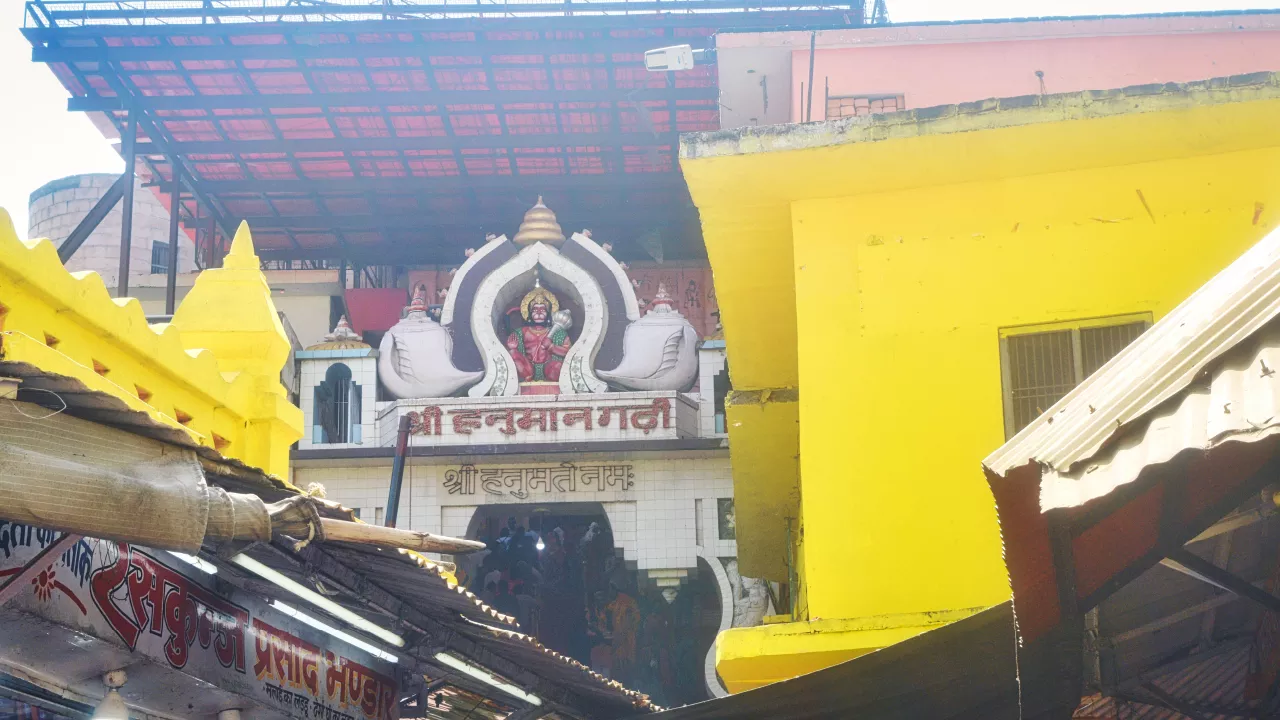
Hanuman Garhi
Ayodhya’s most visited temple, and the one most people go to first. Seventy-six steps lead up to a carved entrance, and inside the sanctum is an image of Anjana Devi, Hanuman’s mother, with the child Hanuman on her lap — Bal Hanuman, who is held to grant what devotees ask. From outside it reads as a four-sided fort with round citadels at the corners of the wall. Local tradition has Hanuman watching over Ramkot from here. The land for it was granted by the Nawab of Avadh. More on Hanuman Garhi.
Kanak Bhawan
In Tulsi Nagar, near Ram Janmabhoomi, and also called Sone-ka-Ghar, the golden house. Three golden-crowned idols of Ram and Sita stand in the garbhagriha under a silver ceiling. The tradition is that Kaikeyi, Ram’s stepmother, gave the palace to the couple. The present building dates from 1891, rebuilt by Vrish Bhanu Kunwari after an earlier refurbishment, in the Bundela style. More on Kanak Bhawan.
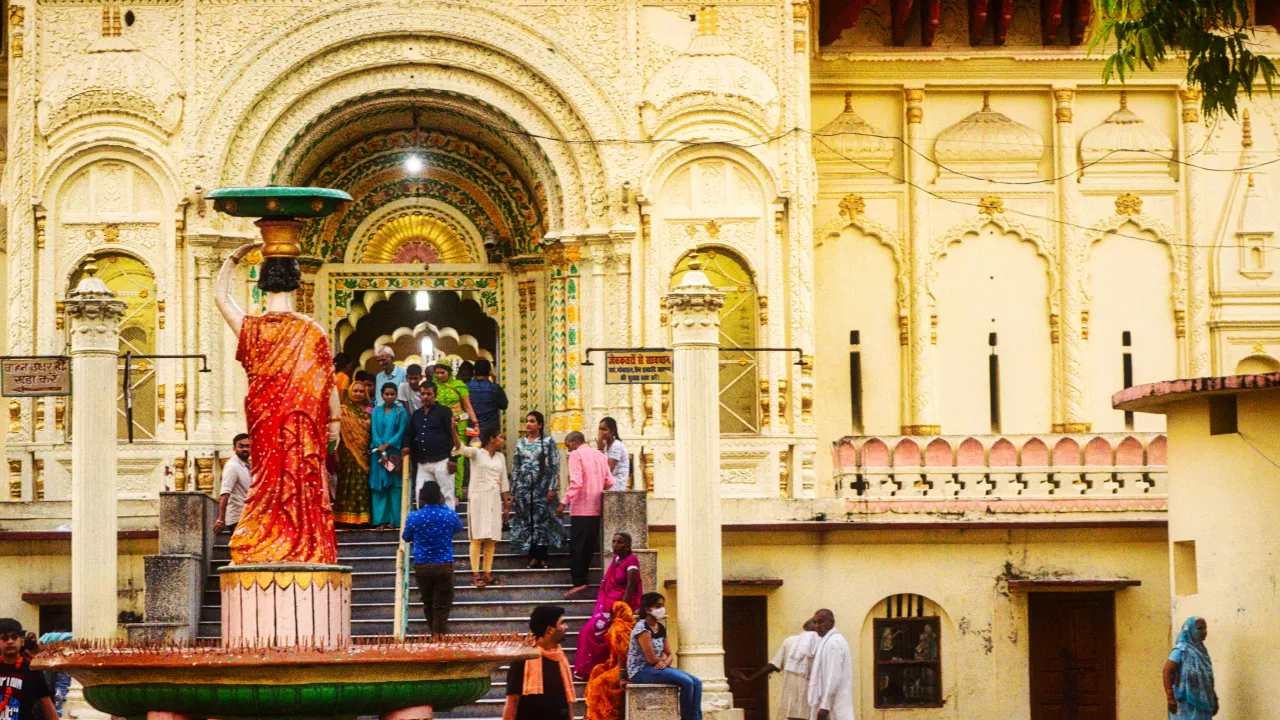
Sita ki Rasoi
An old kitchen, held to have been Sita’s own, on the north-western side of Ram Janmabhoomi in Ramkot. It is below ground level and is now a temple, with cooking vessels on display. Across from them stand idols of Ram, Lakshman, Bharat and Shatrughan with their wives Sita, Urmila, Mandavi and Srutakirti. Sita is worshipped here as Annapurna, goddess of food, and the temple serves free food in keeping with that. Donations of any amount are accepted.
Dashrath Bhavan
In the middle of Ramkot — the residence of King Dashrath, Ram’s father, and in tradition the house Ram grew up in. Also called Bada Asthan or Badi Jagah. The entrance carries murals, and saffron-clad monks recite and sing within the walls. It is smaller than the word palace suggests, and it is at its busiest during Ram Vivah, Kartik Mela, Diwali, Ram Navami and Shravan Mela. More on Dashrath Bhavan.
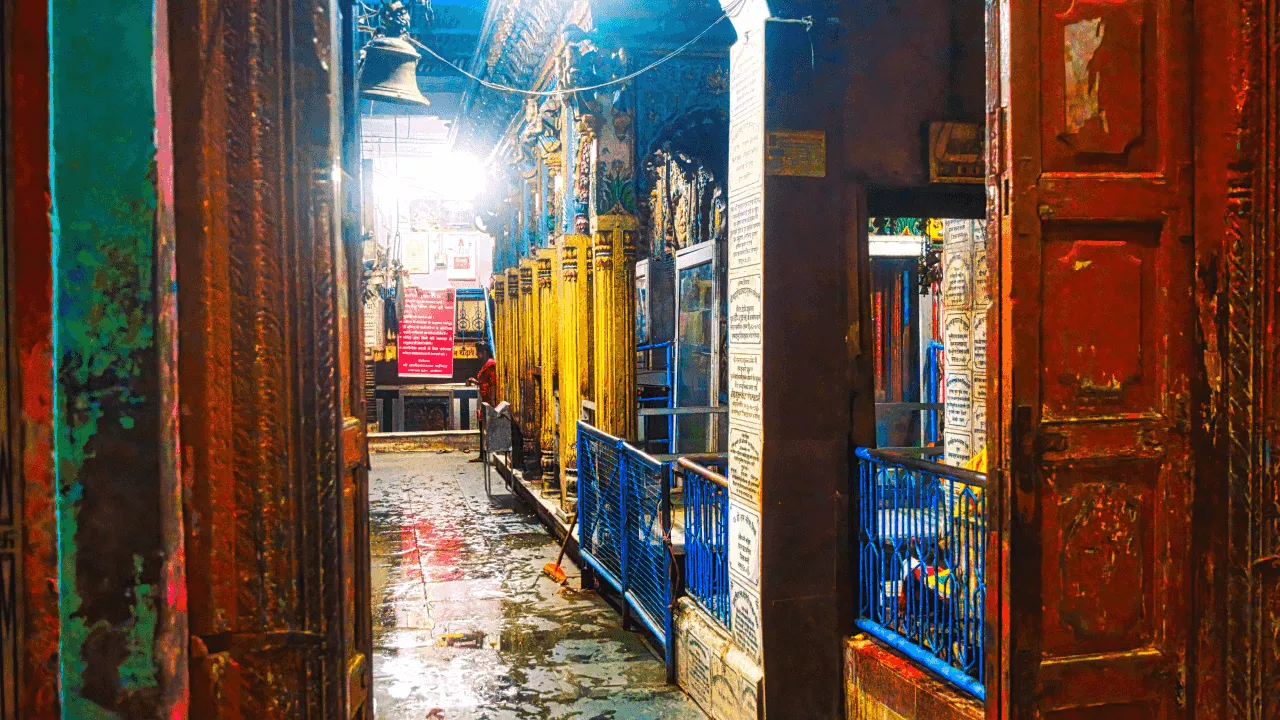
Nageshwarnath Temple
Beside Theri Bazaar, named for the local deity Nageshwarnath and held to have been founded by Kush, Ram’s son. The story is that Kush lost an arm ring while bathing, that a Shiva devotee called Naga Kanya recovered it, and that he built the temple for her on discovering she had fallen in love with him. The site has been maintained since around 750 CE, and the present temple is attributed to Naval Rai, minister to Safdar Jung, in 1750. It fills on Mahashivratri and on the Trayodashi, Pradosh Vrat; the Shiva Barat procession is the thing to see here. More on Nageshwarnath.
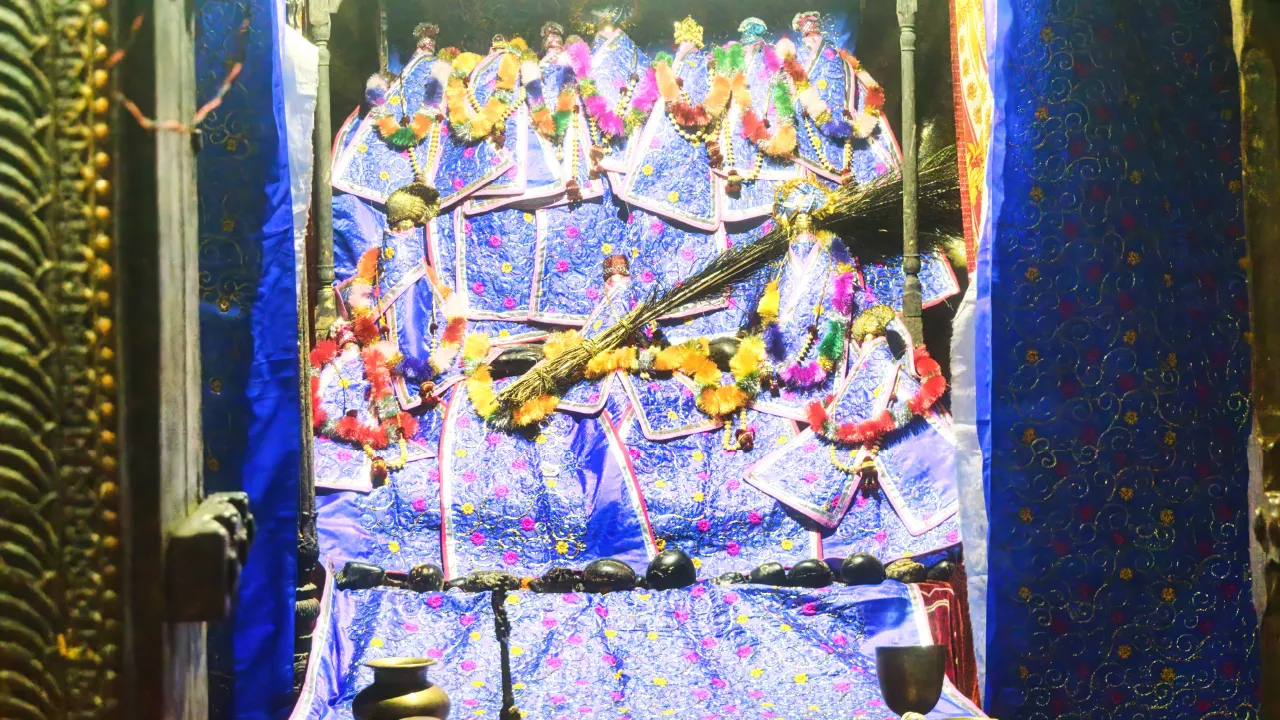
Treta Ke Thakur
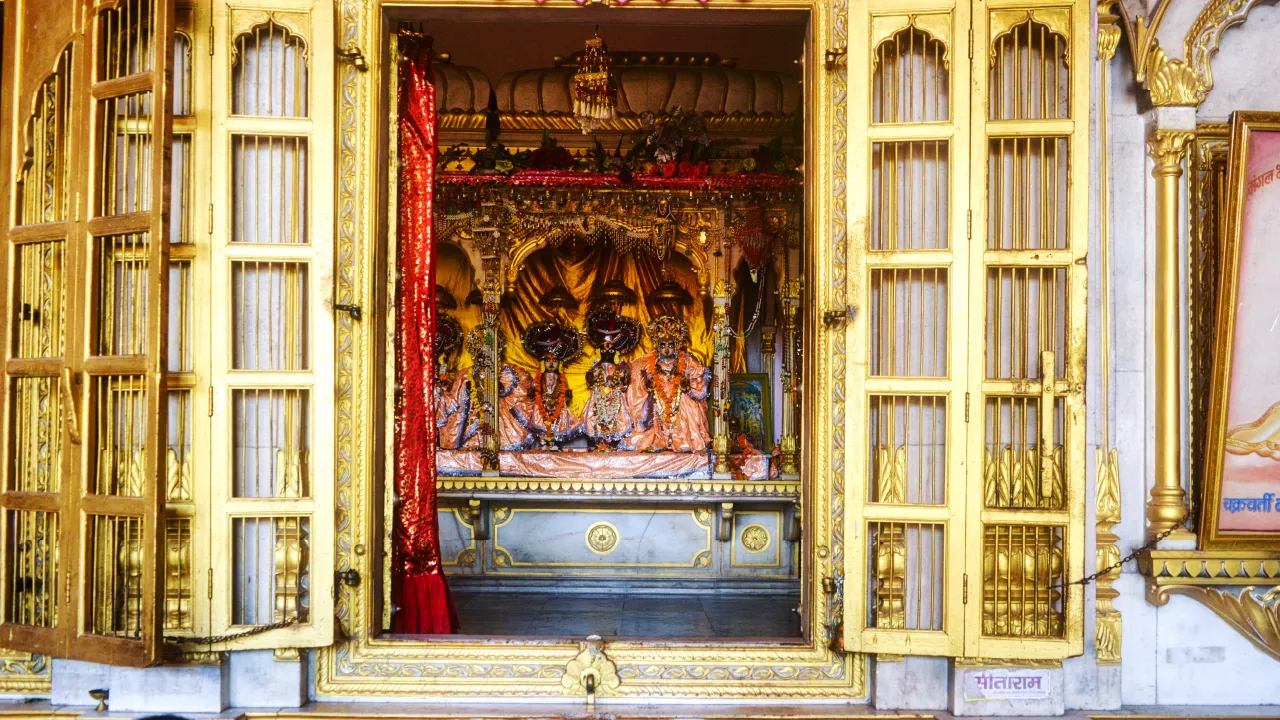
By Naya Ghat, holding idols of Ram, Sita, Lakshman, Hanuman, Bharat and Sugreev, said to be carved from a single piece of black sandstone. It is held to stand where Ram performed the Ashwamedha Yagna, built about three hundred years ago by Kullu, then king of the region, and restored by Ahilyabai Holkar in the 1700s.
Choti Chawni
Also called Valmiki Bhawan, or Maniramdas Chawni — a large building faced entirely in white marble. It is worth the detour for the building itself, which is unlike anything else in the city.
Tulsi Smarak Bhawan
Built in 1969 by Vishwanath Das, then Governor of Uttar Pradesh, in memory of the sixteenth-century poet-saint Goswami Tulsidas, and held to stand where he wrote the Ramcharitmanas. It is at Rajgang Crossing on the eastern end of the National Highway.
Inside is the Ayodhya Research Sansthan, a library and research centre on the city’s literary and religious material, with a daily Ramkatha recital and Ramayana art on display. The Ram Katha Sangrahalaya, a museum of objects and records from Ram’s life and times, was added in 1988. Tulsi Jayanti, on the seventh day of Shravan, is the big day here.
Ram Katha Park
Open-air theatres and lawns over a large site, used for katha recitals, devotional programmes, dance and poetry. On evenings with nothing scheduled it is a park — children playing, people sitting out. The amphitheatre takes national and visiting performers, and it is the one quiet open space in a congested city.
Mani Parbat
A mound near Kami Ganj, rising about 65 feet above the ground around it, with a stupa attributed to Ashoka and a Buddhist monastery on top, and the best view over the city. Sugriv Parbat is the neighbouring mound, and there is an Islamic mausoleum at the foot of Mani Parbat.
Gulab Bari
The rose garden, in Vaidehi Nagar — the tomb of Nawab Shuja-ud-Daula, third Nawab of Oudh, and of his parents. An eighteenth-century building in Nawabi style, with fountains and a long run of rose varieties. It is protected under the Ancient Monuments and Archaeological Sites and Remains Act.
Guptar Ghat and Raja Mandir
Guptar Ghat is at Faizabad, on the Saryu — also called the Ghaggar here — with steps down to the water beside what were the colonial Company Gardens, now Gupt Ghat Van. This is where tradition places Ram’s meditation and his jal samadhi, his entry into the river. The Sita-Ram temple, the Chakrahari shrine and the Narsingh temple are the principal temples around it. The ghat was rebuilt in the 1800s and the state government has continued to work on it.
Raja Mandir stands at the same ghat, on the riverbank, holding carved idols of several deities dressed in silk and ornament. Its position on the bank puts its reflection in the water, which is the reason to come at the right hour. Those who bathe here hold that the water clears the soul of its wrongs.
Rites at the Saryu
Families often combine a visit with ancestral rites, which are performed at Ram ki Paidi. Pind Daan at Ayodhya is ₹7,100, and Deep Daan — the lamp offering on the Saryu — can be added to it. Our note on Prayagraj covers the other city families usually pair with this one.
🙏 Book Pind Daan at Ram ki Paidi
- Performed on the Saryu at Ram ki Paidi
- Sankalp in your family gotra
- Deep Daan added on request
- Online option with a live video link
Common questions
How many days does Ayodhya need?
One full day covers Ramkot — the Mandir, Hanuman Garhi, Kanak Bhawan, Sita ki Rasoi and Dashrath Bhavan. A second gets you Guptar Ghat and Faizabad, Gulab Bari and Mani Parbat.
Which temple is the busiest?
Hanuman Garhi, before the Ram Mandir queues. Both are best early.
Can ancestral rites be performed at Ayodhya?
Yes, at Ram ki Paidi on the Saryu, which is counted among the rivers where Pind Daan and tarpan are performed.
Arranging a visit
Tell us when you can travel and whether your family needs rites performed as well as darshan, and we will confirm the pandit, the ghat and the total before anything is paid.
Book Your Sacred Ritual
Authentic ceremonies performed by Veda-trained pandits at sacred sites across India.



