




What’s included
Included in your package
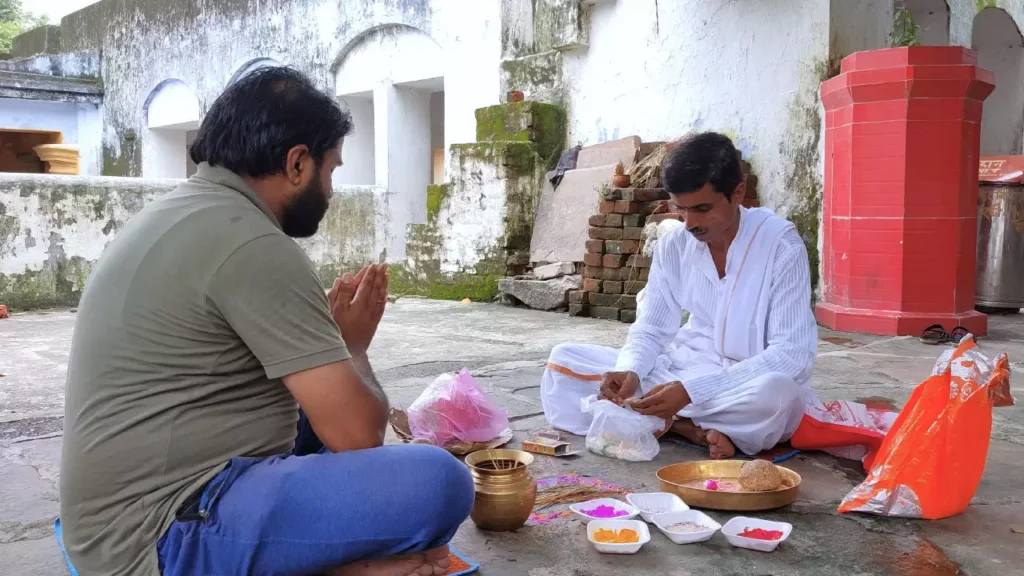
- Shradh ceremony at Triveni Sangam, Prayagraj
- Experienced Prayagraj-based pandit
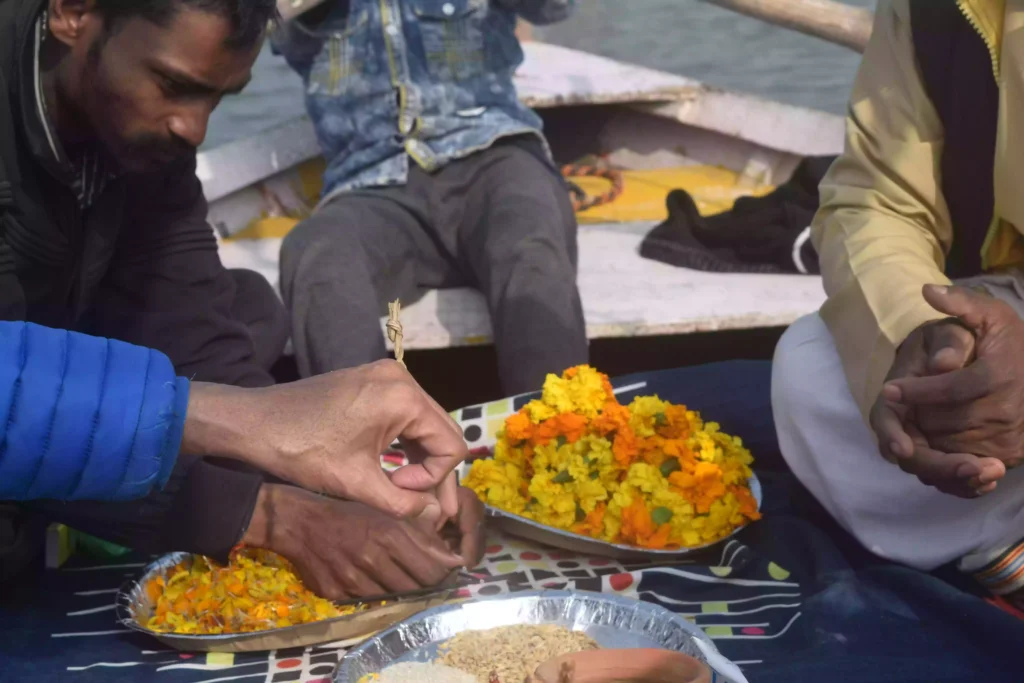
- All samagri sesame, kusha, Gangajal, rice, Pind ingredients, flowers, incense
- Tarpan with three-generation ancestral invocation
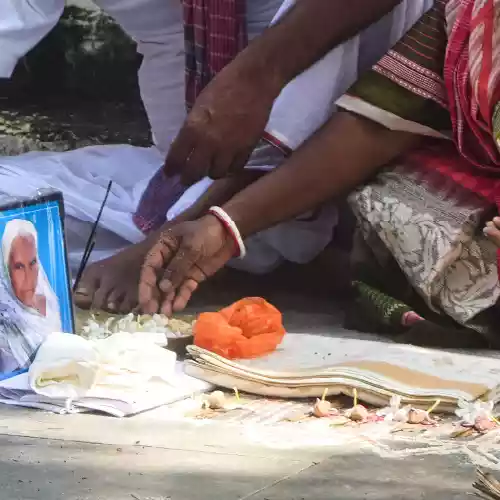
- Pind offering per tradition
- Sankalp with family name, gotra & ancestor names
Not included in your package
- Travel to Prayagraj
- Accommodation
- Station / airport pickup & drop
- Narayan Bali / Tripindi Shradh / Pind Daan (separate ceremonies)
- Photography / videography
- Extra Dakshina/Gifts/Donations made to the Priest/Pandit
How it works
Choose your pooja
Review your package and any available additions, then add it to your booking.
Share your preferences
Enter your contact details, preferred date and time. Add ancestral details if you wish.
We coordinate with you
Our team confirms the arrangements and shares your coordinator’s details 24 hours before the pooja.
Arrive for your pooja
Our team guides you to the designated pooja area and helps you participate in the ceremony.
What families say after the rite
From families who booked Shradh at Prayagraj.
Rated 4.8 out of 5
500+ reviews · Prayag Pandits
This poojarated 4.6 out of 520 reviews
Our pandits
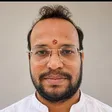
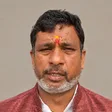
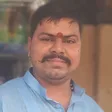

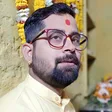

- 2,263+ families served
- Serving since 2019
- GST registered
Families on video
The player loads only when you press play.

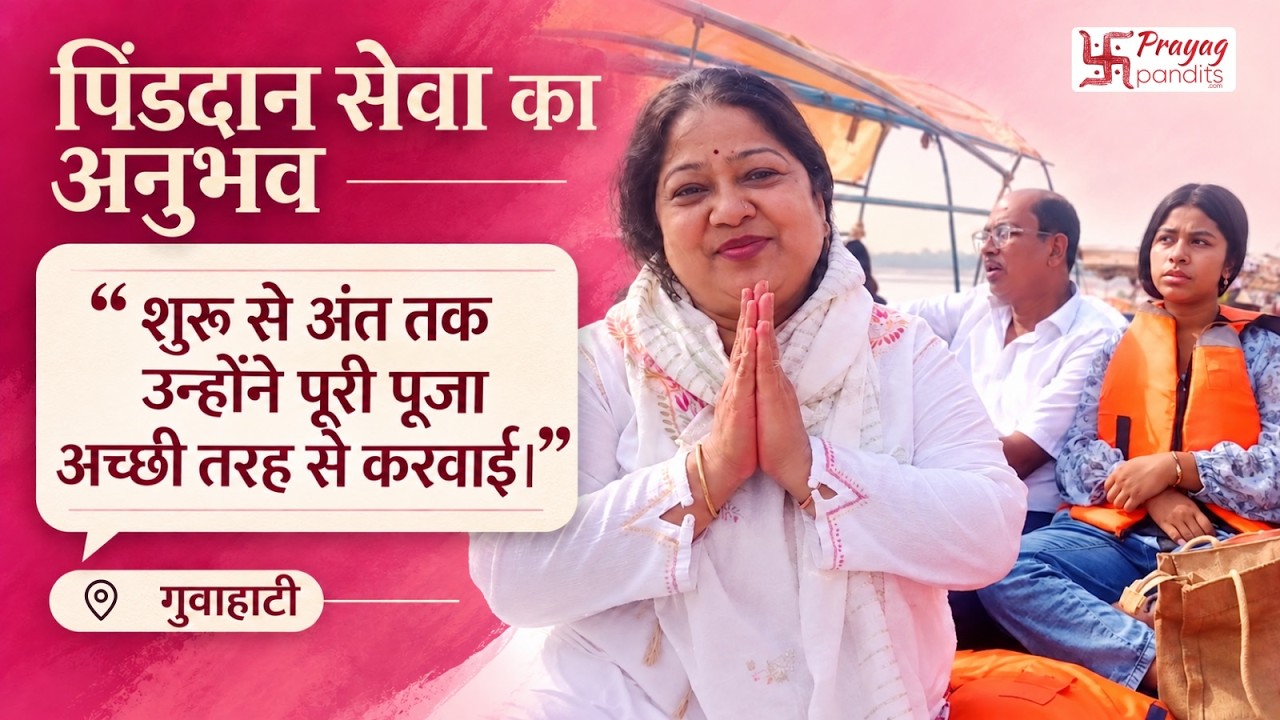


In their words
We booked this for our grandfather's annual shradh. The ceremony was performed with great reverence. Pandit ji even shared stories from the Garuda Purana which were very enlightening for the younger generation. Dhanyavaad.
बहुत संतोषजनक सेवा। पंडित जी का वेद-शास्त्र का ज्ञान अद्भुत था। उन्होंने गरुड़ पुराण के श्लोकों का पाठ किया जो बहुत मार्मिक था। पूरा परिवार भावुक हो गया। 🙏
We booked Pind Daan for our late father's shradh ceremony. The pandits were very knowledgeable and performed all rituals with proper Vedic mantras. The whole family felt at peace after the poojan. Highly recommended for anyone looking for authentic rituals.
Good service overall. The pandit was on time and well prepared. He guided us through each step of the ceremony. The booking process was simple and the team was responsive on WhatsApp. Would recommend to others. Om Shanti.
We had been wanting to perform Pind Daan for years but couldn't travel to India. This online service was a blessing. The entire ritual was done as per shastras. Thank you Prayag Pandits team for your dedication. Jai Shri Ram.
Booked this for my late father. Everything was arranged perfectly. The team was professional and respectful throughout.
Review your ceremony
Shradh at Prayagraj
Please check 1 thing
Questions families ask
Yes, engaging a local Pandit who is familiar with the specific traditions and significance of performing Shradh at the Triveni Sangam is crucial. They know the correct mantras, procedures, and the designated areas for the rituals. These Pandits are often referred to as 'Prayagwals' or 'Pandas'.
Finding a Pandit:
- At the Sangam, You will find many Pandits offering their services near the Ghats and at the Sangam area.
- Recommendations: Ask your family priest, friends, or relatives who may have performed rituals here before.
- Established Offices/Trusts: Some older Panda families have established offices near the Ghats.
- Online Services: Reputable online platforms now connect pilgrims with verified Pandits in Prayagraj.
- It is always wise to speak with the Pandit beforehand, understand the process, and agree upon the Dakshina and other costs. Many Pandas here maintain genealogical records (Vahi) of families who have traditionally visited Prayagraj
- The required Samagri is standard for Shradh: rice flour, barley flour (Jau), black sesame seeds (kala til), Kusha grass, flowers, Tulsi leaves, honey, milk, ghee, fruits, incense, lamp, etc.
- You do not need to worry about sourcing these. All necessary puja materials are readily available in shops near the Sangam area and the main ghats. Often, the Pandit you hire will arrange for the Samagri as part of their service package.
While Pind Daan is significant everywhere, performing it at the Triveni Sangam in Prayagraj carries exceptional weight. The confluence is a point of immense divine energy. It is believed that offerings made here:
- Reach ancestors most effectively due to the combined power of the three sacred rivers.
- Wash away the sins of the ancestors and the performer.
- Grant profound peace and satisfaction (Tripti) to the departed souls.
- Greatly aid in their journey towards Moksha (liberation), breaking the cycles of birth and death.
- The act performed at this specific cosmic junction is said to appease the divine trinity (Brahma, Vishnu, Mahesh) simultaneously, invoking powerful blessings for the Pitrus.
Yes, Prayagraj is a highly potent place for Pitru Dosh Nivaran Puja. Pitru Dosh refers to afflictions or obstacles in life believed to arise due to unsatisfied ancestors. Performing specific pujas, Tarpan, and Pind Daan at the Triveni Sangam, often combined with Narayan Bali or Tripindi Shradh if applicable (especially for unnatural deaths), is considered very effective in mitigating Pitru Dosh. Pandits here are well-versed in these specific remedial pujas, invoking the blessings of the Triveni Sangam to pacify the ancestors and remove obstacles from the descendant's life.
The Magh Mela (occurring annually during the Hindu month of Magh, Jan-Feb) is a period of intense spiritual energy in Prayagraj. Millions of pilgrims, Sadhus, and Saints congregate here for Kalpavas (a month-long vow of austerity and devotion) and holy dips at the Sangam, especially on auspicious bathing days like Paush Purnima, Mauni Amavasya, and Basant Panchami.
Performing Shradh during Magh Mela is considered exceptionally meritorious. The collective positive spiritual vibrations, the presence of numerous enlightened souls, and the heightened sanctity of the Sangam during this period amplify the benefits of the rituals, ensuring profound peace for the ancestors.
Shradh can be performed at Prayagraj on any day of the year, but the most auspicious times are during Pitrupaksha (the 16-day period in Bhadrapada/Ashwin month, usually September-October), on each monthly Amavasya (new moon), on Mahalaya Amavasya (the final day of Pitrupaksha, most powerful), and on the death anniversary tithi of the ancestor. Our team can help you identify the most auspicious date based on your family’s situation.
All puja materials are included in the package. However, if you have the ashes (asthi or phool) of the departed ancestor, please bring them for immersion at the Sangam. It is also helpful to note down the ancestor’s full name, approximate year of death, and gotra (clan lineage) if known — the pandit will use these during the Sankalp and pinda offering. If you do not know the gotra, the ceremony can still be performed using the prescribed alternative mantras.
Yes. While the primary ritual performer (yajman) is traditionally the eldest son or male head of family, women of the family are welcome to attend, observe, and offer their prayers. In cases where there is no male heir, the scriptures permit daughters, daughters-in-law, and wives to perform Shradh. Our pandits are familiar with these provisions and will conduct the ceremony respectfully in such situations. Please inform us in advance so we can ensure the appropriate mantras are arranged.
The core Shradh pooja typically takes 30 to 45 minutes. Tarpan, Pind Daan, Brahmin Dakshina, and any additional rites can extend the total visit. We recommend arriving at least 30 minutes before the scheduled start time. If you wish to take a Sangam snan before the ceremony, please plan for an additional 30-45 minutes.
Yes. In fact, performing Shradh during Kumbh Mela at Prayagraj is considered exceptionally meritorious — the spiritual power of Triveni Sangam is multiplied many times over during Kumbh. We do recommend booking well in advance during Kumbh periods as demand is extremely high and ghat arrangements need additional coordination. Please contact us at least 2-3 months ahead for Kumbh Mela bookings.
Still have a question?
Ask our team on WhatsApp and we will help you plan the ceremony.
We reply on WhatsApp within 1–2 hours.
Ask a pandit (opens WhatsApp)Know your ceremony
There are moments in a family’s life when words fall short — when all that remains is the quiet wish to do right by those who came before us. Performing Shradh for a departed parent, grandparent, or ancestor is one of those moments. It is not merely a ritual; it is a conversation across lifetimes, an act of love that transcends death itself. When this sacred ceremony is performed at Prayagraj — at the hallowed confluence of the Ganga, Yamuna, and the invisible Saraswati — that love reaches its fullest expression. Prayagraj is not just a city. It is Teertha Raj, the king of all pilgrimages, the place where the three sacred rivers carry your offerings directly to your ancestors in Pitru Lok. Our Shradh at Prayagraj package is designed to give your family a complete, properly conducted Shradh experience at Triveni Sangam — handled by experienced Prayagwali pandits who have performed these rites for generations.
Every sacred text that speaks of ancestral rites — the Garuda Purana, the Vayu Purana, the Matsya Purana, the Agni Purana — names Prayagraj among the very highest places to perform Shradh and Pind Daan. The Mahabharata records that Yudhishthira himself was advised to perform ancestral rites at Prayagraj for maximum fruit. The Vishnu Purana states that one act of Tarpan offered at Triveni Sangam is equal in merit to a thousand Tarpans performed elsewhere.
The reason for this elevated status lies in the geography of the sacred. The Ganga at Prayagraj is not merely a river — she is Vishnu Pada Udbhava, born from the feet of Lord Vishnu. The Yamuna carries the energy of Lord Krishna. And beneath both rivers flows the mystical Saraswati, the river of divine consciousness. When these three rivers merge, they create a vortex of spiritual power that the scriptures call a Maha Tirtha — a crossing point where the veil between the world of the living and the realm of the ancestors becomes thinnest. It is at this crossing that your offerings of water, sesame seeds, and pindas (rice balls) travel most directly and most powerfully to your pitrus (ancestors).
The tradition of Prayagwali pandits — hereditary priests who have served pilgrims at Triveni Sangam for centuries — is itself a guarantee of ritual authenticity. Their knowledge is not learned from books alone; it is passed from father to son across hundreds of years of unbroken practice. When you book your Shradh through Prayag Pandits, this is the lineage you are connecting with.
For a deeper understanding of the scriptural foundation of Shradh rituals, we recommend reading our detailed guide: Shradh Karm — A Deep Dive Into Types, Rituals, Philosophy, and Importance.
Understanding what will happen during your ceremony removes anxiety and helps every family member participate with full awareness. Here is how the Shradh ceremony at Triveni Sangam is conducted:
Step 1 — Arrival and Sankalp
Your family arrives at the designated ghat at Triveni Sangam. The pandit begins with a Sankalp — a formal statement of intention. In this, the yajman (the person performing the rite, typically the eldest son or the family head) speaks their name, gotra, father’s name, grandfather’s name, and the name of the ancestor for whom the Shradh is being performed. This Sankalp registers the ceremony before the divine witness.
Step 2 — Pitru Tarpan
Standing in the sacred waters of the Sangam, the yajman performs Tarpan — offering handfuls of water mixed with black sesame seeds and kusha grass while chanting the prescribed mantras for each ancestor. Tarpan is offered to the ancestors of the paternal line, the maternal line, and to the gurukul tradition. This is the first and most essential act of nourishment for the departed souls.
Step 3 — Pind Daan
The pandit prepares the pindas from rice flour, sesame, honey, and gangajal. The yajman offers each pinda at the water’s edge while the pandit chants the pinda daan mantras and calls each ancestor by name. These pindas are then gently immersed in the Sangam, carried by the sacred current to Pitru Lok. Learn more about the significance of this rite at our guide to Triveni Sangam — The Land of Moksha.
Step 4 — Brahmin Dakshina
The pandit is offered dakshina and yatra (food or its monetary equivalent) in the name of the departed ancestor. This is the act that seals the ceremony and completes the cycle of Shradh. The merit of this act is specifically assigned to the ancestor’s onward journey.
Step 5 — Gangajal and Prasad
The ceremony concludes with the family receiving sacred Gangajal and Prasad. If you have brought the ashes (asthi) of the departed, our pandit will also guide the immersion of ashes in the Sangam at this stage.
This package is suited for any Hindu family that:
- Wishes to perform the annual Shradh for a parent, grandparent, or other ancestor at a Maha Tirtha rather than at home
- Is performing Shradh for the first time and needs complete guidance on what to do and how
- Has been unable to perform regular Shradh in previous years and wishes to complete pending ancestral rites
- Is visiting Prayagraj during Pitrupaksha (the 16-day period dedicated to ancestral rites, usually in September-October) and wants a fully arranged ceremony
- Has recently immersed the ashes of a departed family member and wishes to perform the accompanying Shradh at the most auspicious location possible
- Is from any part of India or abroad — this ceremony can be arranged on any amavasya (new moon day), on Pitrupaksha dates, or on the tithi (lunar date) of the ancestor’s death anniversary
You can also book this alongside our Pind Daan at Prayagraj service if you wish the Pind Daan to be performed as a standalone extended ceremony.
Prayagraj attracts hundreds of pandits who approach pilgrims at the ghats, and it can be genuinely difficult for a family arriving from outside to know who is qualified, trustworthy, and experienced. Prayag Pandits was founded precisely to solve this problem. Every pandit in our network is a hereditary Prayagwali — they have been performing these ceremonies at Triveni Sangam as part of their family tradition for generations. We do not hire temporary officiants. We work only with pandits whose lineage and qualifications we have personally verified.
Beyond the pandit, we provide logistics support, language assistance (our coordinators speak Hindi, English, Bengali, Tamil, Telugu, Marathi, and several other Indian languages), and full transparency about the ceremony. We explain each step in plain language as it happens so that every family member understands what is being done and why. We are also available by phone before and after the ceremony for any questions your family may have.
We understand that performing Shradh is not a transaction. It is an act of love, of duty, and of faith. We treat it that way — and we have had the privilege of witnessing thousands of families leave Triveni Sangam with peace in their hearts, knowing that their ancestors have been properly honoured.