
अभी तक कोई अनुष्ठान नहीं चुना गया।
पूजा पैकेज देखें →मुख्य बिंदु
इस लेख में
Of all the post-death ceremonies prescribed in the Hindu tradition, Sapindikarana stands apart. It is the ceremony that decides whether the soul of your departed loved one remains a wandering ghost or joins the ancestral lineage as a revered Pitri. Every other Shraddha — the daily Pinda offerings, the monthly rites, the purificatory ceremonies — leads to this single event. The scriptures describe Sapindikarana as the 50th Shraddha in a sequence of 49 preceding rites, and without it, the entire sequence remains incomplete.
In more than eighteen years of performing ancestral ceremonies at the Triveni Sangam and the ghats of Varanasi, I have guided hundreds of families through this rite. The questions are always the same: when exactly should we do it, what happens during the ceremony, and what are the consequences if we delay or skip it? This guide answers all of these from the original Sanskrit texts — not from secondary summaries — and explains every step of the Sapindikarana vidhi as it is actually performed.
What is Sapindi Shradh (Sapindikarana)?
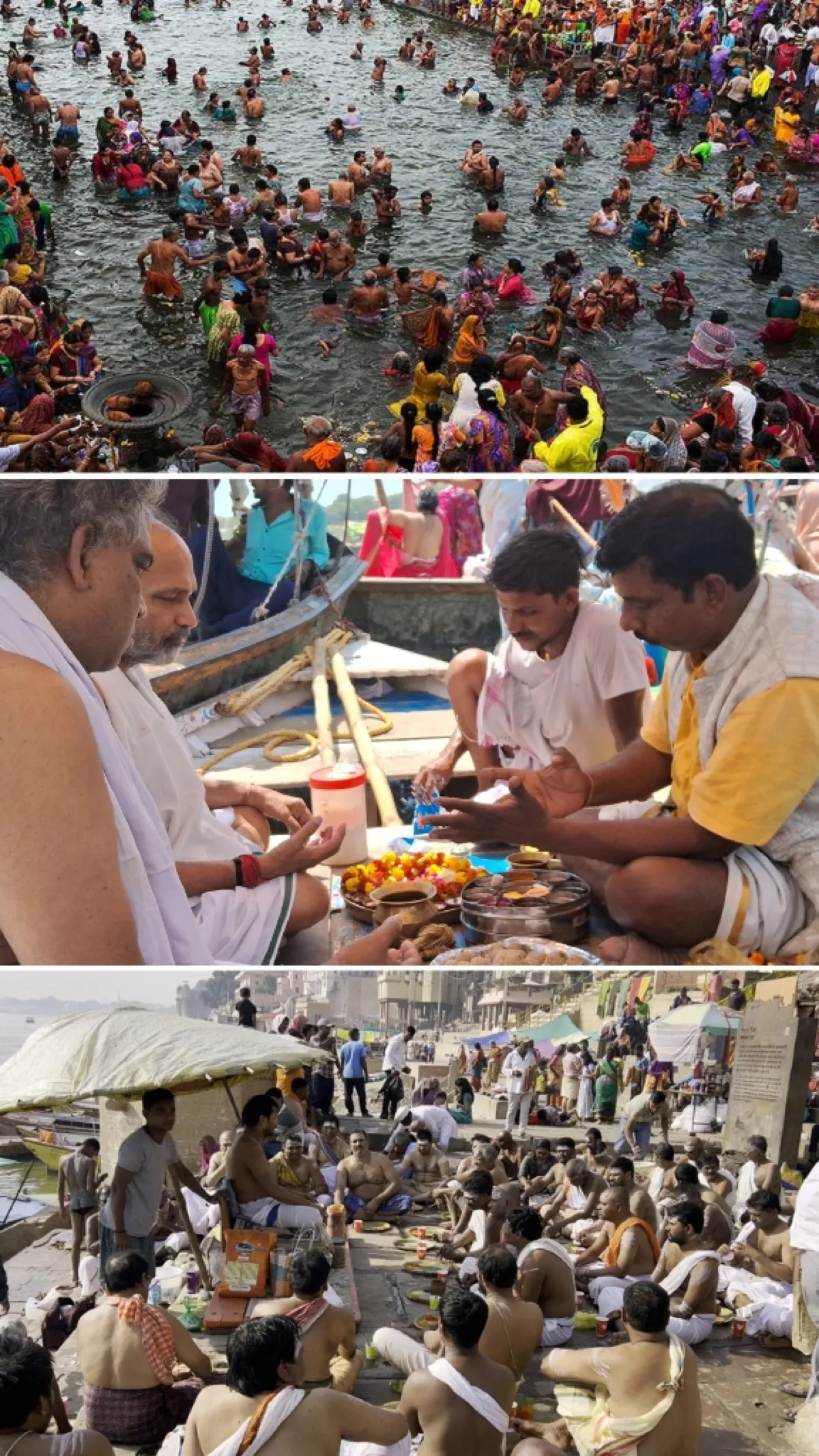
Sapindikarana — also written as Sapindi Shradh or Sapindan — is the specific Shraddha ceremony where the sacred rice ball (Pinda) representing the recently deceased person is physically divided and merged into the Pindas of their three paternal ancestors: the father, grandfather, and great-grandfather. The word itself reveals its meaning: Sa (together) + Pinda (the rice offering representing the ancestor) + Karana (the act of doing). It is, literally, the act of making the deceased one with the ancestral Pindas.
This is not symbolic. The merging is physical — the rice ball of the deceased is cut into three parts and kneaded into the three ancestral Pindas while specific Vedic mantras are chanted. Through this act, the soul of the deceased is formally assimilated into the ancestral lineage. Before this ceremony, the soul exists in a liminal state — classified as a Preta (a wandering spirit with no permanent place). After Sapindikarana, the soul attains Pitri-samya (equality with the ancestors) and joins the Pitri-pankti (the ancestral line). The word “Preta” is never used again.
For a comprehensive understanding of where Sapindikarana fits within the complete Hindu death rituals sequence — from cremation through the 13-day mourning period — read our complete guide. Sapindikarana occurs on the 12th day, immediately before the Tehrvin (13th day) gathering.
When Should Sapindi Shradh Be Performed?
The traditional scriptures allow flexibility in timing: Sapindikarana may be performed after 3 fortnights (approximately 45 days), after 6 months, or after 1 full year from the date of death. However, the sages — recognizing the uncertainty and brevity of human lifespans in the Kaliyuga — strongly recommend performing it on the 12th day (Dwadashah) after death. This accelerated timeline is prescribed specifically for the current age so that the soul’s salvation is not delayed by the unpredictability of life.
In practice, the vast majority of families we serve perform Sapindikarana on the 12th day. The ceremony follows immediately after the 10-day Dashagatra period (during which the daily Pinda offerings build the soul’s subtle body) and the 11th-day Ekadashah ceremony (which marks the end of the impurity period and the beginning of Vedic Shraddha rituals).
There are situations where the 12th-day timing is missed — for example, when the family lives abroad, when death circumstances are unclear, or when the news of the death reaches the family late. In such cases, Sapindikarana can be performed at a later date without losing its spiritual validity. If it has been significantly delayed (more than a year), the ceremony is typically combined with a comprehensive Shradh ceremony at a sacred tirtha.
The Spiritual Transformation: From Preta to Pitri
This is the most important concept to understand about Sapindikarana, and it is the reason the scriptures treat this ceremony with such gravity.
Before Sapindikarana: The soul of the deceased is addressed exclusively as Preta — a term that literally means “departed one” but carries the connotation of a spirit without a fixed place in the cosmic order. During the 10-day Dashagatra period, the daily Pinda offerings construct the soul’s subtle body (Aativahik Sukshma Sharir) piece by piece. But even after this subtle body is complete, the soul remains a Preta. It has a form, but it does not yet belong to the ancestral realm. Family relationship titles — father, mother, grandfather — are strictly avoided during this period. The soul is referred to only as “Preta.”
After Sapindikarana: The moment the deceased’s Pinda is physically merged with the three ancestral Pindas, the soul undergoes a permanent change in status. It is elevated from Preta to Pitri — a revered ancestor with a defined place in the ancestral lineage. From this moment, the word “Preta” is dropped permanently. The soul is addressed with respectful titles like “Sharma” (for Brahmins) or the appropriate family designation, and the term “Pitri” is used in all future ceremonies. The soul attains Pitri-samya — equality with the ancestors — and the right to receive all future Shraddha offerings alongside the father, grandfather, and great-grandfather.
This transformation is not gradual. It happens at the precise moment of the Pinda merger. That is why the scriptures insist on the exact mantras, the exact physical procedure, and the exact intention (Sankalpa) during the ceremony. A mistake at this stage affects not just the current soul but the entire ancestral chain.
The 50th Shraddha — Why Sapindikarana Cannot Be Skipped
The scriptures describe a sequence of 49 Shraddha ceremonies that must precede Sapindikarana. These include the daily Dashagatra Pindas (10), the Malin Shodashi (a set of 16 purificatory Shraddhas), the Madhyam Shodashi (16 middle-stage Shraddhas), and the Uttam Shodashi (the final 16 purificatory Shraddhas). Together, these 49 ceremonies progressively cleanse the soul of the taint of the physical body and its ghost-like existence.
Sapindikarana is the 50th and final Shraddha in this sequence. It is not optional. Without it, the 49 preceding ceremonies remain incomplete — like a bridge built to within a metre of the opposite bank. The soul has been purified, its subtle body has been constructed, the taint has been removed — but it has not been placed into the ancestral lineage. It remains in a holding state, unable to move forward into the Pitri Loka (the ancestral realm) and unable to go back.
The consequences of omitting Sapindikarana are explicitly described: the soul’s ghost-state (Pretatva) is never destroyed. It cannot attain proximity to the ancestors, is denied entry into the higher ancestral realms, and remains trapped as a wandering spirit. This is one of the conditions that leads to Pitra Dosh — the ancestral affliction that the Brahma Purana describes as causing childlessness, chronic illness, and generational suffering in the living family.
The Complete Sapindikarana Ceremony — Step by Step
What follows is the authentic procedure as practised by qualified Vedic pandits. Understanding each step helps the family prepare mentally and participate with full awareness.
Preparation and Sankalpa
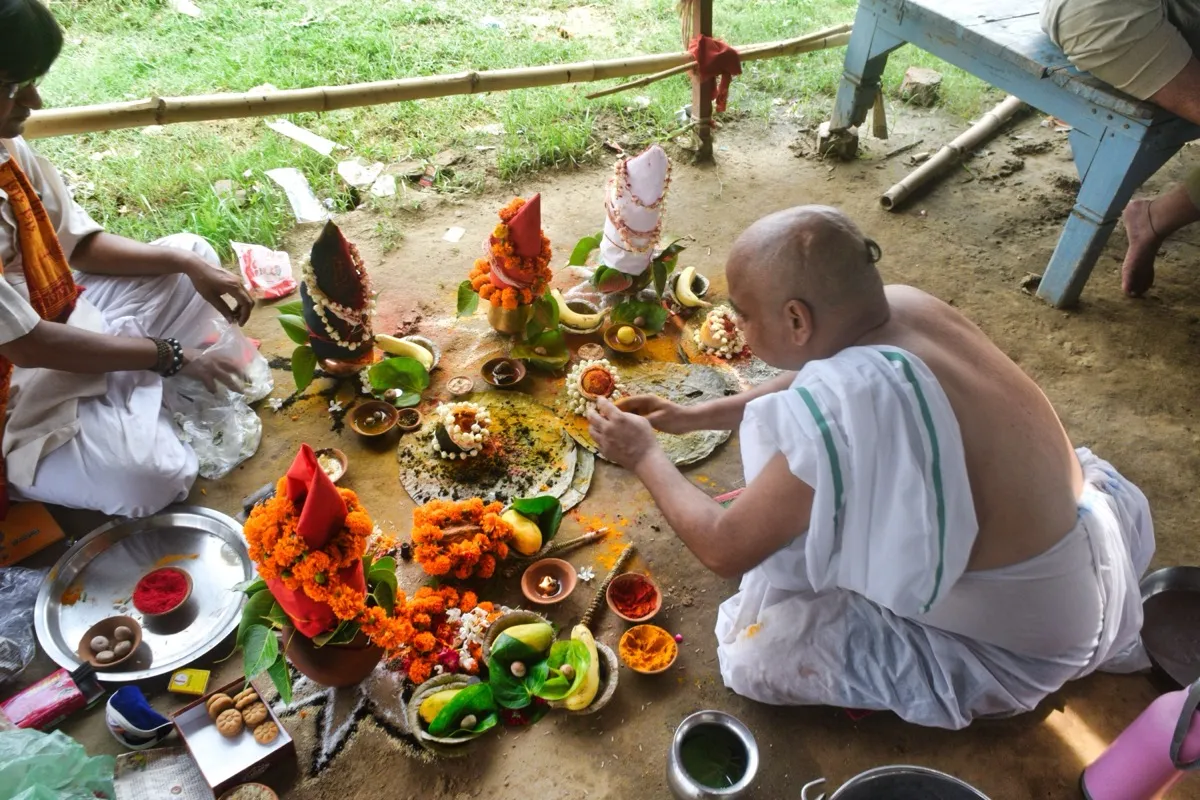
The ceremony begins with the chief mourner (karta) taking a purificatory bath and wearing clean white clothes. The pandit establishes the ritual space with Kusha grass and draws the sacred boundaries. The Sankalpa (formal vow of intent) is recited, naming the deceased, the karta, the gotra (family lineage), the date, and the specific purpose: “For the Sapindikarana of [name], to unite this soul with the ancestral lineage.”
Establishing the Four Pindas
Four Pindas (sacred rice balls mixed with sesame, ghee, and honey) are prepared. One represents the deceased (Preta Pinda). The other three represent the father, grandfather, and great-grandfather. Three separate vessels are established for the Arghya (water offering) of each ancestor.
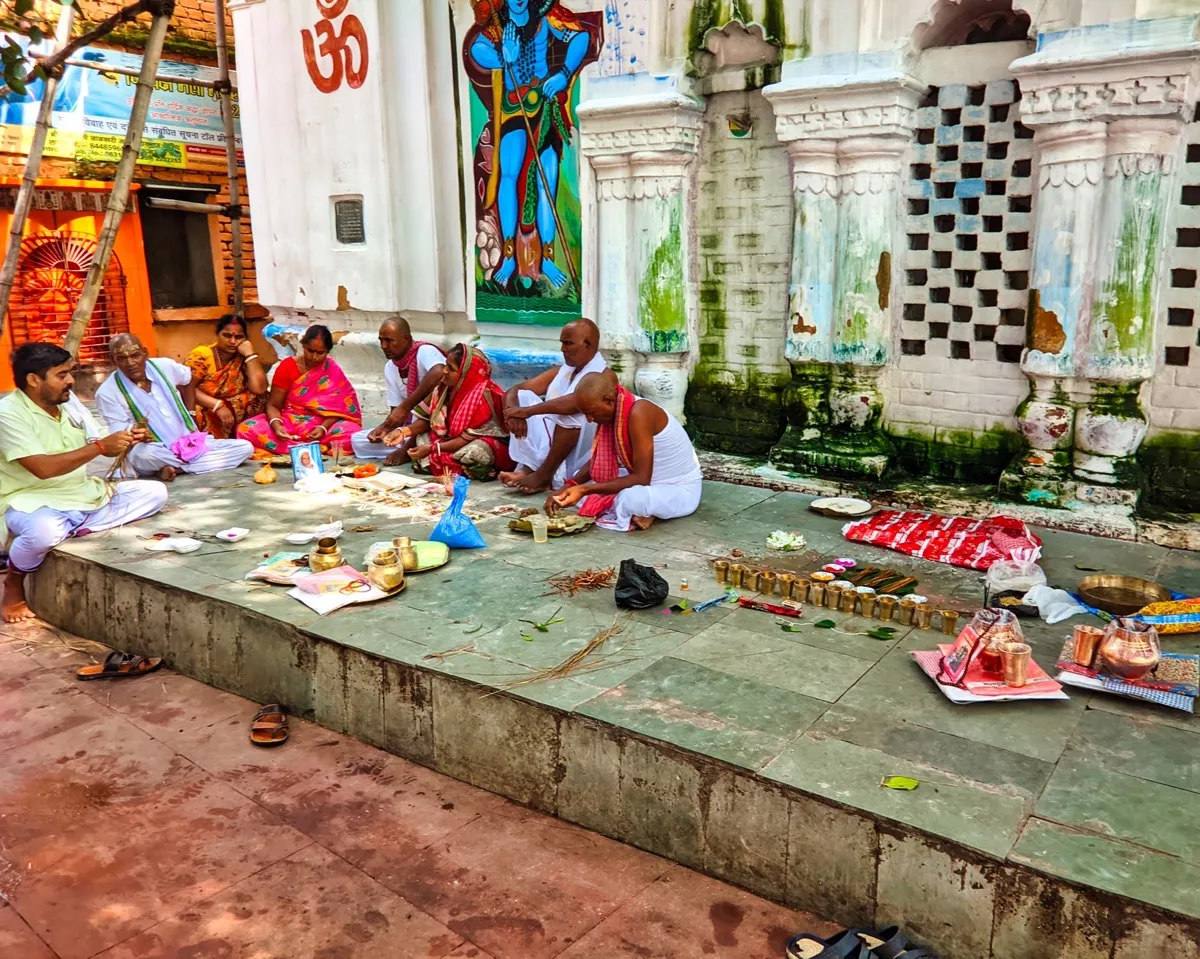
Arghya Samyojan — Merging the Water Offerings
Before the Pindas themselves are merged, the Arghya (water offering) of the deceased is united with the ancestors. The pandit takes the deceased’s Arghya and divides it into three equal parts, pouring each into the vessel of the father, grandfather, and great-grandfather respectively. This is done while chanting the mantra beginning with “Ye Samanah Samanasah…” — the same mantra that will be used for the Pinda merger.
The Pinda Merger — The Core of Sapindikarana
This is the climax of the entire post-death ritual sequence. The Preta Pinda is divided into three equal parts. Then:
- First part — Father’s Pinda: The pandit makes a small cavity in the Father’s Pinda. The first third of the Preta Pinda is placed into this cavity. The two are kneaded together into a single Pinda while the karta and pandit chant: “Ye Samanah Samanasah Pitro Yamarajye. Tesham Lokah Svadha Namo Yagyo Deveshu Kalpatam” — meaning: “Those ancestors who are equal and alike in the realm of Yama — may their world, their Svadha offering, their Yagya be fulfilled among the Devas.” This is followed by: “Ye Samanah Samanaso Jiva Jiveshu Mamakah. Tesham Shrirmai Kalpatamasmin Loke Shatam Samah” — “Those who are equal and alike among the living of my lineage — may prosperity be granted to them in this world for a hundred years.”
- Second part — Grandfather’s Pinda: The same procedure is repeated. A cavity is made in the Grandfather’s Pinda, the second third of the Preta Pinda is placed inside, and the two are kneaded together while chanting the same mantras.
- Third part — Great-grandfather’s Pinda: The final third of the Preta Pinda is merged into the Great-grandfather’s Pinda using the identical procedure and mantras.
Through this precise mantric and physical unification, the deceased is formally and permanently assimilated into the three generations of ancestors. The soul is no longer alone. It has a place, a lineage, and a name.
Completion and Brahmin Bhoj
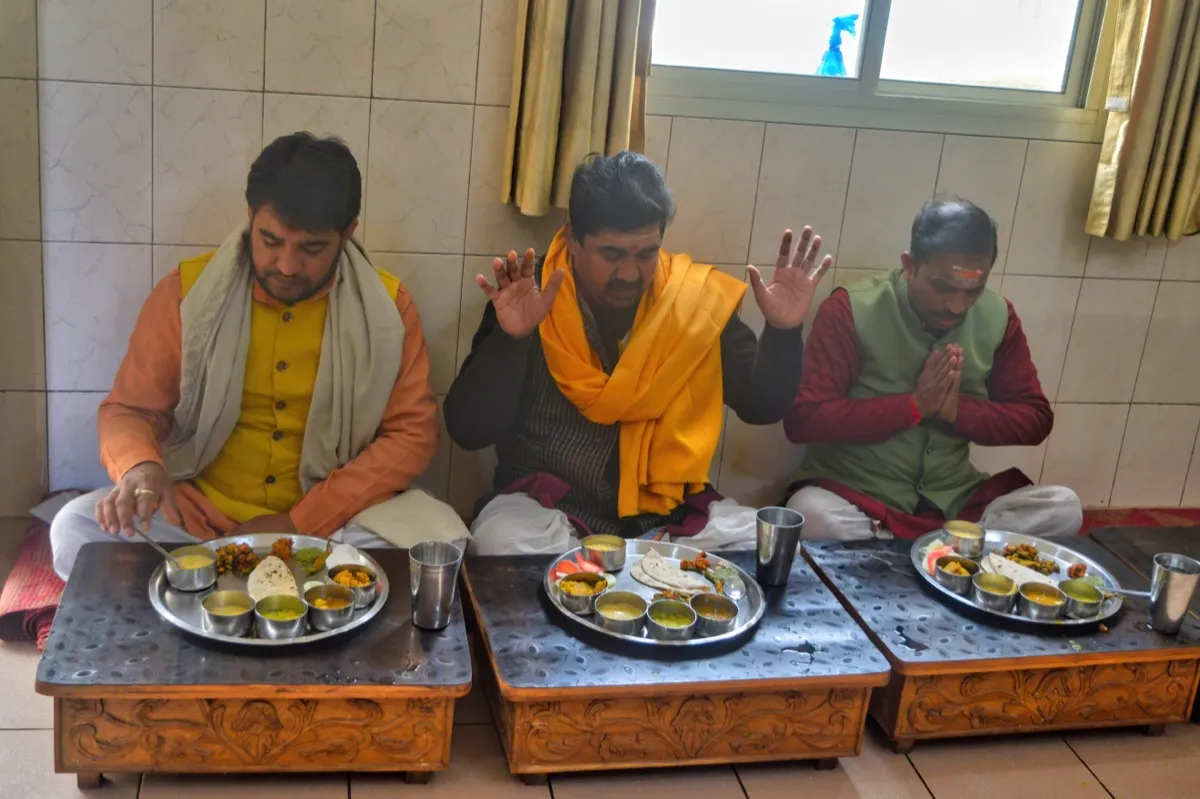
After the Pinda merger, the remaining ritual elements are completed: Tarpan (water offerings with sesame and Kusha grass), donations (Daan) in the name of the deceased, and Brahmin Bhoj — feeding one or more Brahmins. The Atharvaveda and the Manu Smriti state that offerings made to Brahmins reach the ancestors in whatever form they require. This feeding is not charity; it is the final act of nourishment that completes the soul’s transition.
The ceremony is now complete. The family’s period of active ritual obligation transitions from daily ceremony to annual Shradh — performed on the death anniversary tithi and during Pitrupaksha each year.
Sapindi Shradh vs Other Types of Shradh
The Hindu tradition prescribes multiple types of Shraddha, each serving a distinct purpose. Understanding where Sapindikarana fits helps families plan their ritual obligations correctly.
- Ekoddishta Shradh: Performed monthly during the first year after death. Dedicated to a single ancestor (the recently deceased). Does NOT include Vishwadeva invocation.
- Sapindi Shradh (Sapindikarana): Performed on the 12th day (or later). Merges the deceased with the ancestral lineage. After this, Ekoddishta Shradh becomes Parvana Shradh.
- Parvana Shradh: The regular annual Shradh performed on the death anniversary and during Pitrupaksha. Invokes Vishwadeva and addresses three generations of ancestors together. This is only possible AFTER Sapindikarana has been performed.
- Tripindi Shradh: A remedial ceremony performed when Shradh has been missed for three or more consecutive years. See our complete guide to Pind Daan for details.
- Vriddhi (Nandi) Shradh: Performed during happy occasions — weddings, births, house-warmings — to seek the ancestors’ blessings for the auspicious event.
The critical distinction: Parvana Shradh (the normal annual ceremony most families perform) is only valid AFTER Sapindikarana has united the deceased with the ancestral line. If Sapindikarana was never done, the annual Shradh addresses only the three pre-existing ancestors, and the most recently deceased — still a Preta — receives nothing.
Where to Perform Sapindi Shradh
Sapindikarana can be performed at home with a qualified pandit, or at a sacred tirtha for multiplied spiritual merit. The traditional sacred locations for this ceremony include:
- Prayagraj (Triveni Sangam): The king of all tirthas (Tirtharaj). Performing Sapindikarana at the confluence of the Ganga, Yamuna, and Saraswati is considered to deliver the greatest merit. Book Shradh at Prayagraj — from Rs. 5,100
- Varanasi (Kashi): The city of Moksha. Sapindikarana at Manikarnika Ghat or Pishach Mochan Kund carries special significance for liberating trapped souls. Book Shradh at Varanasi — from Rs. 5,100
- Gaya: The supreme tirtha for all ancestral rites, as named by the Garuda Purana.
- Haridwar: Har Ki Pauri and Brahmakund are traditional sites for Sapindikarana. Book Shradh at Haridwar — from Rs. 7,100
For NRI families who cannot travel to India, the entire Sapindikarana ceremony can be performed with live video participation. Our pandits conduct the complete ceremony at the tirtha while you participate via WhatsApp or Zoom. See our NRI Puja Services page for details.
Sapindi Shradh Cost
The cost varies by location and the comprehensiveness of the ceremony:
- Prayagraj (Triveni Sangam): Rs. 5,100 – Rs. 11,000 (includes Sankalp, Sapindikarana, Tarpan, Brahmin Bhoj, all samagri)
- Varanasi: Rs. 5,100 – Rs. 10,999
- Gaya: Rs. 10,999 – Rs. 14,500
- Haridwar: Rs. 7,100 – Rs. 11,000
- Online (for NRIs): Same pricing as in-person, with live video documentation included
All prices include samagri (ritual materials), Pandit Dakshina, and ceremony documentation. There are no hidden charges. Browse all Shradh services.
Who Should Perform Sapindikarana?
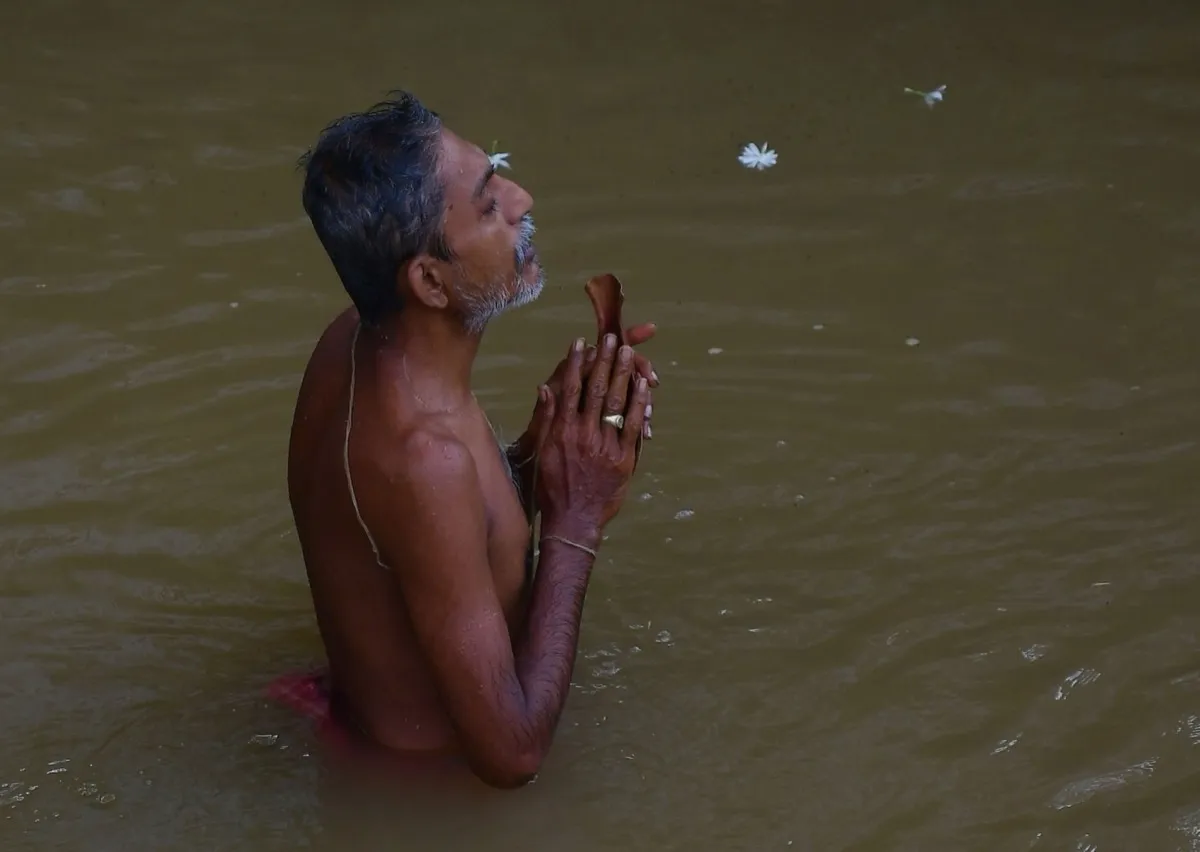
Traditionally, the karta (chief mourner) who has been performing the daily Pinda offerings during the Dashagatra period continues as the performer for Sapindikarana. This is typically the eldest son. However, the tradition recognizes several alternatives:
- If the eldest son is unavailable, a younger son, grandson, or nephew may perform.
- Daughters can perform Sapindikarana — the scriptures explicitly permit this, and we have guided many daughters through the ceremony.
- If no direct family member is available, a qualified Brahmin pandit can perform on behalf of the family, with the Sankalpa taken in the family’s name and gotra.
- The karta does not need to be physically present at the tirtha — for NRI families, the Sankalp details are shared and the pandit performs the ceremony with live video confirmation.
Book Sapindi Shradh
Performed by Experienced Teerth Purohits at Sacred Tirthas
From Rs. 5,100
- Complete Sapindikarana with Vedic mantras and Pinda merger
- Available at Prayagraj, Varanasi, Gaya, and Haridwar
- Live video ceremony for NRI families worldwide
- All samagri, Brahmin Bhoj, and Tarpan included
Frequently Asked Questions
Sapindikarana is the Shraddha ceremony where the deceased’s Pinda (rice offering) is physically merged with the Pindas of the father, grandfather, and great-grandfather. This transforms the soul’s status from Preta (wandering ghost) to Pitri (revered ancestor). The sages recommend performing it on the 12th day after death, though it can be done up to one year later.
Without Sapindikarana, the soul’s ghost-state (Pretatva) is never destroyed. It cannot enter the ancestral realm or receive future Shraddha offerings alongside the other ancestors. This is one of the primary causes of Pitra Dosh — the ancestral affliction that manifests as chronic illness, childlessness, and financial stagnation in the living family.
Yes. While the 12th day is recommended, there is no absolute deadline. Many families we serve perform Sapindikarana months or years after the death — particularly NRI families or those who were unaware of the requirement. The ceremony is equally valid whenever it is performed. If the delay exceeds one year, we typically combine it with a comprehensive Shradh ceremony at a sacred tirtha.
Sapindi Shradh (Sapindikarana) is a one-time ceremony that merges the deceased into the ancestral lineage. Parvana Shradh is the regular annual Shraddha performed on the death anniversary and during Pitrupaksha. Parvana Shradh is only valid AFTER Sapindikarana has been done — it addresses the three generations together, which is only possible once the deceased has been formally united with them.
Yes. The scriptures permit daughters, wives, and other female family members to perform Sapindikarana. In our practice, we have guided many women through the complete ceremony. The spiritual validity of the rite does not depend on the gender of the performer — it depends on the sincerity of the Sankalp and the correctness of the procedure.
At Prayagraj (Triveni Sangam), the complete ceremony including Sapindikarana, Tarpan, Brahmin Bhoj, and all samagri starts at Rs. 5,100. Varanasi is similar. Gaya ranges from Rs. 10,999 to Rs. 14,500. The online option for NRI families is the same price as in-person, with live video included. All prices are final — no additional charges at the ghat.
Parvana (Parwan) Shradh is the standard Shraddha ceremony performed on Amavasya, during Pitrupaksha, or on the annual death anniversary. It invokes the Vishwadeva and addresses three generations of ancestors simultaneously. Parvana Shradh becomes the regular ongoing obligation of the family after the one-time Sapindikarana ceremony has been completed.
Yes. Our pandits perform the complete Sapindikarana at the tirtha of your choice — Prayagraj, Varanasi, or Haridwar — with live video via WhatsApp or Zoom so you can witness and participate. The Sankalp is taken in your name and family gotra. Contact us at +91 7754097777 to arrange.
अपना पवित्र अनुष्ठान बुक करें
भारत भर के पवित्र स्थलों पर वेद-प्रशिक्षित पंडितों द्वारा वीडियो प्रमाण सहित प्रामाणिक अनुष्ठान।
2,263+ परिवारों की सेवा
वीडियो प्रमाण शामिल
2019 से
