Key Takeaways
- The Garuda Purana Mechanism: How Ancestors Actually Receive the Food
- How Many Brahmins to Feed — The Rule by Ceremony
- What to Cook for Brahmin Bhoj — The Complete Sattvic Menu
- The Correct Timing of Brahmin Bhoj Within the Death Rites Cycle
In This Article
In the first days after a death in a Hindu family, grief arrives alongside a quiet and urgent question: what can we still do for the one who has left? The Brahmin Bhoj — the ritual feast in which learned Brahmins are invited, fed with devotion, and sent away honoured — is one of the most direct answers the scriptures offer. This is not hospitality. This is a transfer of spiritual nourishment across the boundary that separates the living from the dead.
The Garuda Purana describes ancestors in the period after death as Manojava — those who travel at the speed of thought. The moment their descendants remember them and call them through sacred mantras, they arrive at the ritual site instantly. Yet because they no longer possess a physical body, they cannot eat. They receive the essence — the Kavya, the subtle fragrance and vitality of the food — through the mouths and bodies of the Brahmins who have been ceremonially installed as their representatives. The Manu Smriti confirms this: “Brahmanasya mukhena tu pitaro’shnanti sadaa” — “the ancestors always eat through the mouth of the Brahmin.”
This article is a complete, practical guide: how many Brahmins to feed and when, what to cook, what to avoid, how much to expect to spend, and how families — including those living abroad — can arrange this sacred duty at the great tirthas of Prayagraj, Gaya, and Varanasi.
The Garuda Purana Mechanism: How Ancestors Actually Receive the Food
Understanding the why of Brahmin Bhoj changes how you approach it. It is not metaphor or symbol. The Garuda Purana, in its Preta Kalpa section, explains the mechanics in detail that would astonish a modern reader.
After the body is cremated and the preta (newly departed soul) begins its journey through the fourteen post-death stages, it exists in what the Skanda Purana calls the Aativahik Sukshma Sharir — a subtle vehicle made of prana and air. This form has appetite, thirst, and the capacity for suffering, but no mouth with which to eat. When the rites are performed correctly — the Tarpan given with sesame and water, the Pind Daan offered at the right tirtha — the departed soul receives relief. But the most sustained and complete nourishment comes through the Brahmin Bhoj.
The Atharvaveda states this plainly: food that is properly established among Brahmins reaches the ancestors and secures for them the heavenly realms. The qualifier “properly established” is the key — the Brahmins must be invited with a formal Nimitta (reason declaration), seated, honoured with water, and fed in silence or with Vedic chanting. If the feast is hurried, or if Brahmins are chosen carelessly, or if prohibited food is served, the Garuda Purana warns that the ancestors receive nothing — they remain hungry, angry, and unable to progress on their journey.
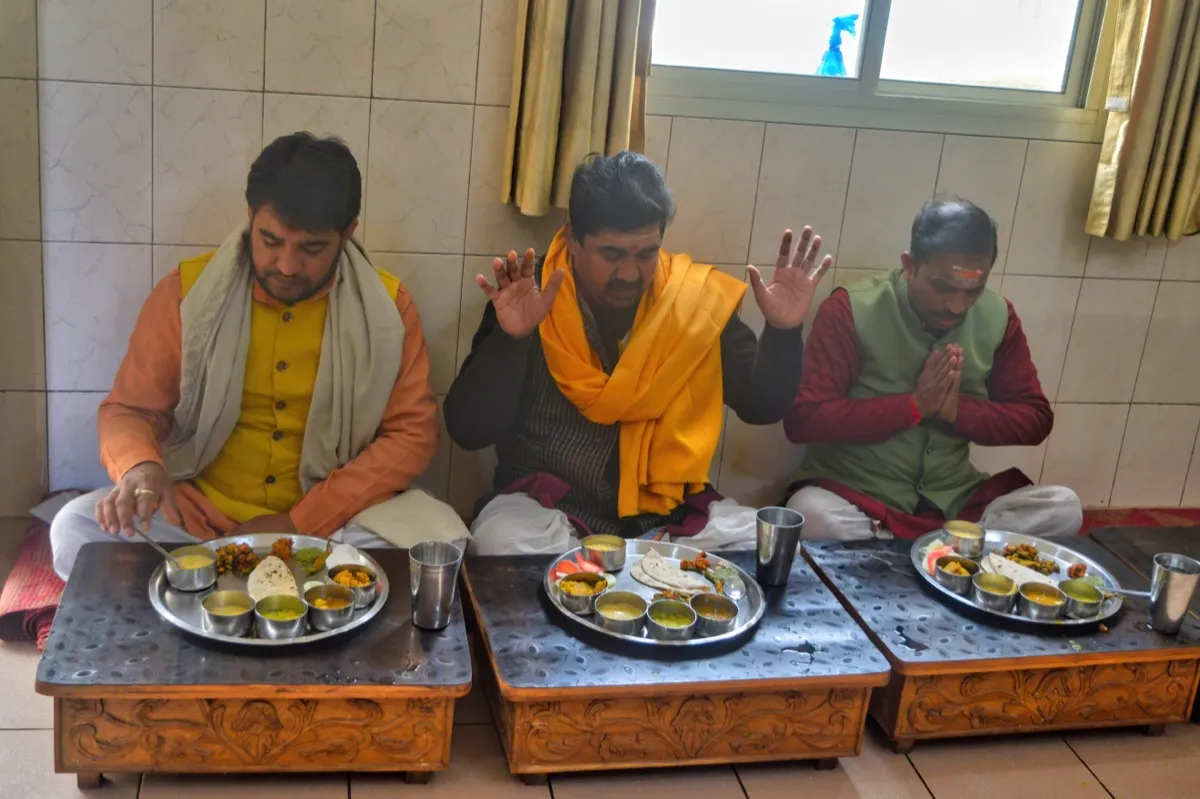
The Vishnu Purana adds a consequence verse that families performing these rites should understand: ancestors who are denied Brahmin Bhoj in the year following death wander without provisions. The Sanskrit word used is Patheya — the traveller’s ration. Brahmin Bhoj is the food packed for the ancestor’s long journey to the next birth. When it is given with devotion, the journey is eased. When it is withheld, the soul travels hungry.
How Many Brahmins to Feed — The Rule by Ceremony
One of the most common questions Prayag Pandits receive is: how many Brahmins do we need? The scriptures give clear, ceremony-specific answers. The number varies because different rites invoke different classes of ancestors and carry different levels of spiritual weight.
| Ceremony | Brahmins — Prescribed | Minimum If Full Not Possible | Notes |
|---|---|---|---|
| Terahvi / 13th Day (Ekoddhishta) | 1–3 (maximum 3 per Manu Smriti) | 1 devout Brahmin | Dedicated to the newly deceased only; inviting more than 3 is not prescribed for Ekoddhishta Shradh |
| Monthly Masik Shradh | 1–3 | 1 | Observed on death tithi each month for the first year |
| Pitrupaksha (Parvana Shradh) | 9 ideally | 3; at absolute minimum 1 | Invokes three generations; Vishwamitra Smriti says “nine is the complete number” |
| Amavasya Shradh | 3–9 | 1 | Monthly Parvana; same rule as Pitrupaksha applies |
| Barsi / Annual Shradh | As many as the family can host | 1 | Garuda Purana calls Barsi the grandest ancestral feast; more Brahmins = greater ancestral satisfaction |
| Sapindikarana (Day 12 rite) | 4 minimum | 4 | Specialist rite elevating preta to pitru status; the four Brahmins represent the three forefathers plus the Vishvedevah |
An important distinction often missed: the terahvi follows the Ekoddhishta rule (maximum 3 Brahmins, dedicated to one departed soul), while Pitrupaksha follows the Parvana rule (up to 9 Brahmins, invoking three generations simultaneously). Feeding 13 Brahmins at terahvi, as is common in some regions, is a cultural custom derived from the number “thirteen” — it is not scriptural, but it is not forbidden either, provided the additional Brahmins are also properly honoured.
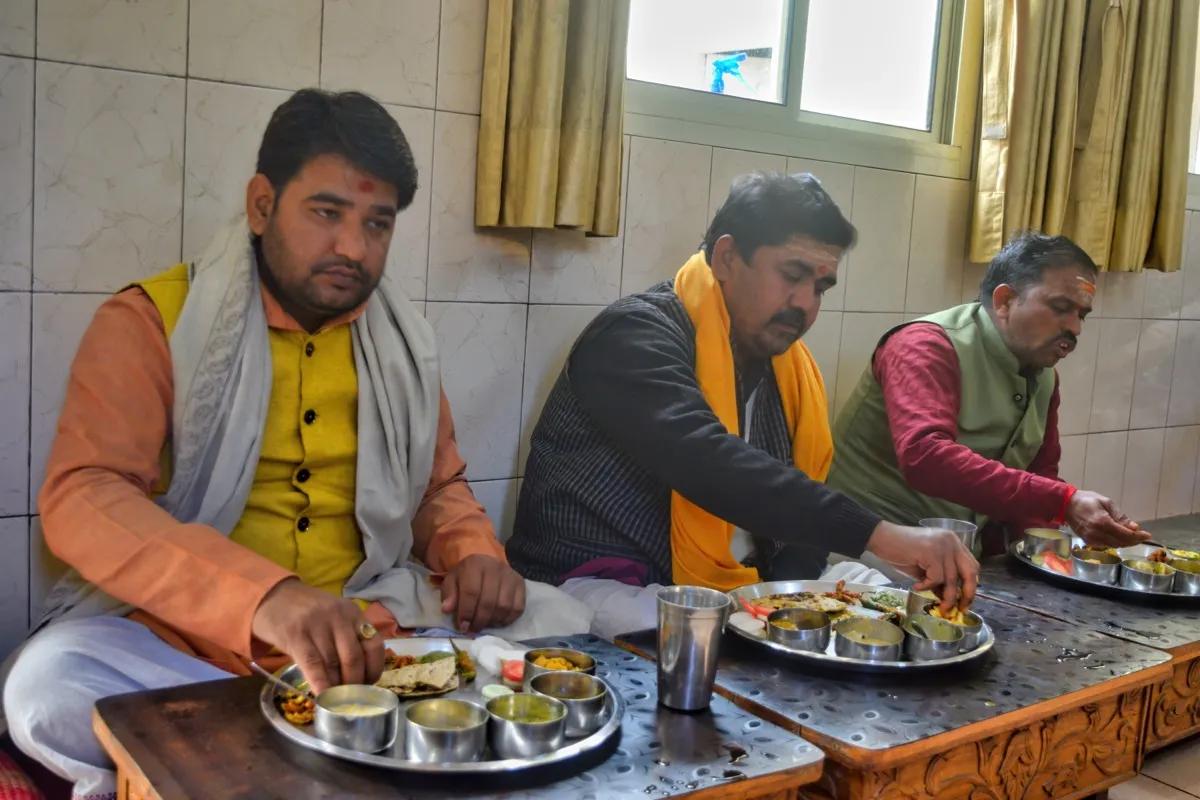
What to Cook for Brahmin Bhoj — The Complete Sattvic Menu
The food for Brahmin Bhoj follows the same purity logic as the pinda — what you offer must be capable of travelling across the subtle boundary to the ancestor. This means Sattvic food only: no stimulants, no tamasic ingredients, nothing that inflames passion or dulls awareness.
The Garuda Purana names Kheer (Payas) first among prescribed items, saying it is “extremely pleasing to the ancestors” — the Devanagari phrase used is pitrbhyah parama priya. After Kheer:
- Grains and staples: Plain rice, barley (Jau), wheat rotis prepared with ghee, mung dal
- Cow products: Cow’s ghee used generously in cooking, cow’s milk, curd — the Garuda Purana notes that Brahma created cows first among all beings, so cow products carry inherent sanctity
- Sweeteners: Jaggery (Gud), honey (added cold, not cooked), natural sugar
- Sesame: Black sesame (Kala Til) — added to rice, used in sweets — the Vishwamitra Smriti says til-mixed food satisfies even the most hungry ancestor
- Seasonal fruits: Mango, pomegranate, coconut, dates, grapes, amla (Indian gooseberry), bel fruit, parwal
- Vegetables: Lauki (bottle gourd), tinda, ridge gourd — all Sattvic gourds are permitted
There is a practical side to this list: many of these items are precisely what a family would prepare for any guest of high standing — clean, simple, generous cooking without shortcuts. The Brahmins should feel that the family has given its best. The Garuda Purana specifically notes that food prepared with even the slightest sense of complaint or reluctance fails to reach the ancestors. The bhava (intention) behind the cooking is as important as the ingredients.
Prohibited Ingredients — The Full List
The Vishwamitra Smriti records the prohibitions in detail. Serving any of the following — even in small quantities mixed into another dish — invalidates the Brahmin Bhoj for ancestral purposes:
- Alliums: Onion, garlic — absolutely forbidden
- Prohibited lentils: Masoor dal, arhar (toor) dal, rajma (kidney beans), chana (gram), kulthi — all specifically named
- Prohibited vegetables: Brinjal (baingan), carrot, turnip, round gourd, pumpkin (Kumhda)
- Prohibited spices/condiments: Black salt (Kala Namak), hing (asafoetida), black cumin (Kali Jeera)
- Other banned items: Alcohol in any form, water chestnut (Singhada), Mahua, any stale or reheated food, food that a dog has looked at, food touched by unclean hands
- Meat, fish, eggs: Entirely forbidden — this applies to all forms, including egg-based sweets
The prohibition on onion and garlic surprises some modern families who routinely cook with them. The scriptural reasoning is that both are Tamasic — they stimulate desire and anger rather than the Sattvic calm required for ancestral rites. The Manu Smriti groups onion and garlic with meat in the category of items that make Shradh offerings ineffective.
The Correct Timing of Brahmin Bhoj Within the Death Rites Cycle
Brahmin Bhoj is not a single event — it recurs at several points across the death rites cycle, each time with a different significance and scale.
Day 13 — Terahvi: The Mandatory Brahmin Bhoj
The terahvi is the first formal Brahmin Bhoj in the death rites cycle and is considered mandatory. It takes place on the thirteenth day after death — or in some regional traditions, after the Sapindikarana rite on day twelve is completed. The rite formally ends the acute mourning period (Ashoucha) and transitions the family from impurity to restored participation in society.
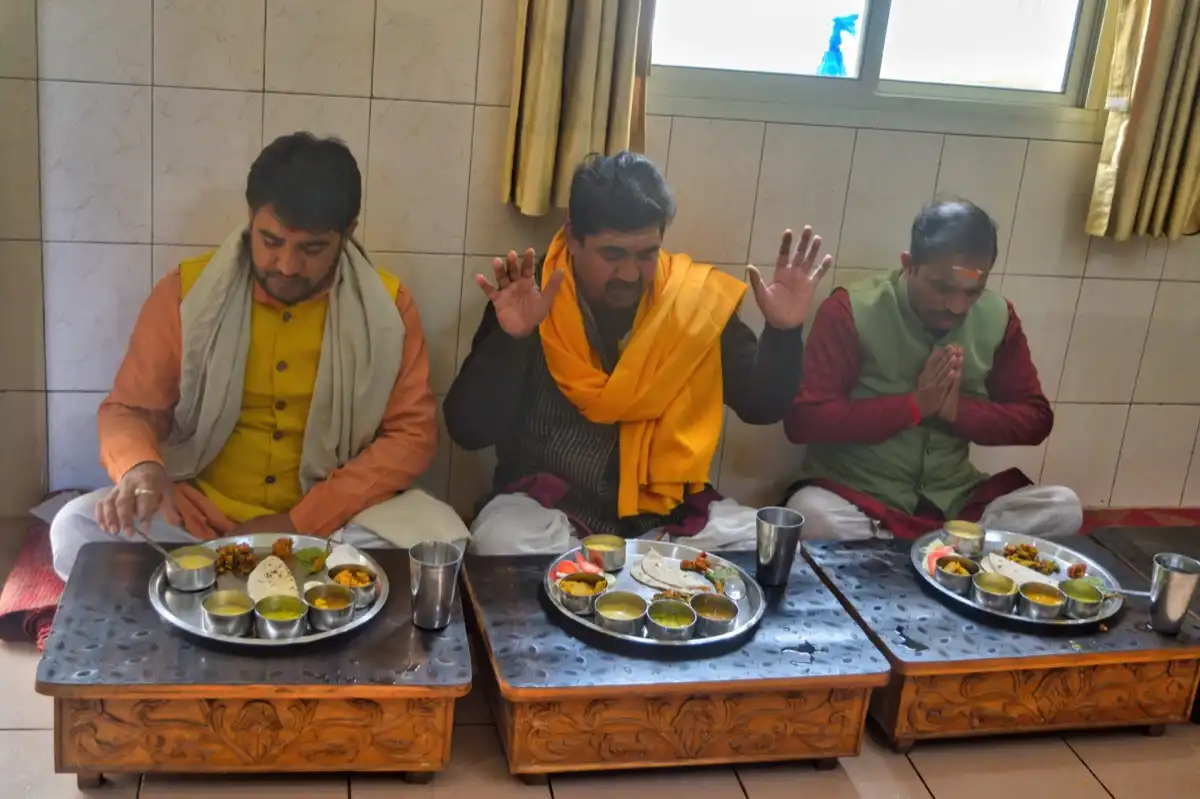
The Brahmin Bhoj on terahvi follows the Ekoddhishta rules: a maximum of three Brahmins, food cooked without onion or garlic, the Brahmin seated facing east, water offered before the meal begins, and Dakshina (cloth plus a silver coin or its cash equivalent) given before they leave the seat. The meal concludes with the family bowing at the feet of the Brahmins and formally seeking their blessings for the departed soul’s peaceful journey.
The Garuda Purana says that when the Brahmins rise satisfied from the terahvi meal, they carry the ancestor’s subtle form with them — nourished, at peace, and ready to proceed toward the next destination.
Monthly Masik Shradh: Sustained Nourishment for One Year
Following the terahvi, the family observes Masik Shradh on the death tithi of each subsequent month for the full first year. Each of these monthly rites includes a small Brahmin Bhoj — in many households this is scaled to one or three Brahmins given a simple meal of kheer, rice, and ghee. The cumulative effect of twelve monthly Brahmin Bhojs across the first year is described in the Vishnu Purana as “sustained provision for the departed soul’s journey” — the equivalent of monthly income sent to a traveller far from home.
Barsi — The First Anniversary: The Grand Brahmin Bhoj
The Barsi (first death anniversary) is the occasion for the largest Brahmin Bhoj in the entire death rites cycle. The Garuda Purana gives it exceptional emphasis: this is when the ancestor has completed the first stage of their post-death journey and stands at the threshold of assignment to a new birth or to a higher realm. The quality of this Brahmin Bhoj — the number of Brahmins, the richness of the food, the sincerity of the Dakshina — has direct bearing on that assignment.
Families who cannot host large numbers of Brahmins at terahvi or during the monthly rites should concentrate their resources on the Barsi. The Garuda Purana is explicit: “at the annual Shradh, many Brahmanas should be feasted and the food should be extraordinarily satisfying.” This is not a guideline for the wealthy alone — the emphasis is on the proportion of what is given relative to what the family can give, not on an absolute number.
Pitrupaksha: The Annual Collective Brahmin Bhoj
During the sixteen days of Pitrupaksha (September–October each year), the Brahmin Bhoj shifts from the Ekoddhishta form (one ancestor) to the Parvana form (all three generations simultaneously). This is when the Parvana Shradh rules apply — up to nine Brahmins, three generations invoked, the food offered under the Vishvedevah rituals as well.
Many families perform their most elaborate Brahmin Bhoj of the year during Pitrupaksha, particularly on the tithi (lunar day) matching their ancestor’s death date or on Sarva Pitru Amavasya — the day when ancestors of all death tithis are collectively honoured.
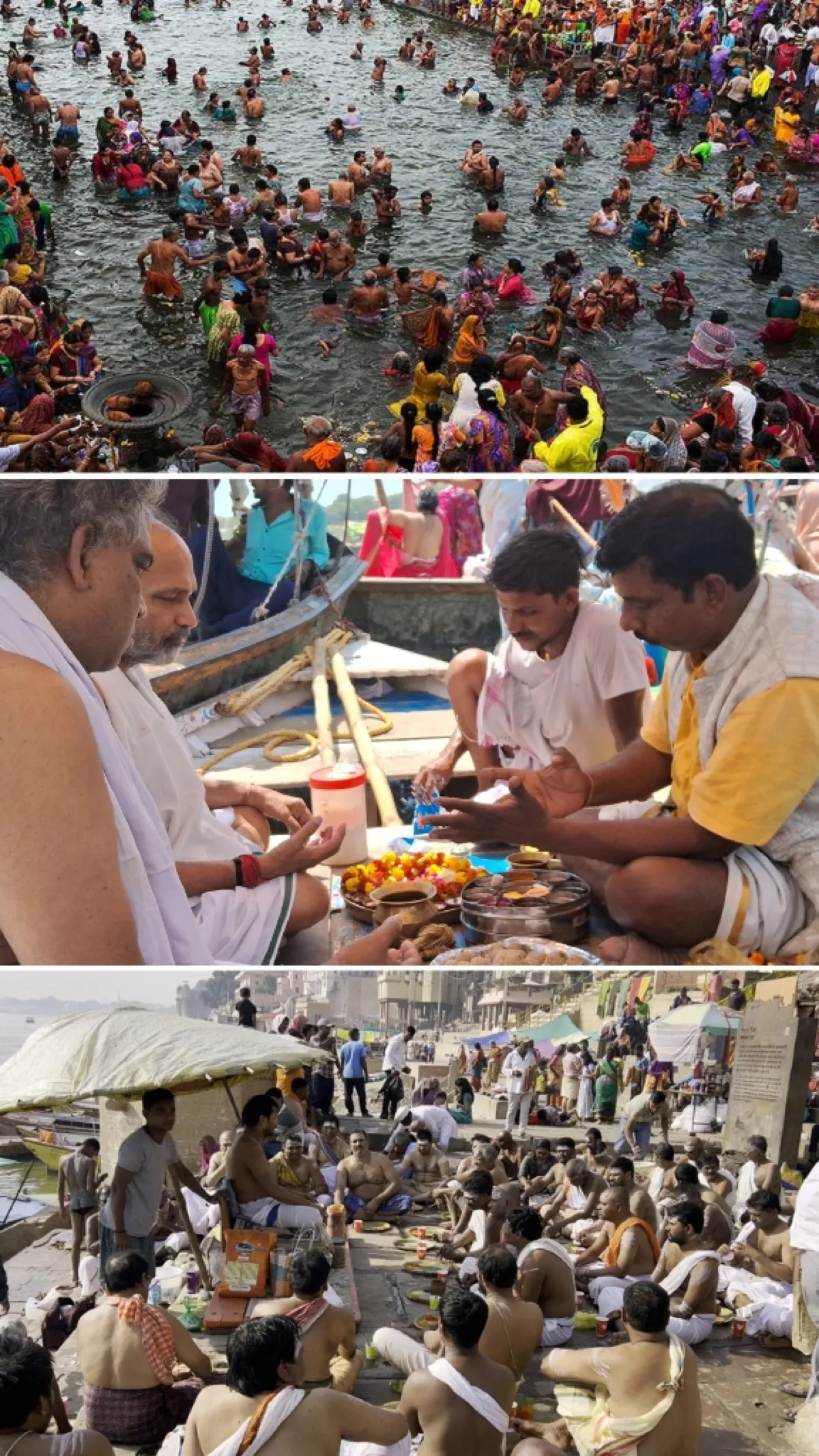
Dakshina — What the Brahmins Must Receive Before Leaving
Brahmin Bhoj is incomplete without Dakshina. The Manu Smriti is explicit: a Brahmin who eats at a Shradh but is not given Dakshina takes the food away with him — the ancestor receives nothing. The meal alone is not the offering. The Dakshina completes the circuit.
Prescribed Dakshina items in the classical texts:
- Cloth (Vastra): At minimum a clean dhoti or cloth piece — symbolises the Brahmin’s labour of carrying the ancestor’s nourishment
- Silver (Rajat): A silver coin or equivalent amount in cash — silver is associated with the moon (which governs the ancestral realm, Pitru Loka)
- Sesame (Til): A handful of black sesame, given in the palm
- Tambula: Betel leaf, betel nut, and a small wrapped offering — symbolises honour and completion
The timing of Dakshina is precise: it is given before the Brahmin rises from the seat. Once he has stood and his feet have touched the ground, the Dakshina given is counted as a later gift, not as part of the Shradh offering. Families who perform Brahmin Bhoj at sacred tirthas through a pandit service will have this managed — the Prayag Pandits at Triveni Sangam follow this protocol as part of every arranged Brahmin Bhoj ceremony.
Brahmin Bhoj at Sacred Cities — Cost and What Is Included (2026)
Performing Brahmin Bhoj at a sacred tirtha carries multiplied merit. The Matsya Purana states that Shradh performed at Prayagraj is ten times more effective than Shradh at an ordinary location. The Vayu Purana places Gaya at the apex for ancestral rites, saying that even a single pinda and a single Brahmin Bhoj at Gaya can liberate seven generations. The spiritual geography of where the Brahmin eats matters.
Prayagraj (Triveni Sangam)
Prayagraj is the confluence of the Ganga, Yamuna, and the invisible Saraswati — the Triveni Sangam. Performing Brahmin Bhoj here, after the completion of Tarpan and Pind Daan at the Sangam, creates an unbroken chain of ancestral nourishment: water offerings, pinda offerings, and the feast all given at the most sacred tirtha in North India.
- Online Brahmin Bhoj / Shradh / Pitrapaksha in Prayagraj — ₹21,000 (Regular ₹31,000). Includes complete Shradh puja, five Brahmin Bhoj with Dakshina, and a live video for families who cannot travel.
- Pind Daan at Haridwar with 5 Pandits Brahmin Bhoj — ₹24,999 (Regular ₹31,999). Complete Haridwar Pind Daan at Har Ki Pauri with full Brahmin Bhoj and prasad dispatch.
Gaya (Bihar)
Gaya holds a unique position in Brahmin Bhoj theology. The Vayu Purana says that at Gaya, the Vishnupada Temple acts as a direct conduit to Vishnuloka — ancestors whose descendants perform Pind Daan and Brahmin Bhoj here receive Vishnu’s direct blessing and liberation from the cycle of rebirth. For families whose primary goal is liberation of the departed soul rather than merely comfort in the ancestral realm, Gaya is the prescribed location.
- Online Pind Daan in Gaya with Brahmin Bhoj — ₹14,500 (Regular ₹16,500). Complete Gaya Pind Daan at the 48 ritual sites followed by Brahmin Bhoj, with live video streaming.
Garh Mukteshwar
Garh Mukteshwar on the Ganga is the traditional site for families from Delhi NCR and western Uttar Pradesh. The name itself — Garh Mukta, the fort of liberation — signals its ancestral significance. Brahmin Bhoj here is performed on the Ganga ghats after Pind Daan.
- Brahmin Bhoj at Garh Mukteshwar / Shradh at Garh Mukteshwar — ₹21,000 (Regular ₹25,000). Includes complete Shradh puja, Pind Daan, and Brahmin Bhoj at the Ganga ghats.
Which Tirtha for Brahmin Bhoj?
If the soul died a natural death and the family seeks comfort and progression for the ancestor — Prayagraj is ideal. The Triveni Sangam amplifies all offerings.
If the goal is liberation (Moksha) from the cycle of rebirth — Gaya is the Purana-prescribed location. The Vishnupada rite at Gaya is called Gaya Shradh and is specifically designed to end ancestral suffering across seven generations.
If the family cannot travel far from Delhi NCR — Garh Mukteshwar on the Ganga provides the sacred river setting with full ritual validity.
Complete guide to Pind Daan at Gaya — rituals, sites, timing, and how Brahmin Bhoj at Gaya differs from other tirthas
Shradh at Prayagraj — complete guide to performing ancestral rites at Triveni Sangam with Brahmin Bhoj
The Brahmin Selection Rule — Who Qualifies and Who Does Not
The quality of the Brahmin matters as much as the quality of the food. The Vishwamitra Smriti lists the characteristics of a Brahmin who is fit to be invited for Shradh. Key qualifications:
- Observes daily Sandhyavandanam (morning and evening prayers)
- Knows at least the basic Vedic mantras related to ancestral rites
- Does not accept Dakshina from sources of unclean livelihood
- Is not afflicted with infectious illness on the day of the feast
Brahmins who are explicitly disqualified in the Vishwamitra Smriti include those who sell the Vedas commercially, those who perform rites for money without genuine learning, and those who eat food during an ongoing Brahmin Bhoj at a different house on the same day. The last restriction explains why at sacred tirthas like Gaya and Prayagraj, the hereditary priests (Gayawals and Prayagwals) rotate carefully among the families they serve — a Brahmin who has already eaten at one Shradh that day cannot participate effectively in another.
This is one reason why families arranging Brahmin Bhoj through a trusted service provider — rather than hiring unknown pandits on the day — tend to get better outcomes. The Prayag Pandits team vets the participating Brahmins against these criteria and ensures no conflicts on high-ritual days like Amavasya or Pitrupaksha dates.
Brahmin Bhoj for NRI Families — The Online Arrangement
One of the most common questions Prayag Pandits receives from NRI families is whether Brahmin Bhoj can be arranged on their behalf, with the family watching from overseas. The answer is yes — and the scriptural validity of proxy performance is established in the Garuda Purana and the Dharma Sindhu both.
The key condition for proxy Brahmin Bhoj is intent (Sankalpa): the family member commissioning the rite must perform the Sankalpa — the formal declaration of their name, gotra, the departed soul’s name, and the intention of the rite — either in person or by communicating it clearly to the officiating pandit who then performs it on their behalf. The Dharma Sindhu confirms that Sankalpa by proxy, when the commissioning family member is genuinely unable to travel, carries full validity.
What NRI families should ensure when booking an online Brahmin Bhoj service:
- Name and Gotra of the deceased must be provided — these are recited during the Nimitta and the Sankalpa
- Death tithi (lunar date) should be provided if known — the pandit will identify the correct ritual timing
- Live video feed should be confirmed before booking — the Prayag Pandits service includes live streaming via WhatsApp video or Zoom so the family can witness the rite in real time
- Prasad dispatch — confirm whether the service includes sending sacred prasad from the tirtha to the family’s address
Families unable to attend in person can connect via WhatsApp at +91-7754097777 for a consultation before booking.
Puja services for NRI families — complete overview of what can be arranged remotely, including Brahmin Bhoj, Pind Daan, and Tarpan
Complete guide to Hindu death rituals — the full sequence from cremation through Sapindikarana and annual Shradh
Pitra Dosh and the Healing Role of Brahmin Bhoj
One of the reasons Brahmin Bhoj receives such emphasis in modern astrological and remedial contexts is its documented capacity to reduce the effects of Pitra Dosh — the ancestral affliction that manifests in a horoscope when Rahu is conjunct or aspecting the Sun in the 9th house, or when a cluster of planets occupies the first house.
The Brahma Purana states directly: Shraddham na kurute yastu pitaras tasya nishphalaah — “For one who does not perform Shradh, the ancestors become fruitless (their blessing is withheld).” The reverse is also true: consistent Brahmin Bhoj — on the death tithi, on Amavasya, and during Pitrupaksha — gradually restores the ancestral blessing and reduces the obstacles associated with Pitra Dosh over a period of three years of consistent observance.
The Garuda Purana adds a specific sequence for those seeking Pitra Dosh remedy: Pind Daan at Gaya (for full liberation of the afflicting ancestor), followed by Brahmin Bhoj at Gaya or Prayagraj, followed by Tripindi Shradh if the Pitra Dosh is severe. This three-part sequence addresses the root cause (the ancestor’s unsatisfied state) rather than only the astrological symptom.
Brahmin Bhoj Services — Book with Prayag Pandits
Brahmin Bhoj at Prayagraj
Complete Shradh puja + 5-Brahmin feast at Triveni Sangam. Live video included.
₹21,000 (Regular ₹31,000)
Brahmin Bhoj at Haridwar
Pind Daan at Har Ki Pauri + full Brahmin Bhoj with Dakshina and prasad.
₹24,999 (Regular ₹31,999)
Pind Daan + Brahmin Bhoj at Gaya
Complete Gaya Shradh at 48 ritual sites + Brahmin Bhoj. Live streaming available.
₹14,500 (Regular ₹16,500)
Brahmin Bhoj at Garh Mukteshwar
Shradh puja + Brahmin Bhoj at Ganga ghats. Ideal for Delhi NCR families.
₹21,000 (Regular ₹25,000)
Arrange Brahmin Bhoj for Your Family
Starting from ₹14,500 — includes ritual, Brahmin feast, Dakshina, and live video
- Vedic Brahmin Bhoj following Manu Smriti and Garuda Purana protocols
- Performed at Prayagraj, Gaya, Haridwar or Garh Mukteshwar
- Live WhatsApp / Zoom video for NRI families
- Name + Gotra recitation in Sankalpa — full scriptural validity
- Experienced Prayagwal and Gayawal hereditary priests
Book Your Sacred Ritual
Authentic ceremonies performed by Veda-trained pandits at sacred sites across India.