अभी तक कोई अनुष्ठान नहीं चुना गया।
पूजा पैकेज देखें →मुख्य बिंदु
इस लेख में
For Bengali Hindu families, পিণ্ড দান (Pind Daan) at Gaya is not merely a religious obligation — it is the most sacred act a son can perform for his departed parents and ancestors. The Agni Purana declares plainly that a man fulfills his true duty as a son only by travelling to Gaya and offering Pinda at the sacred vedis. If he fails to do so, his ancestors grieve, and every other pious act he performs loses its full merit.
This is a sentiment that resonates in every Bengali household. From Calcutta to Chittagong, from Dhaka to the diaspora in London and New Jersey, Bengali families carry this understanding: that the ultimate act of pitru sheva (ancestral service) is the Gaya yatra.
This guide covers everything Bengali families need to know: the Puranic basis for Gaya’s supremacy, the special significance of Mahalaya Amavasya for Bengali tarpan, the differences between Bengali and North Indian Shraddha Paddhati, step-by-step Pind Daan procedure at Gaya, travel from Kolkata, costs, and how to book a Bengali-speaking Teerth Purohit who understands your gotra and tradition.
Why Bengali Families Travel to Gaya for Pind Daan
The pilgrimage to Gaya for Pind Daan has deep roots in Bengali religious culture. Historically, Bengali families would travel to Gaya during the winter months — December through February — after the rice harvest (Aman dhaan), when the agricultural cycle gave families both the time and the financial means to undertake the journey. This post-harvest tradition mirrors that of Odia families, who travel from Odisha for the same purpose during the same season.
The scriptural basis for Gaya’s unique power comes from a story recorded in the Agni Purana. The demon Gaya practised such fierce penance that his heat tormented the celestials, who approached Lord Vishnu for protection. Vishnu granted Gaya Asura the boon that his body would become the holiest place in creation — worshipped by Vishnu, Shiva, and Brahma together — and that all ancestors for whom rites and Pindas are offered at this place would permanently attain the Brahmaloka. This is why Gaya is called Pitru Teertha, the tirtha that belongs to the ancestors.
The Agni Purana specifies the extraordinary result: by offering a single Pinda at Rudrapada or Gayasiras, a devotee elevates not just one ancestor but hundreds of generations of his family — paternal and maternal alike. The Garuda Purana confirms this, stating that Shradh performed at Akshayvata (the indestructible banyan tree of Gaya) enables the devotee to uplift a hundred generations and attain everlasting worlds. The number quoted across the texts is consistently shat kula — one hundred family lines.
For Bengali families, this scriptural guarantee has translated into a living pilgrimage tradition. The Gaudiya Shraddhaprakash — the authoritative Bengali-language compendium of ancestral rites — cites the Agni Purana in recommending Gaya Shradh as a Dwadashadaivatya Shradh, an offering made to twelve ancestors including the father, grandfather, great-grandfather, mother, grandmother, great-grandmother, and both the paternal and maternal lineages with their wives. This twelve-ancestor framework gives the Bengali Gaya Shradh its particular thoroughness.
Bengali Brahmin gotras commonly found at Gaya include Kashyap, Bharadwaj, Shandilya, Vatsa, and Savarna. The Sankalpa — the formal vow that opens every Pind Daan — must include the correct gotra pronunciation in Bengali style, which differs subtly from the North Indian pronunciation. A Bengali-speaking Teerth Purohit ensures the Sankalpa is performed correctly in your lineage’s tradition.
See our complete guide to Gaya Pind Daan as a sacred pilgrimage for soul liberation for the full history and Puranic significance of this tirtha.
মহালয়া অমাবস্যা — Mahalaya Amavasya: The Bengali Tarpan Tradition
No other day in the Hindu calendar carries more emotional and spiritual weight for Bengali families than Mahalaya. The word itself — from the Sanskrit maha (great) and alaya (dwelling place) — refers to the great ancestral home, the Pitru Loka, whose gates open widest during the fortnight of Pitru Paksha.
In Bengali households, Mahalaya Amavasya — the New Moon that falls on the final day of Pitru Paksha — is observed with a pre-dawn ritual called Mahishasura Mardini, followed immediately by tarpan at the nearest river, tank, or water body. This practice is inseparable from the Bengali cultural identity: the All India Radio broadcast of Birendra Krishna Bhadra’s Mahishasura Mardini recitation at 4 AM signals the beginning of the Durga Puja season and, simultaneously, the most sacred moment for ancestral offerings.
The Skanda Purana confirms the supreme importance of this day: “If a man devoutly performs the Mahalaya Shradh rite on the New Moon day, his Pitrs will be infinitely contented — their satisfaction will be as unlimited as the Devas enjoying nectar in heaven.” The same text warns that if Mahalaya tarpan is neglected, even ancestors who had attained the Brahmaloka will fall into lower realms, and the performer’s lineage will break. The Garuda Purana adds a vivid detail: at the advent of the Amavasya, groups of ancestors arrive at their descendants’ doorsteps and wait until sunset, yearning for the Shradh. If none is performed, they return cursing their son.
In Bengali tradition, Mahalaya tarpan follows a comprehensive format. The Gaudiya Shraddhaprakash, citing the Garuda Purana, prescribes invoking ekadashashat pitarah — forty-one specific ancestors and relations — during Mahalaya tarpan. This list encompasses the entire family network: paternal and maternal lineages, stepmothers, uncles, aunts, siblings, nephews, in-laws, gurus, disciples, friends, and even household servants. The intention is to leave no connected soul unnourished on this most auspicious day.
Why Mahalaya Tarpan at Gaya or Prayagraj is More Powerful Than at Home
Performing tarpan at home in a basin or at a local pond fulfills the basic obligation. But performing Mahalaya tarpan at a Tirtha — specifically at Gaya’s Phalgu River or at the Triveni Sangam of Prayagraj — multiplies the merit many times over. The Vishnu Purana places Gaya among the three supreme tirthas for ancestral rites (alongside Prayag and Kashi), and the scriptural consensus is that tarpan at a Tirtha during Pitru Paksha carries the power of the Tirtha’s accumulated sanctity on top of the Mahalaya muhurta’s power.
Our Bengali-speaking pandits at both Gaya and Prayagraj perform Mahalaya tarpan following the Gaudiya Shraddhaprakash’s prescribed method: invoking all forty-one ancestors, offering til (sesame) mixed water from a copper vessel, reciting the appropriate Sankalpa in Bengali tradition, and completing the puja with a Brahmin bhojan.
For Mahalaya tarpan at Prayagraj, see our complete Pitru Tarpan guide. For tarpan at Gaya during Pitrupaksha, see our Pitrupaksha Tarpan Mantras guide. The Sarva Pitru Amavasya guide covers the 2026 date (October 10) in full detail.
Bengali-Speaking Pandits at Gaya and Prayagraj
One of the most common concerns Bengali families share when planning a Gaya yatra is the language barrier. The Sankalpa — the formal vow that opens every Shradh and Pind Daan — requires the pandit to recite the performer’s name, gotra, father’s name, and the specific purpose of the ritual. When this recitation is done in a language the family does not understand, something essential is lost. The performer cannot confirm the Sankalpa is correct. The ritual loses its personal anchoring.
At Prayag Pandits, our Teerth Purohits at Gaya and Prayagraj are fluent in Bengali (বাংলা) and are trained in the Bangiya Shraddha Paddhati — the Bengali method of performing ancestral rites. This means:
- The Sankalpa is recited with correct Bengali gotra pronunciation (e.g., Kashyap, Bharadwaj, Shandilya as pronounced in the Gaudiya tradition)
- The forty-one-ancestor tarpan list (from the Gaudiya Shraddhaprakash) is followed when requested
- The Pinda size is maintained as prescribed — the size of an Amla (Indian gooseberry), as specified by both the Agni Purana and the Bhavishya Purana for Gaya offerings
- Communication throughout the ceremony is in Bengali, so family members can follow every step
- Post-ritual prasad and the sequence of vedis to visit is explained in Bengali
বাংলা ভাষায় পিণ্ড দান (Pind Daan performed in the Bengali language and tradition) is not merely a courtesy — it is a matter of ritual accuracy. When we say “Bengali pandit for Pind Daan at Gaya,” we mean a pandit who understands that your Kula Deva, your gotra lineage, and your family’s specific Shradh traditions may differ from North Indian custom.
Our pandits have served Bengali families from Kolkata, Siliguri, Asansol, Howrah, and the Bengali diaspora in the USA, UK, Canada, and Australia. To book, WhatsApp us at +91-7754097777 (Bengali speakers available).
Step-by-Step: Pind Daan at Gaya for Bengali Families
The Gaya Pind Daan covers forty-five vedis (sacred altars) distributed across the town of Gaya, though most families complete the essential set of seventeen vedis in a single day with a full-service pandit arrangement. The Gaudiya Shraddhaprakash recommends visiting at minimum the following vedis for Bengali families:
Day 1 — Arrival and Sankalpa
- Vishnu Pad Temple: The primary vedi where Lord Vishnu’s footprint (Vishnupadam) is enshrined. The first Pinda is offered here with full Sankalpa. The Sankalpa specifies the gotra, the name of the departed, and the purpose: to liberate them from the cycle of pitru rina (ancestral debt).
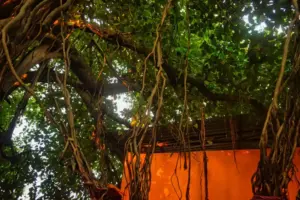
- Akshayvata (Immortal Banyan Tree): The ancient banyan under which Lord Rama performed Pind Daan for King Dasharatha, whose soul — according to the Agni Purana — appeared in person to accept the offering. Pinda offered here is said to confer akshayphala (imperishable fruit).
- Rudrapada: The footprint of Lord Shiva. Offering Pinda here is described in the Agni Purana as sufficient to elevate all ancestors in one’s lineage.
- Brahma Kund: The sacred tank where Lord Brahma performed the sacrificial rite upon Gaya Asura’s body, establishing Gaya’s sanctity permanently.
Day 2 — Falgu Ghat and River Pinda
- Phalgu River Tarpan: The Phalgu (also written Falgu) River flows through Gaya and is the primary site for water tarpan. Bengali families offer til-water facing south while the pandit recites the names of all ancestors to be invoked. The Gaudiya paddhati recommends at least three rounds of offering.
- Mangala Gouri Temple: The Shakti peetha within Gaya, important for those whose deceased family members were women — especially mothers, grandmothers, and unmarried daughters.
- Pretashila Hill: The final Pinda is offered on this rocky hill — the “rock of the departed” — from which the soul is said to depart fully liberated once the offerings are complete.
Throughout this process, our pandit carries the Sankalpa list and ensures that each Pinda is offered with the full formula. Families may participate in pouring the water offering themselves — our pandits encourage this because the merit is stronger when the Karta (performer) directly touches the offering.
See our dedicated page on Pind Daan in Gaya for the complete vedi list, packing checklist, and timing guidance.
📋
Bengali Paddhati Note — Dwadashadaivatya vs Navadaivatya Shradh
The Gaudiya Shraddhaprakash, following the Agni Purana, recommends the Dwadashadaivatya Shradh (invoking twelve ancestors) for Gaya — not the shorter Navadaivatya format. When booking, confirm with your pandit that the twelve-ancestor Sankalpa is included. This is standard in our Bengali paddhati service.
Asthi Visarjan at Prayagraj for Bengali Families
Many Bengali families combine Gaya Pind Daan with Asthi Visarjan (ashes immersion) at Prayagraj’s Triveni Sangam. This is theologically sound: Gaya performs the Pinda offering that feeds and liberates the subtle body, while Triveni Sangam — where the Ganga, Yamuna, and invisible Saraswati meet — is the supreme tirtha for purifying and releasing the physical remains.
The Garuda Purana places the Triveni Sangam among the highest tirthas for post-death rites. In Bengali tradition, the Asthi Visarjan is typically performed on an auspicious day between the 10th and 13th day after death, but many families delay it until they can travel to a major tirtha. Prayagraj is the preferred destination for Bengali families in eastern India because it is accessible by train and road from Kolkata, and the Sangam’s spiritual potency is universally acknowledged.
We offer Asthi Visarjan at the Triveni Sangam with full Vedic procedure, Bengali-speaking pandit, and documentation for families who cannot travel in person. See also our complete guide to Hindu death rituals for the full sequence from death to Sapindikarana.
How to Reach Gaya from Kolkata
Kolkata is well-connected to Gaya by both train and air, making the pilgrimage logistically straightforward for Bengali families.
By Train (Recommended)
Gaya Junction is on the Howrah–Delhi main line, making it one of the easiest tirthas to reach from Kolkata.
- Howrah Rajdhani Express (12301/12302): Howrah to Gaya in approximately 6 hours. Departs Howrah in the afternoon, arrives Gaya in the evening. Runs daily.
- Puri–New Delhi Rajdhani Express (12801): Stops at Gaya. Travel time from Howrah approximately 5.5–6 hours.
- Gaya Express (13151): Kolkata to Gaya, approximately 8–9 hours. A budget option with more seat classes.
- Vibhuti Express (11062): Howrah to Gaya via Patna. Approximately 8 hours.
Gaya Junction is located 5 km from Vishnu Pad Temple. Pre-paid auto-rickshaws and taxis are available at the station.
By Air
Gaya International Airport (IATA: GAY) operates seasonal flights. Air India and IndiGo have operated Kolkata–Gaya routes, especially during Pitrupaksha (September–October) when demand is highest. Check current schedules as seasonal frequencies change. Flight time is approximately 1 hour.
Best Time to Travel from Kolkata
- December–January (post-harvest): The traditional Bengali travel window. Pleasant weather, less crowding than Pitrupaksha, and trains are easier to book.
- Pitru Paksha (Sep 26–Oct 10, 2026): The most auspicious window. Mahalaya Amavasya (October 10) is the peak day. Extremely crowded — book trains and accommodation 3–4 months in advance.
- Mahalaya Amavasya separately: Some Bengali families perform tarpan at Gaya specifically on Mahalaya Amavasya and then return home for Durga Puja preparations. This requires a 2–3 day trip.
For the journey, pack: white dhoti for the Karta, black sesame (til), barley (jau), kusha grass, copper vessel (a travel-size one is acceptable), and the gotra/name details of all ancestors to be invoked.
Cost of Pind Daan at Gaya for Bengali Families (2026)
All prices below are for services provided through Prayag Pandits with Bengali-speaking Teerth Purohits following the Bangiya Shraddha Paddhati.
| Package | What Is Included | Price |
|---|---|---|
| Standard Pind Daan — Book here | 17 essential vedis, Sankalpa, Pinda offering, Falgu Ghat tarpan, Bengali paddhati | ₹7,100 |
| Platinum Package — Book here | All 45 vedis over 2 days, Gau Daan, Brahmin Bhojan, premium accommodation arrangement, Bengali paddhati | ₹11,000 |
| Pitrapaksha 3-Day Special — Book here | Full 3-day Gaya yatra during Pitru Paksha, all 45 vedis, extended tarpan, group pooja options | ₹31,000 |
| Online Pind Daan — Book here | Performed at Gaya on your behalf with live video, certificate, prasad dispatch | ₹11,000 |
| Tarpan in Gaya — Book here | Dedicated Mahalaya/Amavasya tarpan at Phalgu River, 41-ancestor format on request | ₹5,100 |
For NRI Bengali families who cannot travel to India, the Online Pind Daan service is performed at Gaya with a Bengali-speaking pandit, live-streamed via WhatsApp or Zoom, and includes a Sankalpa video confirming your gotra and ancestor names.
Mahalaya Tarpan at Prayagraj — An Alternative for Bengali Families
If travelling to Gaya is not feasible for your family, Mahalaya tarpan at the Triveni Sangam in Prayagraj is scripturally equivalent for tarpan purposes (though not a substitute for Pind Daan at Gaya’s specific vedis). Prayagraj sits at the confluence of the Ganga, Yamuna, and the subterranean Saraswati — a configuration that the Vishnu Purana describes as uniquely powerful for ancestral water offerings.
For Bengali families, Prayagraj has the additional advantage of being accessible from Kolkata by direct train (Howrah to Prayagraj, approximately 11–12 hours on Prayagraj Express or Sangam Express). Our Bengali-speaking pandits at Sangam perform tarpan following the Gaudiya paddhati: forty-one-ancestor format, til-mixed water, facing south, with Sanskrit mantras recited in the Bengali pronunciation style.
See our Pitru Tarpan complete guide for the full procedure at Prayagraj. You may also be interested in the significance of Sarva Pitru Amavasya, which in 2026 falls on October 10 — the same day as Mahalaya Amavasya, making it doubly powerful for Bengali families.
Understanding Mourning Ceremonies for Bengali Families
Pind Daan at Gaya is one act within a longer sequence of post-death rituals that Bengali families perform. Understanding where Gaya fits in this sequence helps families plan the complete set of obligations.
In Bengali tradition, the sequence after death follows the standard Vedic framework with some regional specifics:
- Dashaha (দশাহা): The ten-day mourning period during which the subtle body of the departed is sustained by daily Pinda offerings. In Bengali custom, this is called Dashami (the tenth-day rite).
- Shantishradha: On the thirteenth day (or the day after Ekadasha in some Bengali communities), the Sapindikarana rite is performed — the moment when the departed’s soul is formally elevated from preta (wandering soul) to pitru (ancestral spirit) and joins the ancestors.
- Ekodishta Shradh: The annual death anniversary, performed on the same tithi each year. In Bengali families, this is calculated from the Banga Panjika (the Bengali almanac).
- Mahalaya Shradh: The annual Pitru Paksha offering. Considered the most important of all annual Shradh obligations.
- Gaya Yatra: The once-in-a-lifetime pilgrimage that provides the most comprehensive ancestral liberation. Many Bengali families plan the Gaya yatra in the first or second year after a parent’s death.
For the complete sequence of Hindu mourning ceremonies, see our guide to Chautha, Uthala and Terahvin ceremonies and our pillar post on Hindu death rituals. For the annual ceremony, see our Barsi (first death anniversary) guide.
Families from other eastern Indian communities planning similar pilgrimages may find our Odia Shraddha Paddhati guide useful for comparison, as Odia and Bengali traditions share many structural similarities in post-death rites.
Related Services for Bengali Families
Pind Daan in Gaya
Standard service at 17 essential vedis. Bengali-speaking pandit. Sankalpa in Bangiya paddhati.
₹7,100
Pind Daan Gaya Platinum
All 45 vedis over 2 days. Gau Daan, Brahmin Bhojan, premium Bengali paddhati.
₹11,000
Tarpan in Gaya (Phalgu River)
Mahalaya tarpan at Phalgu Ghat. 41-ancestor format available. Bengali-speaking pandit.
₹5,100
Online Pind Daan in Gaya
For NRI families. Live video, Sankalpa confirmation, prasad dispatch.
₹11,000
Book Bengali-Speaking Pandit — Prayag Pandits
Our Teerth Purohits have served Bengali families at Gaya, Prayagraj, and Varanasi for many years. We understand that when you travel from Kolkata or from abroad for this once-in-a-lifetime yatra, the precision and reverence of the ceremony matters deeply. A pandit who speaks your language, knows your gotra traditions, and follows the Gaudiya Shraddhaprakash is not a luxury — it is the correct way to perform these rites.
We invite Bengali families to contact us in advance — ideally 30 days before your planned travel — so we can confirm the Bengali-speaking pandit, verify your gotra details, and prepare the full Sankalpa list including all ancestors you wish to invoke. For Mahalaya Amavasya (October 10, 2026), we recommend booking by August 2026 as this is our peak period.
You may also be interested in our guide for Odia and Oriya-speaking pandits in Prayagraj — families with mixed Bengali-Odia heritage or those traveling together will find both services available.
Book Bengali-Speaking Pandit for Gaya Pind Daan
Bengali-speaking Teerth Purohits | Bangiya Shraddha Paddhati | All 45 Vedis Available
- Bengali (বাংলা) communication throughout
- Dwadashadaivatya Shradh — 12 ancestors invoked
- Mahalaya Amavasya tarpan — 41-ancestor format
- Online option for NRI families worldwide
- Starting from ₹7,100
अक्सर पूछे जाने वाले प्रश्न
Do pandits at Gaya speak Bengali for Pind Daan ceremony?
Yes. Prayag Pandits has Bengali-speaking Teerth Purohits at Gaya who are trained in the Bangiya Shraddha Paddhati — the Bengali method of performing ancestral rites. The Sankalpa (formal vow) is recited with your gotra and ancestor names in the correct Bengali pronunciation style as described in the Gaudiya Shraddhaprakash. Our pandits also follow the Dwadashadaivatya format (twelve-ancestor invocation) standard in Bengali tradition. Communication throughout the ceremony is in Bengali so the family can follow every step of the ritual without confusion.
When do Bengali families typically travel to Gaya for Pind Daan?
Bengali families traditionally travel to Gaya in two windows. The first is December through February — the post-harvest season after the Aman rice harvest — when families have both the time and financial means to undertake the pilgrimage. The weather is cool and pleasant, trains are less crowded than during the festival season, and the overall atmosphere at Gaya is serene. The second window is Pitru Paksha (September–October), specifically Mahalaya Amavasya, which in 2026 falls on October 10. This is the holiest day for Bengali tarpan and many families combine the Gaya yatra with their Mahalaya observance before returning home for Durga Puja. Book trains at least 3–4 months in advance for the Pitrupaksha window as demand is very high.
What is the difference between Mahalaya Tarpan at home and at Gaya?
Mahalaya tarpan performed at home — in a basin or at a local pond — fulfills the basic obligation and ensures ancestors receive their annual water offering. However, tarpan performed at a Tirtha like Gaya multiplies the merit significantly. The Vishnu Purana places Gaya among the three supreme tirthas for ancestral rites alongside Prayag and Kashi. The Skanda Purana states that Mahalaya Shradh performed on the New Moon day satisfies ancestors as infinitely as the Devas enjoy nectar in heaven — and this merit is amplified at a Tirtha by the accumulated sanctity of the place. At Gaya specifically, the Agni Purana records that a single Pinda at Rudrapada or Gayasiras liberates hundreds of generations. At home, the merit is personal; at Gaya, it carries the power of the Gaya Asura boon granted by Lord Vishnu himself. If travel to Gaya is not possible, tarpan at Prayagraj Triveni Sangam is scripturally equivalent for water offerings.
How to reach Gaya from Kolkata for Pind Daan?
Gaya is easily accessible from Kolkata by train. Gaya Junction is on the Howrah–Delhi main line. The Howrah Rajdhani Express (12301) covers Howrah to Gaya in approximately 6 hours. The Gaya Express (13151) is a more economical option taking 8–9 hours. Vibhuti Express (11062) via Patna takes approximately 8 hours. From Gaya Junction, Vishnu Pad Temple and the main Pind Daan sites are approximately 5 km — pre-paid autos and taxis are available at the station. By air, Gaya International Airport (IATA: GAY) receives seasonal flights from Kolkata — check current IndiGo and Air India schedules as routes vary by season. Flight time is approximately 1 hour. The best travel windows from Kolkata are December–February (post-harvest, pleasant weather) and Pitru Paksha in September–October (most auspicious, very crowded — book 3–4 months ahead).
अपना पवित्र अनुष्ठान बुक करें
भारत भर के पवित्र स्थलों पर वेद-प्रशिक्षित पंडितों द्वारा वीडियो प्रमाण सहित प्रामाणिक अनुष्ठान।
2,263+ परिवारों की सेवा
वीडियो प्रमाण शामिल
2019 से
