
अभी तक कोई अनुष्ठान नहीं चुना गया।
पूजा पैकेज देखें →मुख्य बिंदु
इस लेख में
Can Ancestral Rites like Pind daan Be Performed at Home? Before exploring home-based rituals, it is essential to understand why certain places are highly recommended in the scriptures for Shradh and Pind Daan.While permissible, performing Pind Daan at home requires careful attention to certain details to maintain the sanctity and efficacy of the ritual. But the following is stressed:
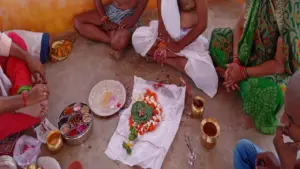
The short answer is Yes, it can be done.The offering of Pindas is the cornerstone of Shradh rituals, designed to nourish, satisfy (tripti), and aid the onward journey (sadgati) of our departed ancestors (Pitrus). Traditionally, certain locations – holy riversides, sacred Teerth Sthals – are highly extolled for performing these rites, believed to possess immense spiritual potency. Yet, the heart of Sanatana Dharma has always resided not just in grand temples or pilgrimage sites, but also within the everyday life and home of the devout householder (Grihastha). So, can this sacred space, the home, serve as the venue for Pind Daan? The answer, rooted in scripture and tradition, is nuanced but ultimately affirming: Yes, Pind Daan can indeed be performed at home, provided certain conditions and principles are adhered to.
The Ideal: The Unmatched Potency of Teerth Sthals
 Before exploring home-based rituals, it is essential to understand why certain places are highly recommended in the scriptures for Shradh and Pind Daan.
Why Pilgrimage Sites are Preferred:
- Sacred Geography: Places like Gaya, Prayagraj (Triveni Sangam), Kashi (Varanasi), Badrinath (Brahma Kapal), Rameshwaram, Siddhpur, and the banks of holy rivers like the Ganga, Yamuna, Narmada, Godavari are considered inherently pure and spiritually charged (jagrut).
- Presence of Holy Waters: The purifying power of sacred rivers is believed to cleanse sins and grant immense peace to the ancestors. Offering Pindas on their banks or using their water in the rituals is highly meritorious.
- Accumulated Spiritual Energy: Millennia of prayers, rituals, and the presence of enlightened sages have imbued these sites with potent positive energy that aids the efficacy of the rites.
- Specific Blessings: Certain locations are associated with specific deities or events related to ancestor liberation. Gaya, for instance, is pre-eminent, blessed by Lord Vishnu himself for Pitru Mukti. Performing Pind Daan here is believed to grant liberation to many generations of ancestors.
- Focus and Environment: The atmosphere at a Teerth Sthal is naturally conducive to spiritual focus, away from the distractions of daily life.
The Reality: The Sanctity and Role of the Home (Griha)
While Teerth Sthals represent the ideal, our Dharma is also deeply practical and recognizes the centrality of the home in religious life. The Grihastha Ashram (the stage of the householder) is itself a pillar of Dharma.The Home as a Sacred Space:
- Grihastha Dharma: The householder has specific duties (Dharma) to perform, many of which are centered within the home. This includes daily rituals (Nitya Karma), hospitality, and ancestor worship.
- The Domestic Fire (Grihagni): Many homes traditionally maintained a sacred domestic fire, a witness to daily life and rituals. Even without a physical fire, the home hearth represents the center of family life and sustenance.
- Presence of Kul Devata/Devi: The home often houses the family deities (Kul Devata/Devi), making it a place of regular worship and divine presence.
The home is not merely a dwelling; it is the primary field for practicing Dharma for the vast majority of people. Therefore, performing essential rites like Shradh within its confines is not only permissible but often necessary and historically common.
Shastric Sanction for Performing Shradh and Pind Daan at Home
Our foundational texts provide ample evidence and procedures for performing ancestral rites within the home.Guidance from Grihya Sutras and Smritis:
- Domestic Rituals: The Grihya Sutras (manuals for domestic rituals) associated with different Vedas (like Ashvalayana, Paraskara, Baudhayana) detail numerous ceremonies meant to be performed by the householder at home. These often include aspects of Pitru Yagna (offerings to ancestors) as part of the daily Pancha Maha Yagnas (five great sacrifices).
- Smriti Literature: Texts like Manu Smriti, Yajnavalkya Smriti, and others lay down rules for householders, including detailed procedures for various types of Shradh ceremonies. While they praise Teerth Shradh, they provide frameworks that are clearly applicable within a domestic setting.
Types of Shradh Commonly Performed at Home:
Many forms of Shradh are traditionally and practically performed at home:- Varshika Shradh (Barsi): The annual Shradh performed on the lunar date (tithi) of the ancestor’s passing. This is perhaps the most common Shradh performed at home by families worldwide.
- Masika Shradh: Monthly Shradh ceremonies, especially performed during the first year after death to aid the soul’s transition. These are typically home-based.
- Mahalaya Paksha Shradh: While some may travel to Teerths during Pitru Paksha, millions perform daily Tarpan (water libations) and offer food (sometimes including Pinds, depending on tradition and capability) to ancestors at home during this sacred fortnight. Special emphasis is given to the tithi of the ancestor’s passing falling within this period.
- Nandi Shradh (Vriddhi Shradh): This Shradh is performed before auspicious ceremonies like weddings, sacred thread ceremonies (Upanayana), or housewarmings (Griha Pravesh) to seek the blessings of the ancestors for the event’s success. This is almost always performed at home or the venue of the main event.
- Nitya Shradh: The daily offering (often just water or a small portion of food) made to ancestors as part of the daily duties of a householder.
Emphasis on Bhakti and Shradh (Faith):
A recurring theme across the Shastras is the paramount importance of the intention and devotion (Bhakti, Shradh) behind the ritual. The Garuda Purana states that even simple offerings like water and sesame seeds, given with true faith and love, can satisfy the ancestors immensely.A ritual performed mechanically at a grand Teerth Sthal without sincerity may be less effective than a humble Pind Daan performed with deep reverence and love at home.The Shastras provide the framework, but it is the Karta’s (performer’s) sincerity that truly energizes the offering.
Essential Considerations for Performing Pind Daan at Home
 While permissible, performing Pind Daan at home requires careful attention to certain details to maintain the sanctity and efficacy of the ritual. But the following is stressed:
Purity of Space (Sthala Shuddhi)
- Cleanliness: The area chosen for the ritual must be thoroughly cleaned. Traditionally, it might be smeared with cow dung paste or cleaned with pure water. In modern homes, ensure meticulous physical cleanliness.
- Location: Choose a quiet, undisturbed part of the home. A space near the Puja room is often suitable. Traditionally, rituals involving Pitrus are performed facing South (the direction associated with Lord Yama and the Pitrus).
- Atmosphere: Ensure a calm, respectful atmosphere free from loud noises, arguments, or distractions.
Purity of Self (Atma Shuddhi)
- Personal Hygiene: The Karta (performer) should bathe, wear fresh, clean clothes (traditionally a dhoti for men, a clean saree for women), and maintain physical and mental purity.
- Abstinence: Certain austerities might be observed on the day, such as abstaining from specific foods or activities, depending on family tradition.
Correct Procedure (Vidhi)
- Following the Steps: It is crucial to follow the prescribed steps of the Shradh ritual correctly. This includes Achamana (purification), Sankalpa (statement of intent), invocation of ancestors, preparation and offering of Pindas, water libations (Tarpan), feeding Brahmins (or making equivalent offerings/donations), and prayers.
- Mantras: Correct pronunciation and chanting of the specific mantras are vital. These sacred sounds invoke the deities and ancestors and energize the offerings.
Necessary Materials (Samagri)
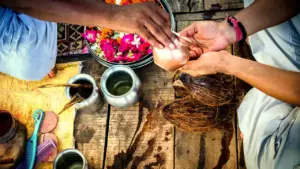
- Gather all required items beforehand: Cooked rice or barley flour, black sesame seeds (kala til), honey, ghee, milk, water, Kusha grass (darbha), flowers, incense, lamp, etc. Ensure ingredients are pure and suitable for offering.
Inviting a Qualified Priest (Purohit)
- Guidance: Especially if performing a full Shradh or if unfamiliar with the procedures, inviting a knowledgeable and experienced priest is highly recommended. The priest can guide the Karta through the rituals, ensure correct mantra chanting, and add their own spiritual weight to the ceremony.
- Representing Brahmins: Traditionally, feeding learned and pious Brahmins is an integral part of Shradh, as they are seen as representatives through whom the ancestors receive the offerings. If feeding Brahmins at home is not feasible, the priest can guide on alternatives like giving dakshina (fees) and sidha (raw food materials) or donating to worthy Brahmin institutions or charities.
The Unwavering Element: Shradh (Faith)
- Sincerity: Perform the ritual with complete faith, concentration, and heartfelt remembrance of the ancestors. Visualize them receiving the offerings and feel gratitude and love towards them. This inner state (bhava) is paramount.
When Home May Not Be Ideal (Though Still an Option)
While Shastrically valid, there might be situations where performing Pinda Daan at home presents challenges:- Lack of Suitable Space: Very small or cluttered homes might make it difficult to create a dedicated, pure space.
- Inability to Maintain Purity: Constant disturbances, lack of privacy, or inability to maintain the required ritual purity can be obstacles.
- Lack of Knowledge/Guidance: Performing complex rituals without proper knowledge or the assistance of a priest can lead to errors.
- Desire for Highest Merit: For those seeking the specific, amplified benefits promised by Teerth Shradh (like at Gaya), a pilgrimage might still be desired or necessary.
Conclusion: Honoring Ancestors Where You Are
The wisdom of Sanatana Dharma balances the ideal with the practical. While the merit of performing Pinda Daan at sacred Teerth Sthals is unparalleled and extolled in our scriptures, the performance of this essential duty within the sanctity of one’s own home is absolutely permissible, scripturally supported, and widely practiced.The Grihya Sutras and Smritis provide the framework, acknowledging the home as a legitimate space for ancestor worship. Various forms of Shradh, including the crucial annual rites, are regularly performed in homes across the world.The key lies not solely in the location, but in the purity of space and self, the correctness of the procedure (Vidhi), the use of proper materials, and above all, the unwavering faith (Shradh) and sincere devotion (Bhakti) of the performer. When performed with a loving heart and adherence to scriptural guidelines, Pinda Daan offered at home reaches the ancestors, bringing them peace and satisfaction (tripti), and bestowing blessings upon the family.Do not let distance or circumstance become a reason to neglect this sacred duty. If a pilgrimage is not possible, embrace the sanctity of your own home, consult with a knowledgeable priest if needed, and perform the Pinda Daan with full faith. Your ancestors will surely feel your love and remembrance. Hari Om Tat Sat.
Online Seva
🙏 Book Online Pind Daan from Home
Starting from
₹5,100
per person
- Pandit performs the complete ritual at the sacred site on your behalf
- Live video call so you can witness and participate from home
- Multiple locations: Prayagraj, Gaya, Varanasi, Haridwar or Badrinath
- Full video recording delivered after the ceremony

अक्सर पूछे जाने वाले प्रश्न
Can Pind Daan be done at home, or only at sacred tirthas?
Pind Daan can be performed at home, but its merit is significantly amplified when performed at a recognised tirtha. Scriptures describe Gaya, Prayagraj (Triveni Sangam), Varanasi (Pishach Mochan), Haridwar, and a few other sites as places where the boundary between the earthly and ancestral realms is especially thin, making the ritual spiritually more effective. At-home Pind Daan is accepted in scriptures when travel is not possible, but most families choose to perform at least one tirtha-based ceremony for the liberation of ancestors. Our pandits can guide you through either option.
Is it mandatory to travel to Gaya or Prayagraj for Pind Daan?
No — Pind Daan can be performed at any sacred water body or even at home. However, performing it at a major tirtha such as Prayagraj (Triveni Sangam), Gaya, or Varanasi significantly amplifies the merit and the efficacy of the rite. The scriptures describe these locations as places where the boundary between the earthly realm and the ancestral realm is especially thin.
Can Pind Daan be done online or through someone else if I can not go to Gaya?
In rare cases, due to health, age, or unavoidable circumstances, a proxy (sarva-sangrahi) may perform Pind Daan on your behalf. This should be arranged with a trustworthy Gaya Purohit, and you must send your consent and sankalp. While this is spiritually valid, personal presence is always superior, as the devotion and intention of the doer carry immense karmic weight.
Can Asthi Visarjan be performed if the death occurred long ago?
Yes, If, for some reason, the ashes could not be immersed shortly after death, Asthi Visarjan can still be performed even years later. The sanctity of Prayagraj and the power of the Triveni Sangam are such that the ritual remains highly beneficial whenever performed with faith and devotion. It provides peace to the soul regardless of when the immersion takes place.
How does Pind Daan at Gaya help in removing Pitru Dosh from a horoscope?
Pitru Dosh in astrology indicates displeasure or unfulfilled desires of ancestors, which may manifest as:
- Delayed marriage
- Childlessness
- Career struggles
- Recurring health issues Pind Daan at Gaya, when done with sincerity and proper mantras, appeases the souls, lifts the curse-like effects, and brings blessings into one's life. It is often recommended by astrologers as part of Pitru Dosh Nivaran remedies, especially during Pitru Paksha or after an astrologically significant transit.
Can Pind Daan be performed for a person whose death date (tithi) is not known?
Yes. When the tithi of death is unknown, the rite should be performed on Sarva Pitru Amavasya — the last day of Pitrupaksha — which is specifically designated for all ancestors whose dates are unknown or uncertain. The pandit will adjust the sankalpa accordingly.
Is it necessary to perform Pind Daan if Narayan Bali is done in Gaya?
Often, Pind Daan is an integral part of the Narayan Bali ritual sequence in Gaya.[ The pandit performing the puja will guide you, but generally, performing Narayan Bali addresses the specific issue of unnatural death, and Pind Daan (offering of rice balls) is included within its procedures to nourish the soul as part of its liberation process.
How much does Pind Daan cost at Gaya, Prayagraj, and Varanasi?
Pind Daan costs vary by location, duration, and comprehensiveness of the ceremony. At Gaya, a basic 1-day ritual typically starts from ₹1,200–₹5,100, while a standard 3-day Tripakshi ceremony ranges between ₹11,000 and ₹21,000. The full 17-day Gaya Shraddha covering all principal vedi sites (Vishnu Pad, Akshaya Vat, Phalgu River) can go higher depending on rituals included. At Prayagraj (Triveni Sangam), standard packages start from ₹5,100 and go up to ₹25,000. Varanasi is similarly priced. All our packages include pandit dakshina, puja samagri, and documentation. Visit our respective service pages for current packages and transparent pricing.
अपना पवित्र अनुष्ठान बुक करें
भारत भर के पवित्र स्थलों पर वेद-प्रशिक्षित पंडितों द्वारा वीडियो प्रमाण सहित प्रामाणिक अनुष्ठान।
2,263+ परिवारों की सेवा
वीडियो प्रमाण शामिल
2019 से
