
अभी तक कोई अनुष्ठान नहीं चुना गया।
पूजा पैकेज देखें →मुख्य बिंदु
इस लेख में
When someone passes away in a Hindu family, the days and weeks that follow are shaped by a precise, centuries-old sequence of rituals — each one serving a specific spiritual purpose. These are not cultural customs that evolved by habit. They are prescriptions drawn from the Garuda Purana, Skanda Purana, Vishnu Dharmottara Purana, Agni Purana, Brahma Purana, and Markandeya Purana — texts that describe in extraordinary detail what happens to the soul after death and what the living must do to help it.
The Garuda Purana, narrated by Lord Vishnu to Garuda across 19,000 verses, is the most comprehensive text on death and the afterlife in all of Hinduism. When we perform these rites, we are not following custom. We are following a map — drawn by the sages who understood the mechanics of what happens when a soul leaves its body and must find its way to the next world.
If you are reading this guide, your family may have just lost someone, or you are trying to understand what lies ahead. Either way, we have written this from the experience of performing these rites thousands of times at Triveni Sangam, Varanasi, Gaya, and Haridwar — not from a textbook, but from standing beside families at their most difficult moments.
This guide covers everything in sequence: what happens at the moment of death, the funeral and cremation, Asthi Visarjan (immersion of ashes), the 13-day mourning period including the Tehrvin ceremony, Pind Daan, Shraddha, Tarpan, and the special rites for unusual circumstances. We have also addressed the practical questions NRI families ask us every week.
The Moment of Death — What the Scriptures Say Happens
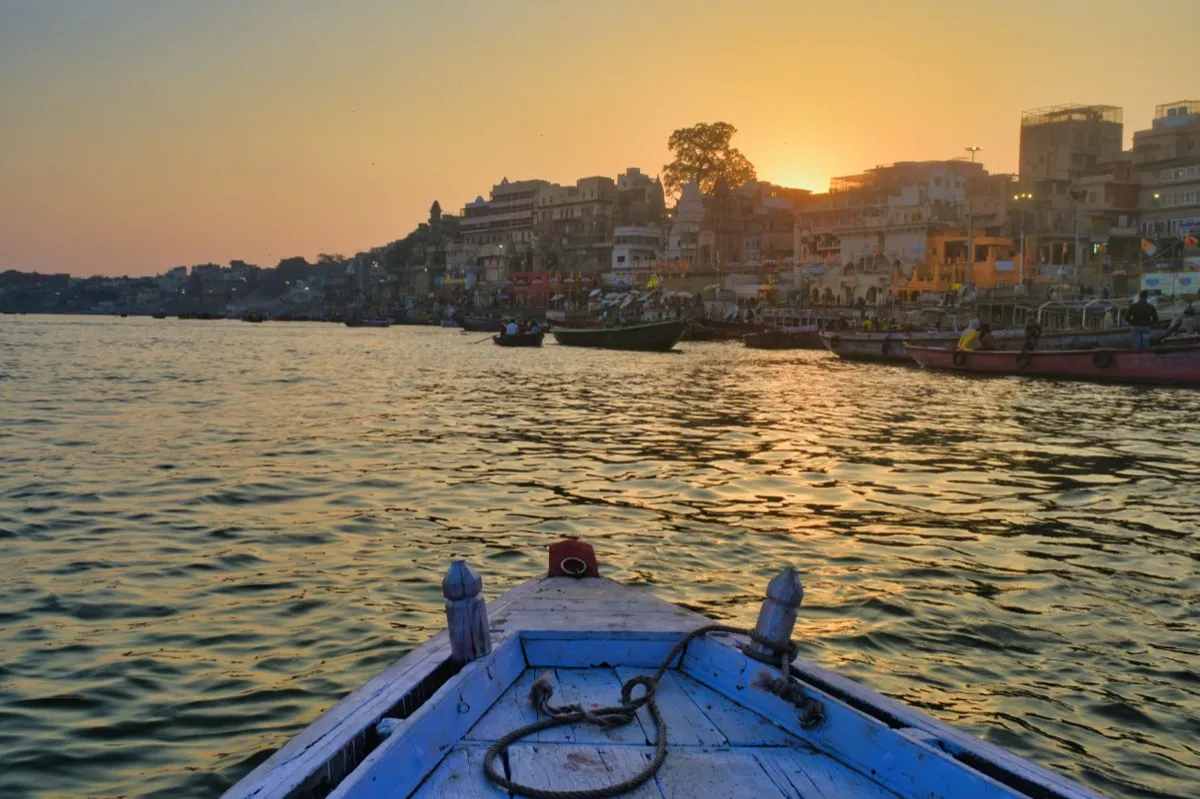
Most people think of death as a single event. The scriptures describe it as a process — and a precise one. The Skanda Purana states that at the moment of death, the soul does not simply depart. It assumes a subtle body called the Aativahik Sukshma Sharir (the vehicle-body for the journey ahead), constructed from the dying person’s own Pranas — the five vital forces that animated the physical body throughout life. This thumb-sized subtle body is what actually makes the journey onward. The physical body, once the Pranas withdraw, is nothing more than an empty vessel.
The Vishnu Dharmottara Purana adds a critical distinction: only human beings take this Aativahik Sukshma Sharir and travel the Yamya path to Yamaloka (the realm of Yama, the lord of dharma and death). Animals, birds, and other creatures do not receive this intermediate body — they transition directly into their next birth without this transitional journey. The human birth is rare precisely because it is the only birth that carries this responsibility and this mechanism of accounting.
Understanding this changes how you approach the first hours after a death. The soul — now encased in this subtle thumb-sized body — is still close to the physical remains. It is disoriented, often unaware at first of what has happened. The early rituals are designed to help it understand that the transition has occurred, and to provide guidance and sustenance for the journey ahead.
In Hindu tradition, the period immediately after death requires specific actions from the family. These are not bureaucratic steps — each one has a purpose rooted in the Garuda Purana and Agni Purana.
Place the body on the ground. The deceased is laid on a clean floor or mat, ideally on the earth. The ground is considered a purifying element, and returning to the earth is seen as the beginning of the soul’s release from the physical body.
Light a lamp. A ghee lamp (diya) is lit near the head of the deceased and kept burning continuously until the body is cremated. This light guides the soul through the early hours of its transition when, according to the Garuda Purana, it is still close to the body and needs orientation.
Ganga Jal on the lips. As soon as possible, a few drops of Ganga water are placed on the lips of the deceased. This act is considered a final purification and an offering of the sacred river to the departing soul.
Tulsi leaves near the body. Tulsi (holy basil), considered the most sacred plant in Hinduism, is placed near or on the body. The Vishnu Purana states that the presence of Tulsi draws the grace of Lord Vishnu and helps protect the soul in its vulnerable transitional state. As we will see in the cremation section, Tulsi wood placed on the funeral pyre carries a specific liberation benefit described in the scriptures.
Who should be present. The immediate family — spouse, sons, daughters, siblings — should gather. Sons, particularly the eldest, have a specific ritual role in the coming days. The Garuda Purana is traditionally read aloud during this period, and pandits may be called to recite it at home through the days leading to the cremation.
The Sutak (Ashaucha) period begins. From the moment of death, the family enters Sutak — a period of ritual impurity. The Garuda Purana prescribes specific durations by varna: 10 days for Brahmins, 12 days for Kshatriyas, 15 days for Vaishyas, and one full month for Shudras. During this time, family members do not attend temples, observe a simple diet, and focus entirely on the rites for the deceased.
Antyesti Samskara — The Hindu Funeral and Cremation
Antyesti Samskara — from the Sanskrit antya (last) and isti (rite) — is the sixteenth and final samskara in the Hindu life cycle. Cremation is almost universal in Hindu practice, with the few exceptions being children under two years of age, certain saints and ascetics, and those who die of snakebite (who are traditionally set afloat on a river).
Preparing the body. The body is bathed by family members, typically with Ganga Jal, turmeric, and clean water. It is then wrapped in white cloth — white being the colour of death and mourning in Hindu tradition. The body is adorned with flowers, particularly marigold garlands.
Gold in the seven apertures. In the classical tradition described in the funeral texts, small pieces of gold — or ghee as an alternative — are placed in the seven apertures of the body: the two eyes, two ears, two nostrils, and the mouth. Gold is considered the most purifying of metals, associated with solar energy and spiritual light. This act seals the apertures through which the Pranas departed and offers a final purification to the physical form.
Tulsi wood on the pyre. The tradition of placing Tulsi (holy basil) wood on the funeral pyre is not merely devotional. The scriptures state that cremation with Tulsi wood helps free the soul from the cycles of birth and death. Even a small amount of Tulsi placed on the corpse or pyre is considered extremely auspicious, as Tulsi is associated with Lord Vishnu and is believed to draw his grace at the critical moment of the soul’s departure.
The funeral procession. The body is carried on a bier (arthi) made of bamboo to the cremation ground, traditionally by the male family members. The procession chants “Ram naam satya hai” (The name of Ram is truth) — an affirmation that only the divine is eternal.
How the fire is applied. The fire is applied toward the head first — the direction that corresponds to the seat of consciousness and the point from which the soul is considered to have departed. This is not arbitrary. The Garuda Purana describes the head as the primary aperture of the subtle body, the point of exit for elevated souls.
Kapal Kriya — the ritual of the skull. At the height of the cremation, when the skull is exposed to the flames, the chief mourner performs Kapal Kriya — a ritual in which the skull is broken. This act is understood in the tradition as releasing the soul from its final attachment to the physical body. The skull is the last boundary, and its ritual breaking allows the subtle body to move freely toward the next stage of its journey. This is performed with a long bamboo stick while reciting specific mantras.
The return from the cremation ground. The return home from the cremation ground follows a specific protocol. The younger members of the family lead the procession home — age reversed, because the eldest is in the most grief-heavy ritual role. Crucially, no one is to look back toward the cremation ground after leaving. This is not superstition; it is a conscious severance — the soul has been released, and looking back is seen as calling it back, which would disturb its journey.
At the doorstep. Before entering the house, every person who attended the cremation observes a purification ritual at the threshold. The traditional sequence includes: chewing a few neem leaves (neem is powerfully cleansing and its bitterness drives away malevolent energies), sipping water, touching cow dung applied to the doorstep (an ancient purifier in Vedic practice), stepping over or near a small fire, and placing one foot on a stone as a grounding act. Yellow mustard seeds may also be scattered near the entrance. These are not arbitrary customs — each element is a specific purifying substance that addresses the subtle pollution (ashaucha) incurred by proximity to death.
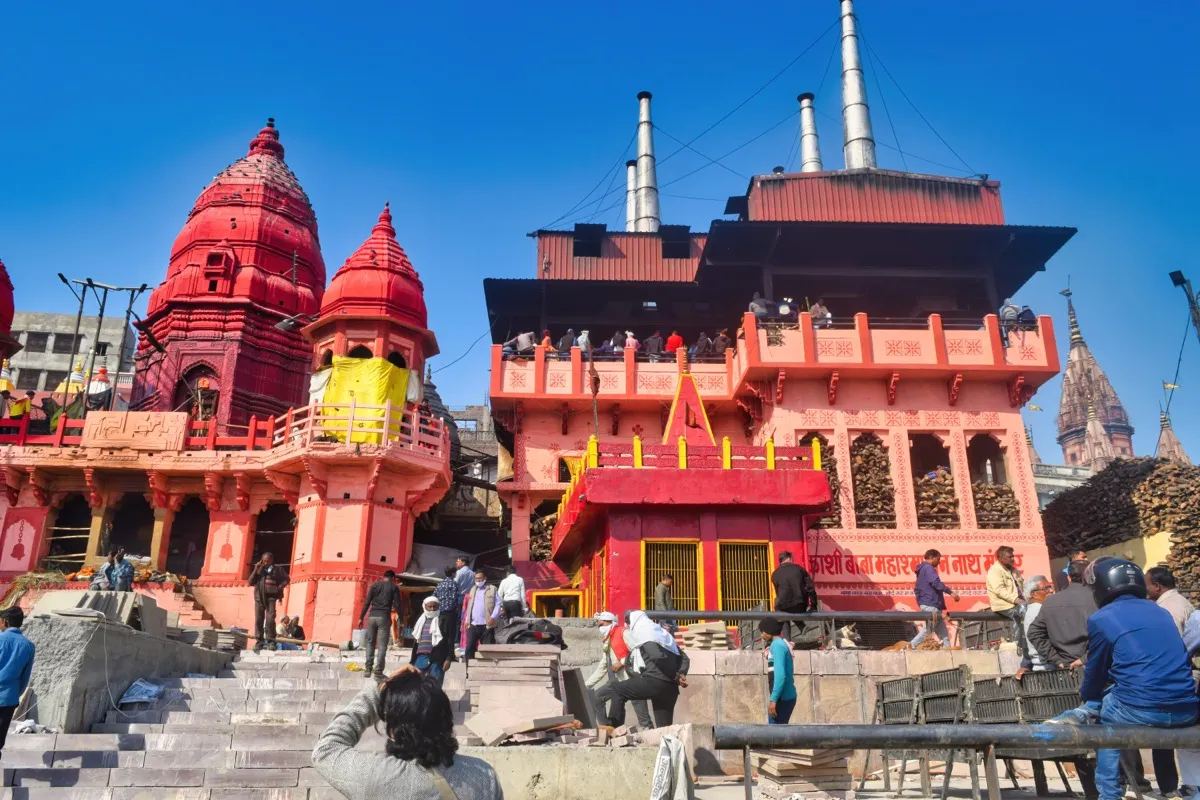
Why Manikarnika Ghat, Varanasi is considered the holiest. The Kashi Khanda of the Skanda Purana states that dying in Varanasi — or having one’s body cremated there — grants the soul moksha (liberation from the cycle of rebirth) regardless of the karma accumulated in life. Lord Shiva himself is said to whisper the Taraka mantra (liberation mantra) into the ear of the dying at Kashi. Manikarnika Ghat has been burning continuously for thousands of years and is considered the most powerful cremation ground in the Hindu world.
Asthi Sanchayan — Collecting the Ashes
After the cremation, what remains are the bones and ashes — collectively called Asthi. The Asthi Sanchayan ceremony (collection of ashes) is typically performed on the third day after death, though in some communities it is done on the same day or the following morning.
The collection ceremony. Family members, led by the chief mourner, go to the cremation site. The ashes and larger bone fragments are collected using a new clay pot or, in some traditions, bamboo sticks. Milk and water are sometimes poured over the ashes before collection as a final purifying act.
How ashes are stored. The Asthi is placed in a clean clay pot or brass urn. It should be kept in a cool, respectful location — not in a bedroom or kitchen. The pot should not be kept indefinitely at home; the ashes must be immersed in a sacred river within a specific period (traditionally within 10 days, though this is often extended to within the first year).
Where to immerse the ashes. The most auspicious destinations for Asthi Visarjan are Triveni Sangam at Prayagraj (the confluence of Ganga, Yamuna, and the invisible Saraswati), the Ganga at Haridwar and Varanasi, and the Falgu at Gaya. See our complete guide to Asthi Visarjan — best locations, procedure, and how to arrange the ceremony.
Asthi Visarjan — Immersion of Ashes in Sacred Rivers
Asthi Visarjan (from asthi = bones/ashes and visarjan = release/immersion) is the ceremony of releasing the physical remains of the deceased into a sacred river. The Garuda Purana states that the Asthi immersed in the Ganga attains liberation, and the soul is freed from any remaining attachment to its last physical form. Once the Asthi has been immersed, the connection of the subtle body to its last physical birth is finally severed.
Best locations for Asthi Visarjan:
- Triveni Sangam, Prayagraj — The confluence of three sacred rivers. Considered one of the most powerful sites for all ancestral rites, and our team performs Asthi Visarjan at Prayagraj with complete Vedic rites including Ganga puja, boat arrangements, and tarpan.
- Harishchandra Ghat / Manikarnika Ghat, Varanasi — The Kashi cremation ghats are ideal if the family also wishes to perform Pind Daan at Kashi. Asthi Visarjan in Varanasi can be combined with a complete ancestral rites package.
- Har Ki Pauri, Haridwar — Where the Ganga enters the plains from the Himalayas. A powerful site, particularly for families from North India.
- Falgu River, Gaya — If the family plans to perform Pind Daan in Gaya, Asthi Visarjan can be done at Falgu simultaneously.
For NRI families. If you cannot travel to India with the ashes, we offer an ash courier service. Families in the USA, UK, Canada, Australia, UAE, and Singapore ship the ashes to us in India, and we perform the complete Asthi Visarjan with live video streaming so you can participate from wherever you are. See our NRI puja services page for full details on international ash shipping and documentation.
The 13-Day Mourning Period — How the Garuda Purana Explains It
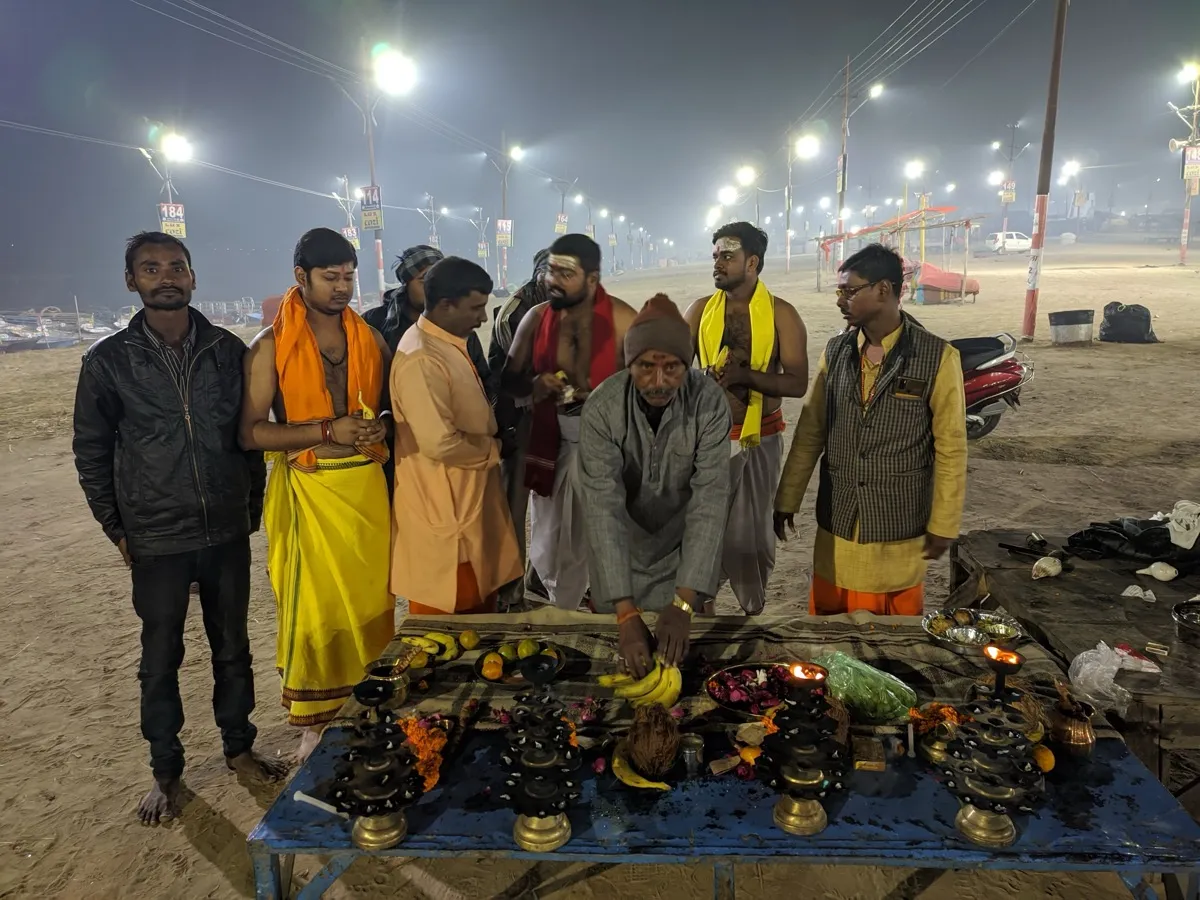
After cremation, the family enters the 13-day period called Terah Din or Sutak. Most people understand this as a mourning period. The Garuda Purana describes it in far more precise terms: it is the period during which the departed soul’s subtle body is being built — literally, piece by piece — through the Pinda offerings made by the living family.
This is the most important and least understood aspect of Hindu death rituals. Let us explain it as the scriptures do.
How the 10 Pindas Build the Soul’s Subtle Body
When the Aativahik Sukshma Sharir (the thumb-sized vehicle-body described in the Skanda Purana) first forms at the moment of death, it is incomplete. It has no senses, no form strong enough to experience Yamaloka or receive judgment. According to the Garuda Purana, the soul in this state experiences acute hunger and thirst — it is a formless energy that cannot receive, cannot perceive, cannot move toward its destination.
The 10 Pindas offered during the first 10 days of the mourning period do not merely symbolise nourishment. The Garuda Purana states explicitly that each Pinda builds a specific part of the subtle body that the soul will inhabit during its journey through the afterlife:
- 1st Pinda (Day 1): Forms the head of the subtle body
- 2nd Pinda (Day 2): Forms the ears, eyes, and nose
- 3rd Pinda (Day 3): Forms the neck and shoulders
- 4th Pinda (Day 4): Forms the chest and heart region
- 5th Pinda (Day 5): Forms the navel and abdomen
- 6th Pinda (Day 6): Forms the back and spine
- 7th Pinda (Day 7): Forms the hips and lower body
- 8th Pinda (Day 8): Forms the knees and legs
- 9th Pinda (Day 9): Forms the feet
- 10th Pinda (Day 10): Grants completeness and relieves the overwhelming hunger the soul has experienced during this formation period
Without these 10 Pindas, the Garuda Purana states with great force: the soul remains trapped as a formless, hungry ghost (Preta) in the atmosphere surrounding the earth. It cannot travel to Yamaloka. It cannot be received by the ancestors. It is caught between worlds — neither here nor there — experiencing unbearable hunger and disorientation. The Pindas are therefore not optional ceremonies. They are the mechanism by which the soul is equipped for its journey.
The chief mourner during these 10 days must observe strict disciplines: sleeping on the floor, celibacy, eating only once a day — and that meal must be plain, unseasoned, and entirely without salt. These restrictions are not punishment. They are a deliberate austerity that channels the mourner’s Pranas toward the Pinda offerings, making them more potent and effective for the soul’s benefit.
What the Sutak Period Means for the Family
During the 13 days, the immediate family observes specific restrictions alongside the daily Pinda offerings:
- Simple, sattvic (pure) food — no meat, no alcohol, no fried foods, no salt for the chief mourner
- No attendance at religious celebrations, weddings, or temples
- No shaving for the chief mourner (eldest son) until the 13th day
- Daily rituals of water offering (tarpan) for the departed soul
- Reading or listening to the Garuda Purana
Day by Day: What Happens
Days 1-3: Cremation is performed (typically on Day 1 or 2). The home is cleaned thoroughly after the funeral. On Day 3, Asthi Sanchayan (collection of ashes) takes place. The first three Pindas have begun building the head, sensory organs, and neck of the subtle body.
Days 4-10: This is the core period of Pinda formation. Visitors come to pay condolences. The family does not cook in the home in some traditions — neighbours and community bring food. Some families arrange for the Garuda Purana to be recited by a pandit during these days. The seven remaining Pindas are offered, completing the subtle body’s formation down to the feet by Day 10. The 10th Pinda, which grants completeness and relieves the soul’s hunger, is the most important offering of this period.
Day 11 — Ekadashah (the day of impurity’s end): The Ashaucha (impurity) period formally concludes. The Shraddha with Vedic mantras begins. This is when the ritual framework shifts from body-formation to liberation. If the death was unnatural — accident, suicide, drowning, fire, snakebite — then Narayan Bali is MANDATORY before any further Shraddha proceedings can begin. Regular rites cannot liberate a soul trapped by unnatural death; the Narayan Bali ceremony must first address the special condition of that soul. Vrishotsarga — the ritual release of a bull in the name of the deceased — is also performed on or around this day. The importance of Vrishotsarga is described with great emphasis in the Garuda Purana: without it, hundreds of future Shraddhas are ineffective. The bull carries the deceased’s merit forward and ensures that the soul has a strong, sure-footed carrier on its journey through Yamaloka.
Day 12 — Dwadasha: Final preparations for the milestone ceremony on Day 13. A Brahmin feast (Brahmin Bhoj) may be held. The deceased’s soul is being prepared for its formal elevation to the status of Pitri.
Day 13 — The Tehrvin Ceremony and Sapindikarana: This is the single most important day of the entire 13-day sequence. The ceremony performed is called Sapindikarana — and its significance in the Garuda Purana and related texts is profound.
Sapindikarana — From Preta to Pitri
At the moment of Sapindikarana, the deceased is elevated from the state of Preta (a wandering, incompletely settled spirit) to the state of Pitri (a respected, established ancestor in Pitru Loka). This elevation is ritual and metaphysical at the same time.
The ceremony involves mixing Arghya (water offering) and Pinda. The Pinda offered to the recently deceased is physically mixed with the Pindas offered to the grandfather and great-grandfather — three generations of ancestors being joined in a single act. Through this mixing, the newly departed soul is formally introduced to the ancestral lineage already residing in Pitru Loka. The soul moves from being a wandering presence in the atmosphere to being received and settled among the ancestors.
From the moment Sapindikarana is completed, the word “Preta” is never used again for the deceased. In all subsequent Shraddhas and Tarpans, the soul is addressed as “Pitri” — an ancestor. This is not a formality. The scriptures indicate that this change in address reflects an actual change in the soul’s condition and location.
On the Tehrvin day, the chief mourner shaves his head (mundan) in most traditions, takes a ritual bath, changes into new or washed clothes, and performs the final Pind offerings. A Brahmin feast is typically held, and the extended family gathers. The family’s period of ritual impurity ends at sunset on the 13th day.
What the 13th day ceremony involves practically:
- Pandit performs Sapindikarana puja (2-3 hours)
- Tarpan and Pind offerings to the three generations of ancestors
- Brahmin Bhoj (feeding of Brahmins) — typically 5, 7, or 11 Brahmins are fed
- Daan (charitable giving) in the name of the deceased — clothes, grains, household items
- Community gathering, remembrance of the deceased
After the Tehrvin, the family returns to normal life. The ritual period is complete, though grief is personal and has no prescribed end point.
Pind Daan — The Offering That Liberates the Soul
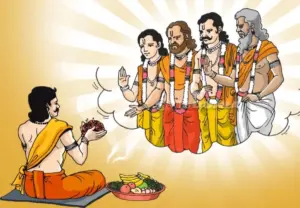
Pind Daan is one of the most important rituals in all of Hindu ancestral practice. The word Pind refers to the rice balls mixed with sesame, barley, and flowers that are offered to the ancestors. Daan means to give. Together, Pind Daan is the act of offering these sacred balls as food and sustenance for the souls of the departed.
The Vayu Purana states: “A son who performs Pind Daan liberates not just his father, but all seven generations of ancestors.” The Mahabharata describes how Yudhishthira performed Pind Daan for the warriors who fell at Kurukshetra — such is the antiquity and importance of this rite.
But here is the detail the Garuda Purana adds that most people do not know: the soul that has not received these Pindas from its family remains formless and hungry in the atmosphere. The 10 Pindas of the 13-day period form the subtle body. But the Pind Daan performed at the great tirthas — Gaya, Prayagraj, Varanasi — is what provides the ongoing sustenance and liberation that moves the soul forward. A soul that has received Pind Daan at Gaya, where Lord Vishnu himself blessed the earth with his footprint (Vishnu Pada), is said to be released from the debt of karma and qualified for moksha regardless of its accumulated actions in life.
When to Perform Pind Daan
Pind Daan should ideally be performed:
- Within the first year after death — as soon as the family is ready, particularly before the first death anniversary
- During Pitrupaksha — the 16-day period in September-October (in 2026: September 26 to October 10) specifically dedicated to ancestral rites. See our complete Pitrupaksha guide.
- On Amavasya (new moon) days — considered especially auspicious for all ancestral rites
- On the death anniversary — the tithi (lunar date) of the person’s death
Where to Perform Pind Daan
Any sacred river is valid, but certain locations are considered especially powerful:
- Gaya, Bihar — The most powerful site for Pind Daan in the world. The Vayu Purana and Agni Purana both describe Gaya as specially blessed by Lord Vishnu. Pind Daan performed at Vishnupad Temple and the Falgu River bank is said to grant moksha to the departed soul directly. Pind Daan in Gaya costs from Rs. 7,100.
- Triveni Sangam, Prayagraj — The confluence of three rivers makes Prayagraj second only to Gaya in ritual power for Pind Daan. Pind Daan at Prayagraj starts from Rs. 5,100.
- Varanasi (Kashi) — Pind Daan at Manikarnika and Dashashwamedh Ghat, combined with Asthi Visarjan, is a powerful combination for complete ancestral liberation.
- Haridwar — At Har Ki Pauri ghat, Pind Daan is performed in the Ganga as she enters the plains.
For a detailed understanding of the ritual, the best locations, and what to expect, read our complete guide to Pind Daan.
What Happens During the Pind Daan Ceremony
The ceremony typically takes 2-4 hours depending on the location and the number of generations being honoured. It proceeds in this sequence:
- Sankalpa — the chief mourner states the names and gotras (lineage) of the ancestors being honoured
- Tarpan — water mixed with sesame is offered to the ancestors while reciting their names
- Preparation of Pindas — rice balls are prepared with sesame, barley, honey, and Ganga Jal
- Offering the Pindas — each Pinda is offered with specific mantras to each generation
- Placing the Pindas — at sacred sites like Falgu Ghat in Gaya, the Pindas are placed in the river or on the sacred stone
- Brahmin feeding and Daan — the ceremony closes with feeding a Brahmin and giving daan
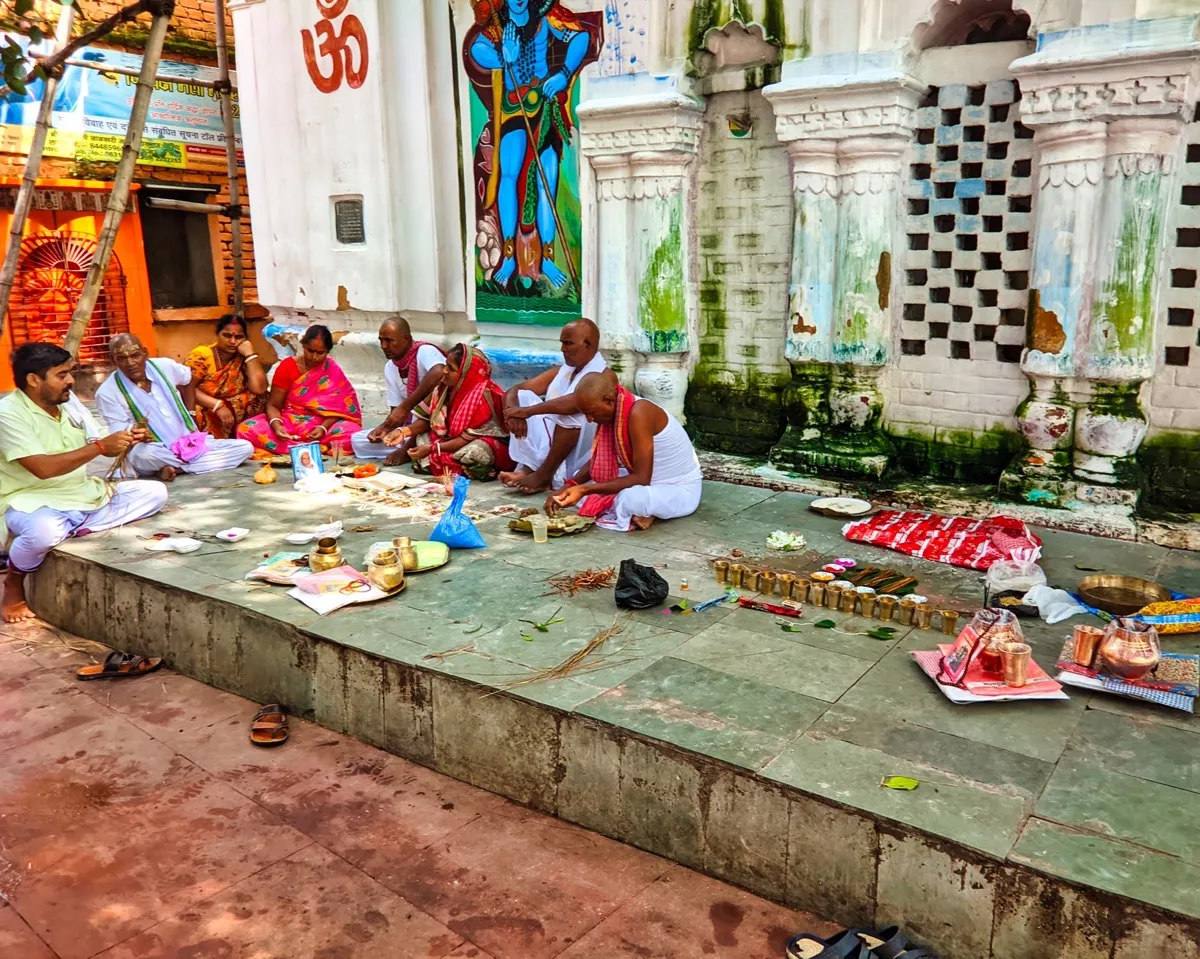
Shraddha — What the Brahma Purana and Markandeya Purana Say
Shraddha (also spelled Shradh or Shraadh) is the annual or periodic ceremony performed to nourish and honour ancestors. The word comes from the Sanskrit shraddha — meaning faith or sincere devotion. The Manusmriti dedicates an entire chapter to Shraddha, calling it one of the highest duties of a householder.
Shraddha differs from Pind Daan in its frequency and nature: Pind Daan is typically performed as a one-time or first-year rite of liberation; Shraddha is an ongoing annual obligation to all ancestors going back three generations.
The Brahma Purana states on the importance of Shraddha: “A person who performs Shraddha with devotion satisfies the entire universe, from Lord Brahma himself down to the smallest blade of grass.” This is not metaphorical language. The teaching is that ancestral rites performed with true faith (shraddha) create a ripple of positive energy that extends far beyond the individual family. The prana offered to the ancestors — through the medium of the Brahmin who receives the food — circulates through the subtle planes of existence and nourishes all beings.
The Markandeya Purana is even more direct about what satisfied ancestors provide in return: they bless their descendants with longevity, radiant health, children, unparalleled wealth, and ultimately salvation (moksha). Ancestors who are fed, honoured, and addressed through Shraddha become powerful protectors of the family line.
What happens when Shraddha is not performed? The Markandeya Purana does not soften this description: ancestors who are neglected are driven by agonising hunger in Pitru Loka. In their desperation, they are forced to draw prana from their own descendants through the subtle plane — sucking the vitality from the very relatives who have forgotten them. They leave after casting severe curses, bringing upon the family lifelong hardships, recurring diseases, financial obstruction, and difficulty with children and progeny. This is the classical description of Pitru Dosha — not a vague “ancestral curse” but a specific spiritual mechanism described in detail by the sages.
When Shraddha is Performed
- Death anniversary (Mahalay or Varshik Shraddha) — performed on the same lunar tithi on which the person died, each year
- Pitrupaksha — the most important annual window for Shraddha, when the door between the living and the Pitru Loka (ancestor realm) is considered to be open. Every Hindu is expected to perform Shraddha during Pitrupaksha.
- Amavasya (new moon) — a monthly observance for those who wish to perform regular ancestral rites
What Shraddha Involves
The core elements of Shraddha are Tarpan (water offerings), Pind offering, and Brahmin Bhoj (feeding of Brahmins). The belief is that the food offered to Brahmins in the name of the ancestors reaches the ancestors in the form of prana (subtle life force). Sesame (til) and barley (jau) are considered the most potent materials for ancestral rites throughout the scriptures — both carry a quality of heaviness and substance that reaches the subtle planes where the ancestors reside.
We perform Shradh ceremonies at Varanasi and at Triveni Sangam in Prayagraj throughout the year, with particular intensity during Pitrupaksha. The ceremony can be arranged for the death anniversary tithi even if you are not present in India.
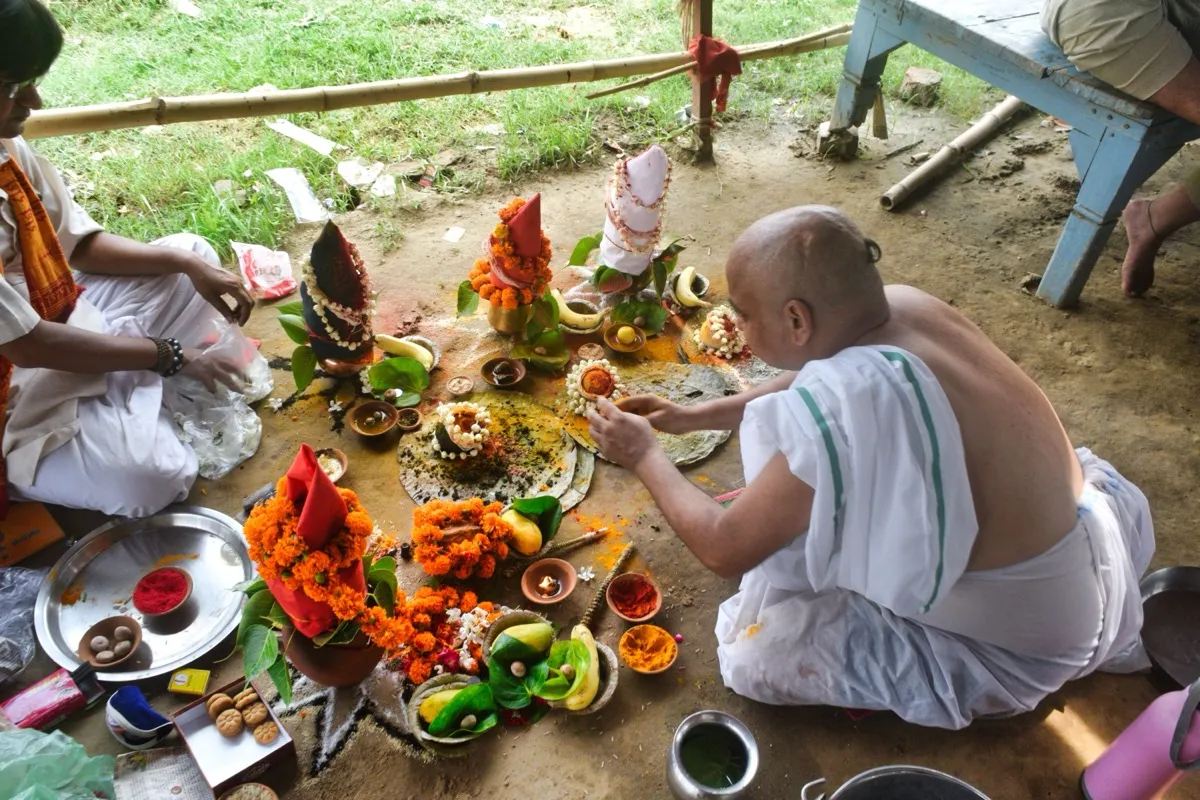
Tarpan — The Daily and Periodic Water Offering
Tarpan is the simplest and most universal form of ancestral offering in Hinduism. The word comes from the Sanskrit root tarp, meaning to satisfy or nourish. Tarpan involves offering water — mixed with sesame, barley, and Kusha grass — to the ancestors while reciting their names and gotras.
Unlike Pind Daan, which requires a pandit and a sacred location, Tarpan can be performed by any Hindu male at home, on the bank of any river, or even using a clean vessel of water. It takes 15-30 minutes once you know the mantras.
When Tarpan is performed:
- Daily during Pitrupaksha (recommended for all householders)
- On every Amavasya (new moon)
- On the death anniversary of each ancestor
- During the 13-day mourning period after a death in the family
- On specific dates like solar eclipses (Grahana) and the Mahalaya Amavasya (the last day of Pitrupaksha)
For the complete mantras, materials list, and step-by-step procedure, see our Tarpan Vidhi guide. If you wish to have Tarpan performed professionally at Triveni Sangam, Tarpan in Prayagraj starts from Rs. 2,100.
Narayan Bali and Tripindi Shradh — Special Rites for Special Circumstances
Two ceremonies often come up in the context of Hindu death rituals that are not part of the standard sequence — Narayan Bali and Tripindi Shradh. Both address specific spiritual situations that regular Shraddha cannot resolve.
Narayan Bali — Mandatory for Unnatural Deaths
When a person dies in an unnatural or premature way — Akal Mrityu — the soul is believed to get stuck in a state between worlds. This includes deaths by accident, suicide, drowning, snakebite, fire, or death in battle. Regular Pind Daan may not be sufficient to liberate such souls.
The Garuda Purana is specific: for deaths classified as unnatural or untimely, Narayan Bali is not merely recommended — it is mandatory before any other Shraddha can be effective. The sequence matters. If a family performs Pind Daan or regular Shraddha for someone who died an unnatural death without first performing Narayan Bali, those ceremonies cannot reach the soul in its trapped state. Narayan Bali must come first. It is the ceremony that addresses the soul’s specific condition of being held in an intermediate state due to the shock and violence of its unexpected departure.
Narayan Bali involves creating an effigy of the deceased and performing a complete last-rites ceremony once more — including the funeral rites that were not possible at the time of sudden death. It is a complex, two-part ceremony that also includes a Narayana Bali component (an offering to Lord Vishnu) and a Nag Bali component (an offering for souls trapped due to snake-related karma). Our complete Narayan Bali guide explains the full procedure. Narayan Bali at Prayagraj starts from Rs. 31,000.
Tripindi Shradh — When Shradh Has Been Missed for Three or More Years
If a family has not performed Shraddha for any ancestor for three or more consecutive years, the ancestors are believed to become restless and their hunger for prana becomes acute. The Tripindi Shradh is the prescribed remedy — a single ceremony that addresses this accumulated debt to three generations of ancestors simultaneously.
The word tri (three) + pindi (pinda offerings) reflects the three generations addressed: the father (or mother), the grandfather, and the great-grandfather. This ceremony is performed at Tryambakeshwar (near Nashik), Varanasi, or Prayagraj by qualified pandits. It is a significant commitment of time and resources — typically a half-day ceremony — but it resolves the ancestral debt comprehensively.
If your family has not been regular with Shraddha observances and you are concerned about Pitru Dosha (ancestral curse) affecting the family, Tripindi Shradh combined with Narayan Bali where applicable is the recommended course.
Hindu Rituals After Death of Father vs Mother — Key Differences
One of the most common questions we receive is about the differences in rituals when the father dies versus when the mother dies — and who should perform them.
The chief mourner (Karta). In classical Hindu tradition, the eldest son performs the last rites for both parents. The son lights the funeral pyre, performs the Tehrvin ceremony, and carries out Pind Daan. If there is no son, the responsibility passes to the nearest male relative — a brother, nephew, or son-in-law depending on regional tradition.
Can daughters perform Hindu death rituals? The Garuda Purana itself does not prohibit daughters from performing last rites. The Manusmriti’s injunctions are about property and lineage, not ritual capability. Increasingly, daughters do perform all death rites, particularly in families where there are no sons. We have assisted many families where daughters have been the chief mourner, and we encourage this when it reflects the family’s wishes. The soul benefits from the intention and love, not from the gender of the performer.
Differences by parent:
- For the father (Pitru), the rites are performed specifically as Pitru Tarpan and Pitru Pind Daan. The father is addressed in the Pitrupaksha Shraddha schedule on the tithi of his death.
- For the mother (Matru), similar rites apply, but the Matru Navami day during Pitrupaksha (the ninth day, in 2026 falling on October 4) is specifically designated for mothers who died as married women (Suhagans). Many families perform a special Shraddha for their mother on this date.
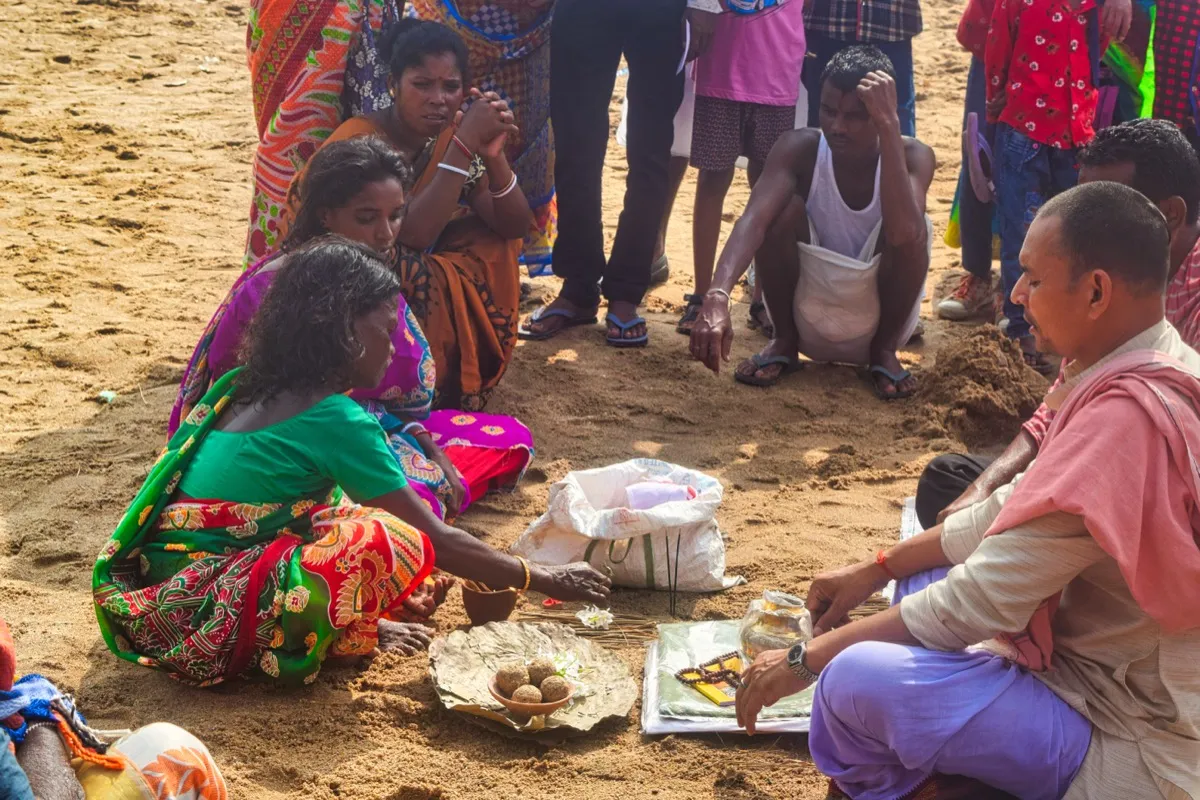
Pitru Dosha — When Ancestral Rites Have Been Neglected
Pitru Dosha is a term that many people encounter without fully understanding what it means. It is not a generalised bad luck or a horoscope configuration that one is born with by chance. The Markandeya Purana describes it as a specific spiritual consequence: the ancestors, deprived of Shraddha and Tarpan, are hungry and restless. Their hunger causes them to draw vitality from the family line below them. The family experiences this as recurring patterns of difficulty — health problems that appear generation after generation, financial setbacks that reset just when stability seems possible, or persistent trouble with children and progeny.
The important thing the scriptures emphasise is that Pitru Dosha is reversible. The ancestors are not malicious. They are hungry and distressed. When the family performs Shraddha, Tarpan, and Pind Daan with genuine faith, the ancestors are satisfied and their curses dissolve. The Brahma Purana’s statement that a sincere Shraddha satisfies the universe from Brahma down to a blade of grass is also a statement about this reversal: when the right actions are performed with the right intention, the ripple effect is vast.
If you believe your family may have Pitru Dosha, our guide to Pitra Dosh Nivaran explains the signs and the complete remedial sequence. The core remedy is always Pind Daan at a mahakshetra (great sacred site), combined with Tarpan, Shraddha, and in some cases Narayan Bali or Tripindi Shradh.
Can Hindu Death Rituals Be Performed Online or Remotely?
This is the question that comes in from NRI families most often. The straightforward answer is: yes, and we have been doing this since 2019 for families across 30+ countries.
What “online” means in this context is that our pandits perform the complete ritual physically at the teertha — Triveni Sangam, Varanasi, or Gaya — while you participate via live video call. You recite the sankalpa (statement of intent) from wherever you are, watch the entire ceremony in real time, and receive a recording. This is not a compromise. The Garuda Purana’s emphasis is on the correct intention (sankalpa) and the proper performance of the ritual by qualified pandits — your physical presence at the teertha is not required for the ritual to be valid.
What NRI families can arrange remotely:
- Pind Daan (all locations)
- Asthi Visarjan (with ash courier service)
- Shraddha and Tarpan
- Narayan Bali and Tripindi Shradh
- 13th day ceremony (Tehrvin) if you cannot travel in time
Payments are accepted via international bank transfer, Wise, or USD/GBP/AED/AUD/SGD equivalent. See our full NRI puja services page or visit our booking hub to browse all services with pricing.
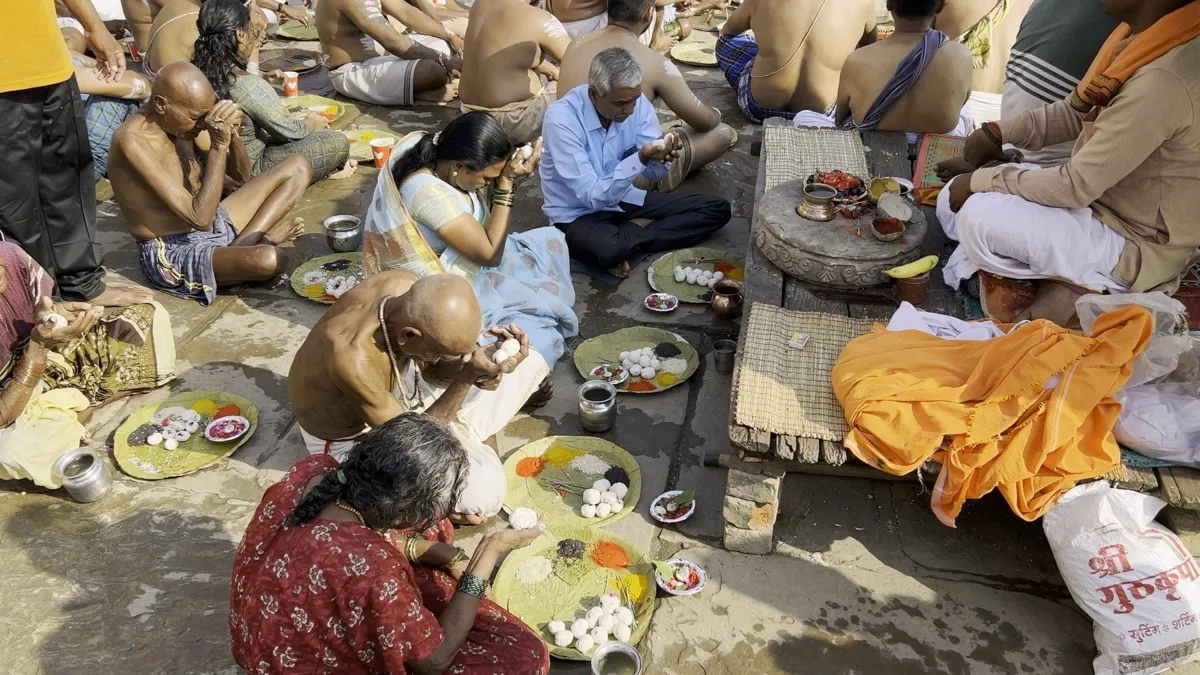
Need Help with Ancestral Rites?
Book Hindu Death Rituals with Experienced Pandits
From ₹5,100
- Pind Daan, Asthi Visarjan, Shradh, Tarpan across 7 sacred cities
- Live video ceremony for NRI families worldwide
- Experienced Teerth Purohits — we are the pandits, not a platform
- 2,263+ families served since 2019
Frequently Asked Questions
What is the 13th day ceremony after death called?
The 13th day ceremony is called Tehrvin (also spelled Terahvin or Terahi). On this day, the Sapindikarana ritual is performed — the soul of the recently deceased is formally elevated from Preta (wandering spirit) to Pitri (established ancestor) and introduced to the ancestors already in Pitru Loka. The chief mourner (usually the eldest son) shaves his head, the family performs a Brahmin feast (Brahmin Bhoj), and charitable giving (Daan) is done in the name of the deceased. The 13th day marks the end of the Sutak (mourning period), and the family returns to normal life after this ceremony. According to the Garuda Purana, it is also the day on which the soul’s subtle body — formed over the preceding 10 days through the daily Pinda offerings — is complete and the soul is fully equipped for its journey.
Can women perform death rituals in Hinduism?
Yes, women can and do perform Hindu death rituals. The Garuda Purana does not prohibit women from performing last rites. Historically, this has been a matter of social custom rather than scriptural prohibition. In families without male heirs, daughters routinely perform all death rites including lighting the funeral pyre, performing Pind Daan, and conducting the Tehrvin ceremony. We assist many such families every year. The spiritual validity of the ritual comes from the sincerity of intention (sankalpa) and the correct performance of the ceremony — not the gender of the performer.
How long is the mourning period in Hindu tradition?
The formal ritual mourning period in Hindu tradition lasts 13 days, called the Sutak or Ashaucha period. The Garuda Purana prescribes different durations by varna: 10 days for Brahmins, 12 days for Kshatriyas, 15 days for Vaishyas, and one full month for Shudras. During this time, the immediate family observes dietary restrictions (no meat, alcohol, fried food, or salt for the chief mourner), avoids temples and religious celebrations, and performs daily Pinda offerings that build the subtle body of the deceased. The mourning period formally ends after the Tehrvin ceremony on the 13th day, after which the family returns to normal life.
Is cremation the only option in Hinduism?
Cremation (Antyesti) is the standard and strongly preferred method in most Hindu traditions. However, there are recognised exceptions: infants and children under two years of age are typically buried rather than cremated. Saints, ascetics (sannyasis), and certain holy persons may be buried in a seated meditation posture (samadhi burial). In some communities, people who die of snakebite are traditionally placed afloat on a river. In practical terms, for urban or diaspora families, cremation — including electric crematorium — is valid and widely accepted. The key spiritual requirement is that the body be disposed of respectfully and that the proper rites be performed by family members.
What happens if Pind Daan is not performed?
The Garuda Purana states that a soul for whom the 10 Pindas of the mourning period have not been offered remains formless and trapped as a Preta (wandering ghost) in the atmosphere — unable to travel to Yamaloka or be received by the ancestors. For longer-term neglect, the Markandeya Purana describes ancestors driven by agonising hunger who draw vitality from their own descendants and leave with severe curses — manifesting as Pitru Dosha in the family. The good news is that Pind Daan can be performed at any time, even years or decades after a death. The scriptures do not set a time limit. If your family has not performed Pind Daan for any ancestor, it is never too late. See our complete guide to Pind Daan for more.
Can death rituals be performed after many years?
Yes. There is no expiry date on ancestral rites in Hindu tradition. Families who missed Pind Daan, Shraddha, or Asthi Visarjan — even decades ago — regularly come to us to perform these ceremonies. The soul in Pitru Loka receives the offering regardless of when it is made. For families where rites have been missed for three or more consecutive years, Tripindi Shradh is specifically recommended to address the accumulated debt to three generations of ancestors. Contact us and we can guide you on the right ceremony for your specific situation.
What is the difference between Pind Daan and Shraddha?
Pind Daan is the act of offering rice balls (Pindas) to departed ancestors — it is primarily a liberating ceremony and is most powerful when performed at the great tirthas like Gaya, Prayagraj, or Varanasi. Shraddha is a broader term for all ancestral rites performed with faith (shraddha), and encompasses Tarpan, Pind offering, and Brahmin feeding. The Brahma Purana states that a sincere Shraddha satisfies the entire universe from Lord Brahma down to a blade of grass. Think of Shraddha as the annual obligation — performed on the death anniversary and during Pitrupaksha — while Pind Daan at a tirtha is an intensified ceremony specifically aimed at liberating the soul. Both are necessary: Shraddha maintains the ongoing relationship with the ancestors; Pind Daan at a tirtha actively moves the soul forward.
Do NRIs need to travel to India for Hindu death rituals?
No. We have performed every form of Hindu death ritual — Pind Daan, Asthi Visarjan, Shraddha, Narayan Bali, Tripindi Shradh — for NRI families who could not travel to India, since 2019. Our service includes live video streaming of the entire ceremony so you can participate from the USA, UK, Canada, Australia, UAE, Singapore, or anywhere in the world. For Asthi Visarjan, we offer a documented ash courier service. The sankalpa (statement of intent) is taken from you over video call before the ceremony begins, ensuring your name and family lineage are formally included. Visit our NRI puja services page for complete details and pricing.
अपना पवित्र अनुष्ठान बुक करें
भारत भर के पवित्र स्थलों पर वेद-प्रशिक्षित पंडितों द्वारा वीडियो प्रमाण सहित प्रामाणिक अनुष्ठान।
2,263+ परिवारों की सेवा
वीडियो प्रमाण शामिल
2019 से
