
Key Takeaways
- The sites at a glance
- Badrinath Temple
- Brahma Kapal
- The hot springs
In This Article
Badrinath is in the Chamoli district of Uttarakhand, on the Alaknanda between the Nar and Narayan ranges, with Neelkanth rising behind it. Most visitors come for the temple and the Char Dham, but the sites within a few kilometres — the hot springs, Bheem Pul, Mana village on the border, and Brahma Kapal where the ancestral rites are performed — are what fill out a two or three day visit.
The sites at a glance
| Site | Distance | What it is |
|---|---|---|
| Badrinath Temple | in the town | Vishnu as Badrinarayan; Char Dham and principal Sapta Badri shrine |
| Tapt Kund | at the temple | Hot spring below the shrine, held to be the abode of Agni |
| Brahma Kapal | 200 m | The platform on the Alaknanda where ancestral rites are performed |
| Narad Kund | at the temple | Hot spring; where the Vishnu image is said to have been recovered |
| Sheshnetra | a short walk | Boulder with a natural eye marking, below Nar Parvat |
| Mata Murti Temple | 3 km | Dedicated to the mother of Nar and Narayan |
| Mana Village | 3 km | The last Indian village before the border, at about 3,000 m |
| Bheem Pul | at Mana | Rock bridge where the Saraswati meets the Alaknanda |
| Vyas Gufa | at Mana | Cave associated with Vyasa and Ganesha |
| Saraswati River | at Mana | Tributary of the Alaknanda, named in the Vedic literature |
| Vasundhara Falls | beyond Mana | Waterfall, reached on foot |
| Alka Puri Glacier | a trek beyond Mana | Source of the Alaknanda |
| Pandukeshwar | 22 km | Village founded by King Pandu, on the road up |
| Yogadhyan Badri Temple | at Pandukeshwar | One of the Sapta Badri; Vishnu seated in meditation |
Badrinath Temple
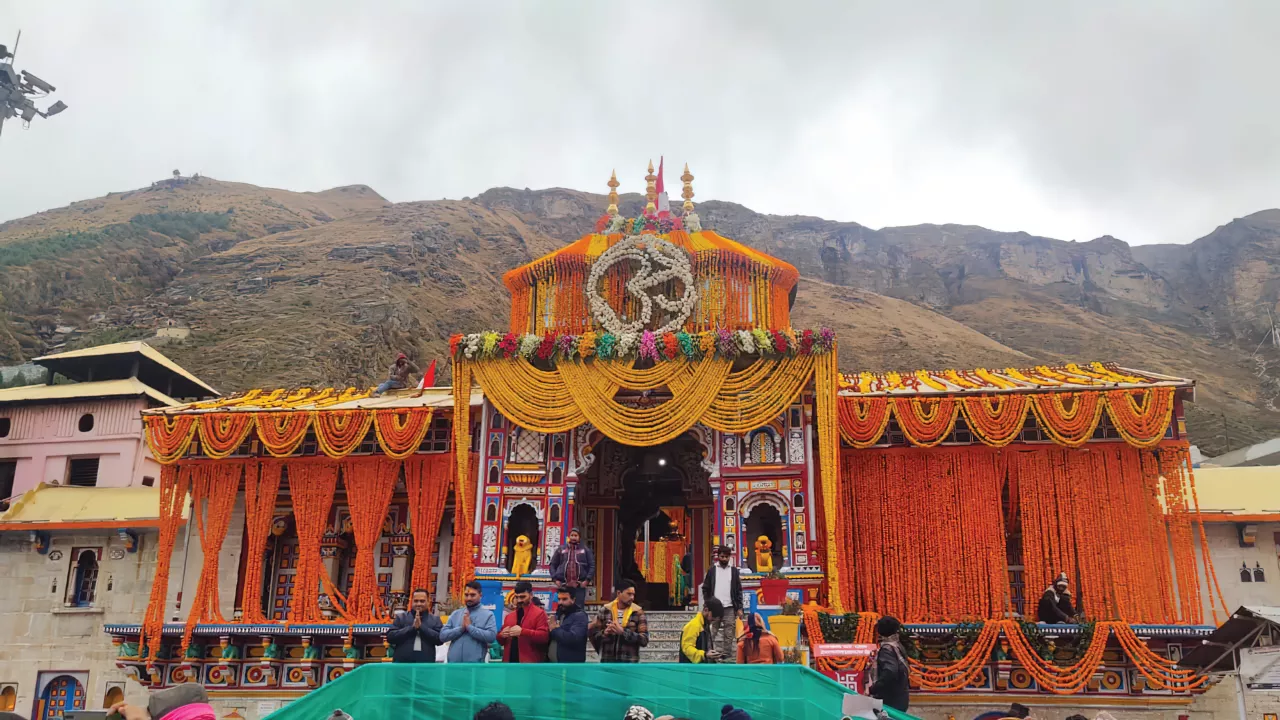
The shrine is dedicated to Vishnu as Badrinath, and the image in the sanctum is a black stone figure of Badrinarayan held to be a self-manifest form. It is one of the four Char Dham shrines and the principal temple of the Sapta Badri group of seven. It is reached on a short walk up from the town.
Brahma Kapal
A flat stone platform on the Alaknanda about 200 metres from the temple, and the reason many families come to Badrinath at all. Brahma is held to be present here, and shradh karma and Pind Daan performed on the platform are said to carry particular weight for the departed. The name comes from the skull of Brahma’s severed fifth head — our story of Brahma Kapal tells that properly, and the guide to Pind Daan at Badrinath covers the procedure and the packages.
🕉️ Book Pind Daan at Brahma Kapal
- Performed on the Alaknanda platform
- Sankalp in your family gotra
- All samagri arranged at the site
- Live video for families who cannot travel
The hot springs
Tapt Kund sits just below the temple and is held to be the abode of Agni. Pilgrims bathe here before darshan, and the water is genuinely hot — hot enough that most people enter it slowly. Narad Kund is the other spring at the temple, and the place from which the Badrinarayan image is said to have been recovered by Adi Shankaracharya.
Sheshnetra
A boulder across the Alaknanda from the town, named for Sheshnag, the serpent. It carries a natural marking that reads as an eye, which is where the name comes from — netra, eye. The rock sits between two small seasonal lakes in the lap of Nar Parvat and is a usual stop for pilgrims walking up to the temple.
Mana village, Bheem Pul and Vyas Gufa
Mana is three kilometres beyond Badrinath and is the last Indian village on this road before the border. It is a cluster of low stone houses and handicraft workshops on the bank of the Saraswati, and the walk up to it through the snow peaks is the reason most people go.
Bheem Pul is at the point where the Saraswati drops into the Alaknanda, and it is a single enormous rock lying across the gorge. The tradition is that the Pandavas passed this way on the swargarohan, their last journey, and that when Draupadi could not cross the river Bheema lifted the boulder into place as a bridge. Beside it is a shop that advertises itself as the last one on this side of the border.
Vyas Gufa is the cave at Mana associated with Vyasa and Ganesha, where the tradition holds the Mahabharata was set down. It is a short walk from Bheem Pul.
Vasundhara Falls and Alka Puri
Vasundhara Falls is beyond Mana and is reached on foot. Alka Puri is further on again — the glacier that the Alaknanda rises from, with peaks around it, and in tradition the dwelling of Kuber, the Gandharvas and the Yakshas. Both are walks rather than drives, and Alka Puri in particular is a proper trek.
Pandukeshwar and Yogadhyan Badri
Pandukeshwar lies on the road up, 22 kilometres below Badrinath and 21 above Joshimath, at about 1,900 metres. The village is named for King Pandu, father of the Pandavas, who is said to have settled here with Kunti and Madri after giving the throne to Dhritarashtra.
The story told here is that Pandu, out hunting, killed a sage who had taken the form of a deer, and was cursed by him as he died. Pandu then installed a bronze image of Vishnu at the shrine and meditated to be free of the act. The Pandavas were born to Kunti and Madri at Pandukeshwar, and Pandu died there when the curse took effect.
Two temples stand in the village. Yogadhyan Badri is one of the Sapta Badri and holds the image of Vishnu seated in meditation that Pandu is said to have installed; it is also described as the abode of Kuber and Udhava. The other is the Vasudev temple. Copper plate inscriptions record the early Katyuri rajas ruling from here, in a territory then called Panchal Desh.
Mata Murti Temple
Three kilometres from Badrinath on the right bank of the Alaknanda, dedicated to Mata Murti, the mother of Nar and Narayan. The tradition is that she asked Vishnu to be born from her, and that he was born as the twins. She is said to grant vairagya to those who meditate here. The temple draws its largest gatherings on Shukla Tritiya, Ashtami and Chaturdashi.
The Saraswati at Mana
The Saraswati here is a tributary that joins the Alaknanda at Bheem Pul, and it is named repeatedly in the Vedic literature. It is a different thing from the Saraswati held to run unseen at the Triveni Sangam at Prayagraj, though the two share the name and the association with the goddess.
Planning the visit
The shrine opens around late April or May and closes in November; the dates are fixed each year against the panchang and there is no access in winter. Two days covers the temple, the kunds, Brahma Kapal and Mana. A third gives you Pandukeshwar on the way, or the walk to Vasundhara.
Common questions
How many days do the sites around Badrinath need?
Two for the temple, the kunds, Brahma Kapal and Mana. Three if you want Pandukeshwar or the walk to Vasundhara Falls as well.
Which is the last village before the border?
Mana, three kilometres beyond Badrinath. Bheem Pul and Vyas Gufa are both there.
When is Badrinath open?
Roughly May to November. The opening and closing dates are set each year and the shrine is inaccessible through the winter.
Can ancestral rites be performed on the same trip?
Yes. Brahma Kapal is 200 metres from the temple and the rites are performed there, so a Char Dham darshan and the ancestral rites fit into one journey.
Arranging it
If your family is travelling to Badrinath and wants rites performed at Brahma Kapal, tell us the dates and the gotra and we will confirm the pandit and the total before anything is paid. The Char Dham guide covers the wider circuit.
Book Your Sacred Ritual
Authentic ceremonies performed by Veda-trained pandits at sacred sites across India.



