Key Takeaways
- 1. Gaya: The Land of Ancestral Redemption
- 2. Prayagraj: The King of Tirthas, Giver of Eternal Merit
- 3. Kashi (Varanasi): The City of Final Liberation (Moksha)
- Weaving the Trinity Together: Redemption, Perpetuity, Moksha
In This Article
To understand this trinity, you must first understand that each Tirtha Kshetra (a sacred field of pilgrimage) has its own unique spiritual power, its own specific boon that it bestows most effectively. While Shraddha can be performed in many holy places, these three form a complete and perfect circuit for ancestral liberation. Think of it as a three-step process: Redemption, Perpetuity, and Final Release.
Let us journey to each of these sacred lands in our minds.
1. Gaya: The Land of Ancestral Redemption
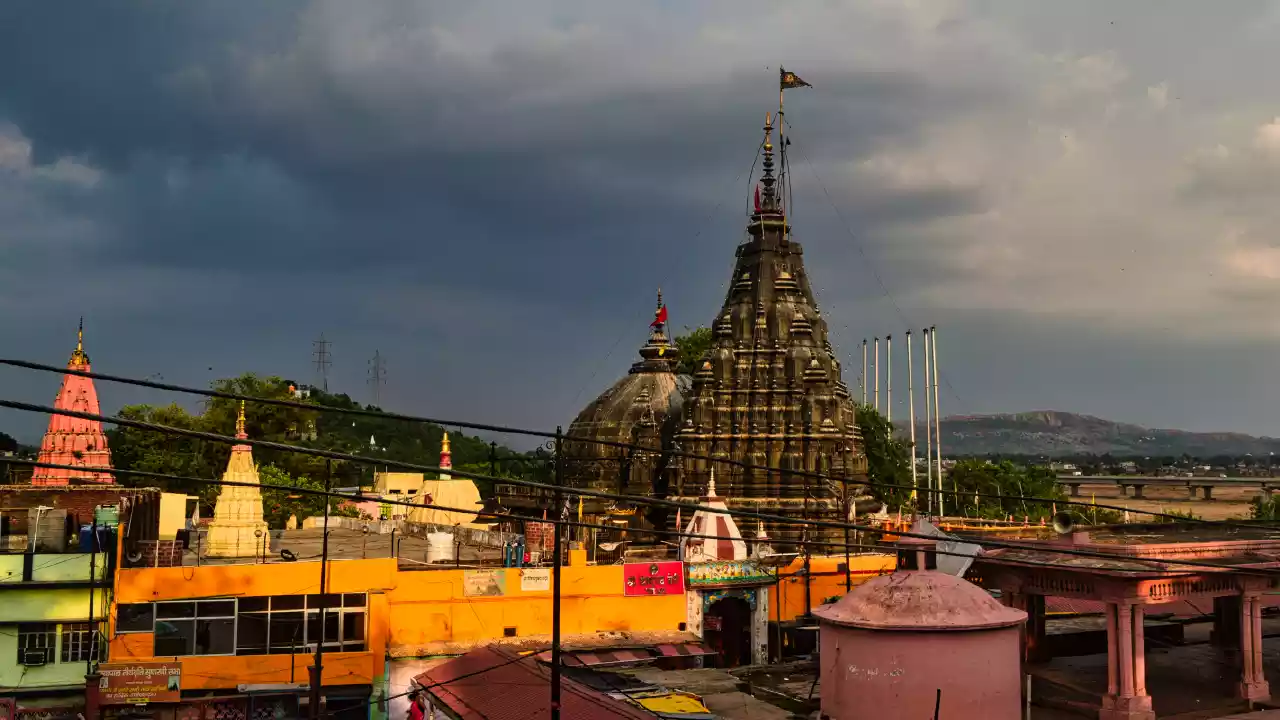
Gaya, in the ancient land of Magadha (or Kikata), is the undisputed cornerstone, the very foundation of Pitru Karma. Its primary and most celebrated power is the direct liberation of ancestors from states of suffering and indebtedness. If you think of this process as unlocking a soul from a prison, Gaya holds the master key. This is why the performance of Ancestral Rituals in Gaya is considered a sacred obligation.
Freedom from the Chains of Suffering (Preta Loka)
After death, a soul can sometimes be trapped in an intermediary state, as a Preta (a wandering spirit), unable to proceed to the Pitru Loka due to unfulfilled desires, a sudden death, or lack of proper rites. This is a state of great suffering, of hunger and thirst that cannot be quenched.
The Puranas sing praises of Gaya as the great redeemer from this state. The Agni Purana tells us that ancestors themselves, fearing the torments of hell, harbour a deep desire: “May a son be born to our line who will journey to Gaya and be our saviour!
The very act of offering Pindas (rice balls) at Gaya’s sacred sites – such as the famed Pretashila (Rock of the Spirits), Gayashiras, and the Akshayavat (the undying banyan tree) – is a powerful spiritual transaction. It provides the specific energy needed to sever the bonds of the Preta state, satisfying the soul and elevating it towards the heavenly realms or the region of Brahmā.
Wiping the Slate Clean: Freedom from the Three Debts
Every human is born with three primary debts (Rinas): debt to the Gods (Deva Rina), debt to the Sages (Rishi Rina), and the debt to the Ancestors (Pitru Rina). Fulfilling these is essential for spiritual progress.
The Garuda Purana states that by merely visiting the shrines of Lord Vishnu in his form as Gadadhara (the mace-bearer) in Gaya and performing the rites, a pilgrim is immediately freed from these three profound debts.
This act of clearing the debts for oneself and one’s lineage is a monumental relief, paving the way for further spiritual ascent. The power of Ancestral Rituals in Gaya is precisely this ability to provide a complete and final settlement of karmic and spiritual accounts.
The Great Ascent to Brahmaloka
The merit gained at Gaya is not small. It is vast and transformative. The Garuda Purana makes a stunning promise: the act of performing Shraddha at Gaya has the power to uplift ancestors up to the twenty-first generation, raising them to Brahmaloka, the realm of the Creator, a state of immense peace and bliss from which there is no easy fall.
The Agni Purana further confirms that Shraddha performed here is undecaying and confers this exalted realm. Gaya, therefore, sets the gold standard for freeing the ancestors from bondage and ensuring their dignified placement in a high celestial world.
🙏 Pind Daan in Gaya — Book the Complete Rite
2. Prayagraj: The King of Tirthas, Giver of Eternal Merit
If Gaya is the act of redemption, then Prayagraj, the sacred confluence where the Ganga, Yamuna, and the subtle Saraswati meet, is the act of making that redemption eternal and inexhaustible. Prayagraj is hailed as the Tirtharaja, the King of all Pilgrimage Sites. Its unique gift is Akshaya Punya – undecaying spiritual merit.

Tirtharaja: The Confluence of Divine Energies
The power of Prayagraj comes from the sacred Sangam. The Ganga is seen as representing Sattva Guna (purity, light), the Yamuna as Tamas Guna (inertia, darkness), and the unseen Saraswati as Rajas Guna (activity, energy). Their meeting point is a place of profound spiritual equilibrium and immense power.
The Skanda Purana declares that Prayaga is superior to all other holy spots, even Kurukshetra, and its pilgrimage yields fruit ten times more meritorious. It is where the spiritual energies of Bharat converge.
Akshaya Punya: The Blessing of Undecaying Merit
This is the key to Prayagraj’s role in the trinity. The Agni Purana states unequivocally that any charity (Daan), ancestral rites (Shraddha), or chanting of divine names (Japa) done at Prayaga yields undecaying merits (Akshaya Punya).
What does this mean? It means the positive effects of the ritual do not diminish over time. The Punya generated becomes a perpetual spiritual bank account for the ancestors and the family.
Therefore, performing Ancestral Rituals in Prayagraj ensures that the peace, satisfaction, and positive energy generated for the Pitris are not a temporary boost but a permanent state. It empowers the redemptive acts of Gaya with the quality of eternity. The Sangam’s sacred waters wash away sins and make the benefits of the Shraddha everlasting.
3. Kashi (Varanasi): The City of Final Liberation (Moksha)
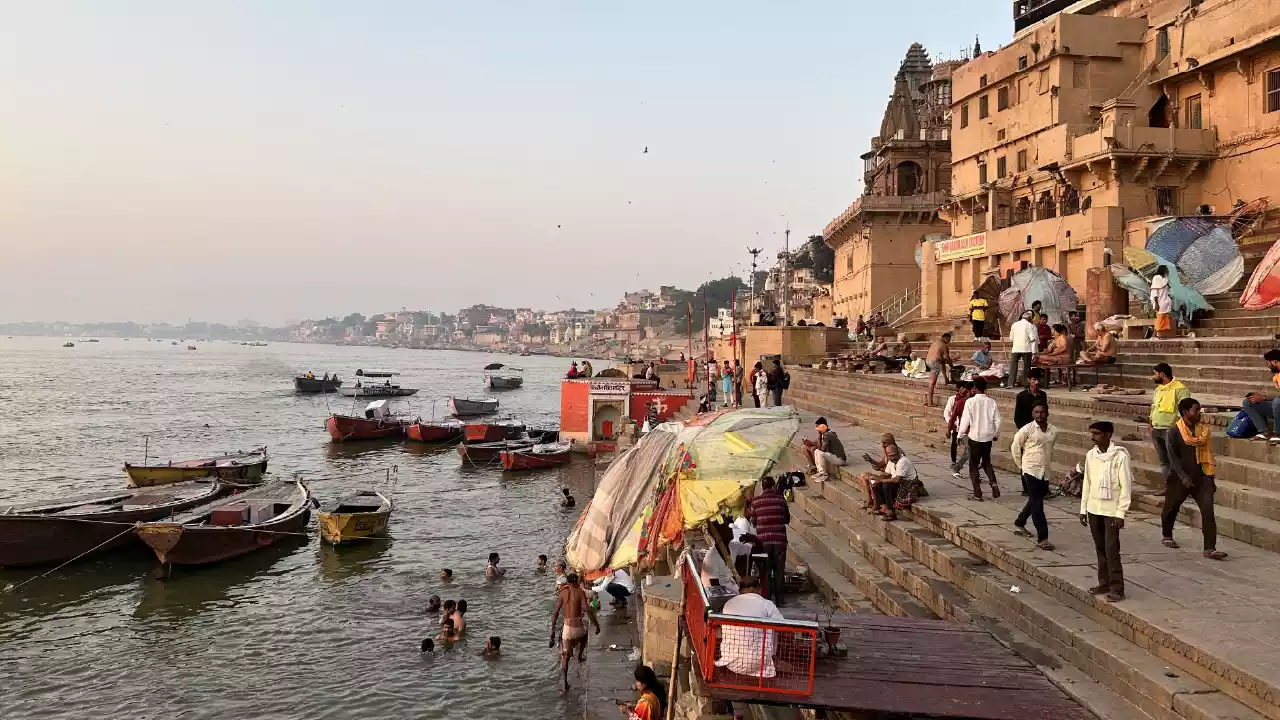
If Gaya redeems and Prayagraj makes the merit eternal, then Kashi, the luminous city of Lord Shiva, offers the ultimate prize: Moksha, the final and absolute liberation from the entire cycle of birth, death, and rebirth. Kashi does not just send the soul to a heavenly realm; it dissolves the very need for realms. This is why the spiritual power of Ancestral Rituals in Kashi is considered supreme.
The Golden Standard of Sanctity
The greatness of Kashi is often described by comparing it to Gaya, the established standard. The Skanda Purana repeatedly states that offerings made at various Tirthas within Kashi, like the Pādodaka Tirtha or Dharma Tirtha, and especially with the holy water from Manikarnika Ghat, grant the ancestors the very same satisfaction and merit as performing Shraddha at Gaya.
This establishes Kashi as a place of equivalent, and often superior, power. One need not wonder if the rites here are effective; the scriptures assure us they meet and exceed the highest benchmark.
The Promise of Ultimate Release (Moksha)
Kashi’s most unique and cherished name is Avimukta – “the one which is never forsaken” (by Lord Shiva). Another is Mukti Kshetra – the “field of liberation.”
The Padma Purana makes the incredible claim that by the very sight of Kashi, final release is given. Lord Shiva himself is believed to whisper the Taraka Mantra (the mantra of liberation) into the ear of anyone who dies here, granting them instant Moksha, regardless of their past karma.
When Shraddha is performed in such a place, the intention is elevated. We are no longer just praying for our ancestors to reach heaven (Swarga) or Brahmaloka; we are praying for their ultimate merger with the Absolute. Performing Ancestral Rituals in Kashi aligns the soul of the ancestor with the city’s inherent nature of Moksha.
The Special Haven in Kali Yuga
In this current age of Kali, which is fraught with spiritual challenges, the Skanda Purana declares that three things are of special significance for salvation: Lord Vishveshvara (Shiva), the holy Ganga, and the city of Varanasi itself. It is considered the spiritual essence of the three worlds. Staying in this sacred city for even a single day can yield immense spiritual benefit.
Weaving the Trinity Together: Redemption, Perpetuity, Moksha
Now, my child, you can see how these three sacred Tirthas are not interchangeable but form a complete spiritual pathway. They address every need of a departed soul and the dutiful descendant:
GAYA (Redemption): This is the foundational act. It is the great rescue mission. Here, you perform the rites to pull your ancestors out of any suffering state (Preta Loka), clear their karmic debts, and place them securely in a high, peaceful realm (Brahmaloka). It answers the immediate need for peace and elevation.
PRAYAGRAJ (Perpetuity): This is the empowering act. Here, you imbue the peace and merit you have secured for your ancestors with the quality of being eternal (Akshaya). The rituals performed here ensure that the benefits gained at Gaya and elsewhere will never fade away, providing lasting spiritual sustenance.
KASHI (Final Release): This is the ultimate goal. Here, you perform the rites with the highest possible intention – not just for a comfortable afterlife in a heavenly realm, but for complete liberation (Moksha) from the entire cycle of samsara. It is the final, definitive step towards merging with the Divine.
Together, the performance of Ancestral Rituals in Kashi, Gaya, and Prayagraj creates a complete and unbreakable chain of spiritual upliftment. One redeems, the next makes it permanent, and the last offers the final, absolute freedom.
A Pilgrim’s Path to Peace
The journey to this holy trinity is therefore not just a physical one; it is a profound spiritual progression. It is a testament to the depth of love and duty that binds generations. By undertaking this pilgrimage, a person not only brings immeasurable peace to their ancestors but also purifies their own being, coming into contact with the most potent spiritual vibrations on this sacred land of Bharat.
May this understanding guide all those who wish to walk this sacred path, bringing peace to their Pitris and blessings upon their own lives.
|| Om Pitru Devatabhyo Namah ||
|| Om Shanti, Shanti, Shanti ||
🙏 Pind Daan in Gaya — Book the Complete Rite
Performing Ancestral Rituals from Abroad: A Guide for NRIs
For NRI families living in the USA, UK, Canada, Singapore, Malaysia, UAE, Australia, or anywhere else in the world, performing ancestral rituals at Kashi, Gaya, and Prayagraj is not only possible — it is encouraged by Vedic tradition through the concept of Pratinidhi Karma (rites performed by a qualified representative).
How NRIs Can Arrange Pind Daan from Abroad
Prayag Pandits has served over 2,263 families including hundreds of NRI families across 30+ countries. The process is simple:
- Contact us via WhatsApp (+91 77540 97777) with your ancestor details (name, gotra, death tithi if known)
- Choose your tirtha — Kashi for moksha-focused rites, Gaya for maximum Pitru liberation, Prayagraj for Triveni Sangam merit
- Join via live video call — our pandits perform the ritual with you watching in real-time
- Receive documentation — photo proof, video recording
Can NRIs Arrange Asthi Visarjan from Abroad?
Yes. For online Asthi Visarjan, the Asthi Kalash (urn) can be shipped to India via international courier with a death certificate and cremation certificate. Our team receives the ashes at the chosen tirtha and performs the complete immersion ceremony. Families who cannot ship ashes can opt for a symbolic Asthi Visarjan with sankalpa and Tarpan.
Payment Options for NRI Families
We accept international payments via PayPal, Wise (TransferWise), direct bank transfer, and international debit/credit cards (Visa, Mastercard). Payments can be made in INR, USD, GBP, SGD, MYR, AED, CAD, and AUD.
Book Your Sacred Ritual
Authentic ceremonies performed by Veda-trained pandits at sacred sites across India.