
No rituals selected yet.
Browse Pooja Packages →Key Takeaways
In This Article
What is Apara Karma?
Apara Karma (அபர கர்மா) — also written as Apara Kriya or Aparakriya — refers to the complete set of post-death rites in Hindu tradition. The word Apara means “later” or “subsequent,” and Karma means “action” — so Apara Karma literally means “the rites that follow” a person’s death. These are the final acts of devotion that the living perform for the departed soul, helping it transition safely from this world to the next.
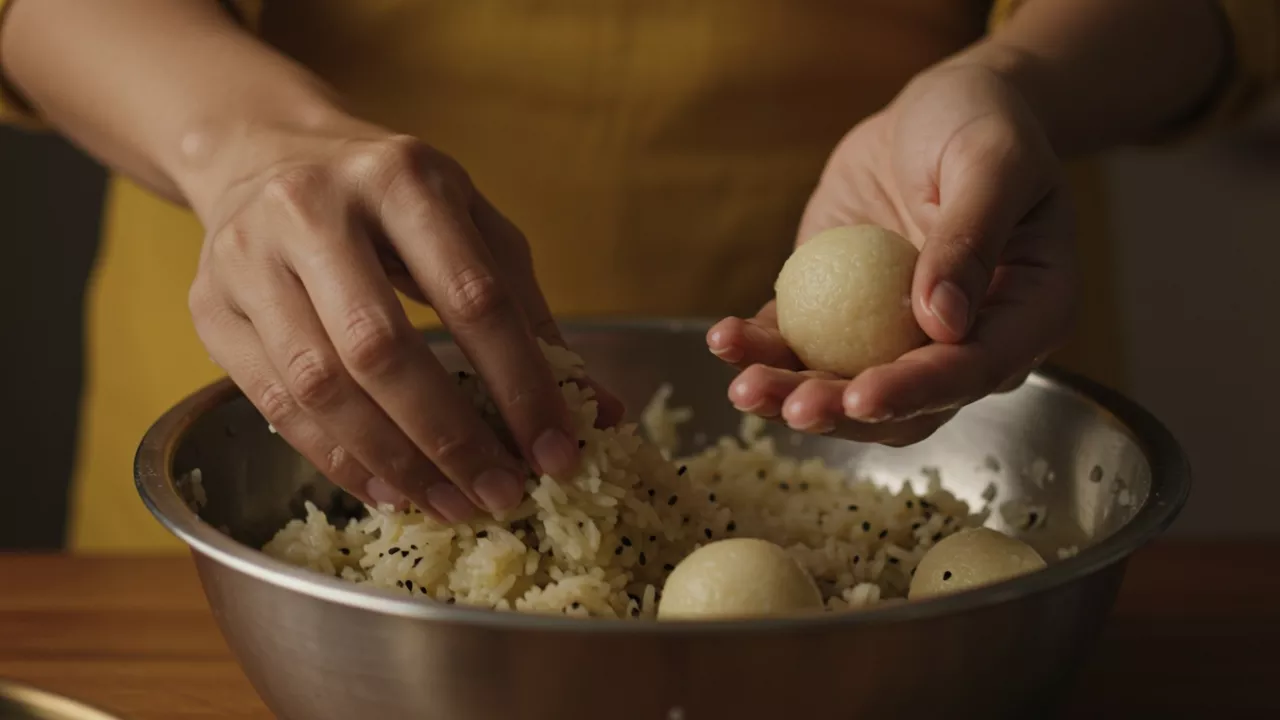
In Tamil Hindu tradition, Apara Karma encompasses everything from the moment of death through the final purification ceremony at the end of the 16-day mourning period. The ritual sequence is meticulous and spiritually purposeful — each step corresponds to a stage in the soul’s journey as described in the Garuda Purana and the Aapasthamba Grihyasutra. For families from other Indian traditions who want to understand how these same principles apply across communities, our comprehensive guide to Hindu death rituals covers the Vedic framework common to all these regional practices.
Understanding this process helps NRI Tamil families — in Malaysia, Singapore, and across the world — navigate what to do when a loved one passes, even when family members are scattered across continents.
The 16-Day Process: Day by Day
Tamil Hindu Apara Karma follows a structured 16-day schedule (though some families observe it over a shorter period for practical reasons). Here is an overview of the key stages:
Day 1: Antyeshti (The Cremation Rites)
Antyeshti (இறுதி சடங்கு) — the final rites — begins immediately after death. The body is bathed, dressed in clean white cloth, adorned with vibhuti (sacred ash) or sandal paste, and a lamp (deepam) is lit nearby. The eldest son (or nearest male heir) leads the rites.
Before the body is taken for cremation, a Vadhyar conducts prayers seeking the blessings of the departed and asking for peace (Shanti) for the soul. The body is carried to the cremation ground (smashan) on a bier of bamboo, with chanting of Vishnu’s names — particularly “Rama Nama Satya Hai” in North Indian tradition and “Govinda, Govinda” in Tamil tradition.
At the cremation ground, the eldest son lights the funeral pyre (Mukhagni — the fire from the face). The Vadhyar guides the mantras throughout. This act is considered one of the most sacred duties a son can perform.
Day 3: Asthi Sanchayana (Ash Collection)
Three days after cremation, the family returns to the cremation ground to collect the ashes and bone fragments (Asthi — அஸ்தி). This collection is called Asthi Sanchayana or Asthi Pickupam in Tamil parlance. The collected remains are placed in a clean clay pot or copper vessel.
The collected Asthi must be immersed in a sacred river — ideally Ganga at Prayagraj, Varanasi, or Haridwar, or the sea at Rameswaram. This immersion is called Asthi Visarjan (அஸ்தி விசர்ஜன் / தூக்கு நீர் திட்டம்). According to the Garuda Purana, immersion of Asthi in Ganga ensures liberation (Mukti) for the departed soul, regardless of the sins accumulated in life.
For NRI families, Asthi Visarjan at Triveni Sangam Prayagraj is especially significant because of the triple-confluence sanctity of the site. Our Online Asthi Visarjan service allows families abroad to courier or hand-carry the Asthi to India, or to send it via trusted courier, for our priests to conduct the Visarjan with full rites on your behalf via live video stream.
Days 1-10: Ekadasham Rites (Daily Pinda Offerings)
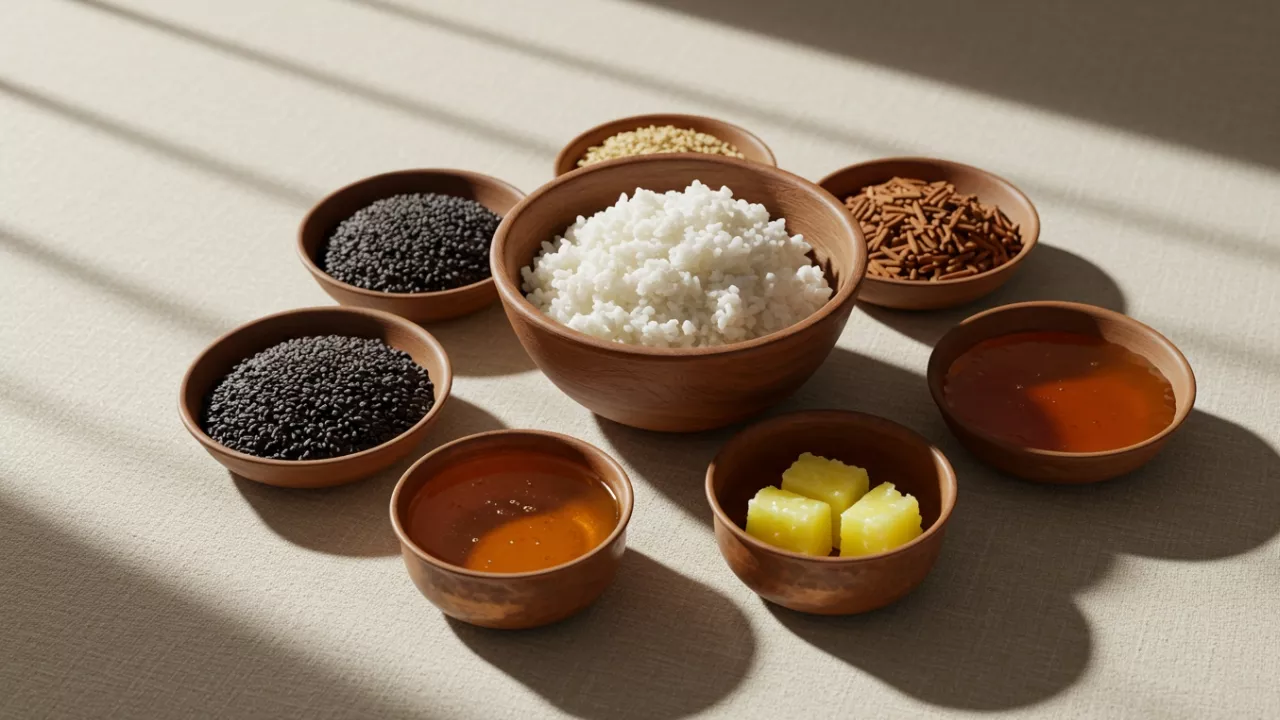
For ten days following the death (Days 1-10), the chief mourner (Karta) offers daily Pinda — a ball of cooked rice mixed with sesame and ghee — to nourish the departing soul as it begins to form its new subtle body for the afterlife journey. These daily Pinda offerings are called Ekadasham rites in Tamil (Ekadasham meaning “the eleventh day process” — the cumulative ten-day sequence culminates on the eleventh day).
During these ten days, the family observes mourning restrictions: no shaving, no wearing of footwear in the house, simple food only (no non-vegetarian food, no onion or garlic), abstaining from celebrations, and sleeping on the floor in some traditions.
Day 11: Pinda Pradana and Sapindikarana
On the eleventh day, a significant rite called Sapindikarana is performed. This is the ceremonial joining of the newly departed soul with the line of Pitrus (the three ancestral generations already in the ancestor realm). Until this rite, the soul is considered a Preta (unsettled spirit); after Sapindikarana, it is formally received among the ancestors. A Vadhyar must perform this rite — it is not appropriate to attempt it without priestly guidance.
Day 13: Thirteenth Day Ceremony
On the thirteenth day, an elaborate Shradh ceremony is performed for the newly departed. Brahmin guests (or in Tamil tradition, the Vadhyar and family elders) are invited for a meal — this is Brahmin Bhoj or Sadhya, the ceremonial feast. Brahmin Bhoj is considered essential because feeding learned Brahmins is equivalent to feeding the soul of the ancestor directly in the Pitru Loka.
Day 16: Karumathi — The Purification Ceremony
Karumathi (கரும தி) — sometimes called Karumadam in some Tamil communities — is the concluding ceremony of the 16-day Apara Karma. It marks the end of the formal mourning period and the ritual purification (Shuddhikaran) of the household. In some traditions, this is called the Subham (சுபம்) ceremony, meaning “auspicious beginning” — the family re-enters normal life after the period of ritual impurity (ashaucha).
The Karumathi ceremony involves:
- A final Shradh feeding for Brahmins and family
- Daan (charitable giving) of clothes, vessels, and items the deceased used regularly
- The household is cleaned, washed, and re-consecrated with Ganga jal
- New clothes are worn by the Karta and close family — symbolising return to normal life
- Depending on the community, a puja for the family deity may be performed to re-invite auspiciousness into the home
Karumathi vs. Subham — what's the difference?
In many Tamil Brahmin (Iyer/Iyengar) families, the 16th-day ceremony is called Karumathi. In some communities (particularly Vellalar and non-Brahmin Tamil families), it is called Subham. Both refer to the same transition: the formal end of the mourning period and the ritual purification that allows the household to resume auspicious activities. The content of the ceremony may vary slightly by community — consult your Vadhyar for the exact procedure for your kula (lineage).
The Role of the Eldest Son in Apara Karma
In Tamil tradition, as in Hindu dharma broadly, the eldest son bears the primary responsibility for conducting Apara Karma. He is called the Karta — the one who acts. His role is not merely ceremonial; the texts describe it as a sacred duty (dharma) without which the soul of the departed remains unsettled.
The son must:
- Light the funeral pyre (Mukhagni) at cremation
- Perform daily Pinda offerings for ten days
- Conduct Sapindikarana on the eleventh day
- Arrange and participate in the thirteenth-day and Karumathi ceremonies
- Observe mourning restrictions for the full 16-day period
- Continue annual Shradh rites on the death anniversary every year thereafter
For NRI sons living abroad, the question of who performs these rites when the death occurs in India — or abroad — is a real and pressing one. The answer is that an authorised Vadhyar or Pandit can perform many of these rites on behalf of the Karta, with the Karta reciting the Sankalpa (declaration of intent) over video call at the beginning of each rite.
Asthi Visarjan: What NRI Families Need to Know
After the cremation and Asthi Sanchayana (ash collection), the Asthi must be immersed in a sacred river. This is often the step that NRI families find most logistically challenging — especially when the death occurs abroad and the family wishes to bring the ashes to India for immersion in the Ganga.
Prayag Pandits has extensive experience assisting Tamil NRI families with Asthi Visarjan from Malaysia, Singapore, and other countries. Here is what you need to know:
If the Death Occurred in India
Arrange for Asthi Visarjan at Triveni Sangam Prayagraj — the most sacred site for this rite. Our priests will conduct the full puja, Visarjan, and Tharpanam at the Sangam. If family members can travel to Prayagraj, we recommend our Prayagraj Asthi Visarjan Package with stay and travel.
If the Death Occurred Abroad (Malaysia, Singapore, etc.)
Bringing cremated remains (ashes) from Malaysia or Singapore to India involves customs documentation in both countries. Requirements vary — consult the High Commission of India in Malaysia or Singapore for the current procedure. Once the Asthi reaches India, our team can receive them in Prayagraj, Varanasi, or Haridwar and conduct the Visarjan.
Alternatively, our Online Asthi Visarjan service allows families abroad to send the ashes by courier to a trusted family member in India, who then hands them to our priests at the tirtha. The ceremony is conducted via live stream so the family can witness it in real time. We also offer Online Asthi Visarjan at Varanasi and Online Asthi Visarjan at Haridwar.
Pind Daan After Asthi Visarjan
For complete Apara Karma, Asthi Visarjan is ideally followed by Pind Daan at the same sacred tirtha. Pind Daan — the offering of rice balls (Pinda) combined with prayer — ensures that the soul’s journey from the Pretu state to the Pitru realm is completed with full merit and without obstruction. Performing both rites at Prayagraj on the same visit is the most spiritually complete form of Apara Karma.
For online services, we offer both Asthi Visarjan and Online Pind Daan at Prayagraj on the same day, so the family can witness both rites in a single extended live stream session.
Immediate Assistance Available
🙏 Apara Karma u0026 Asthi Visarjan Guidance
Online Asthi Visarjan starting price
₹9,999
per person
Tamil NRI families often have specific questions about adapting these ancient rites to modern circumstances. Our NRI poojan services guide covers many practical aspects. Here are the most common questions we receive about Apara Karma specifically.
What Happens If a Family Member Dies Abroad: A Practical Guide for Malaysian and Singaporean Hindus
When a Tamil Hindu family member passes away in Malaysia or Singapore, the family faces a dual challenge: navigating the legal and administrative requirements of the country of death, while also fulfilling the religious obligations of Apara Karma. Here is a practical step-by-step guide for families in this situation.
Step 1: Arrange Local Cremation
In Malaysia and Singapore, cremation can be arranged through local Hindu crematoriums. Major cities including Kuala Lumpur, Penang, Johor Bahru, and Singapore have facilities that serve the Hindu community. A local Vadhyar or temple priest can conduct the Antyeshti rites at the cremation ground. Contact your local temple — Batu Caves in KL, Sri Mahamariamman Temple, or Sri Thendayuthapani Temple in Singapore — for referrals to Vadhyars who can officiate.
Step 2: Collect the Ashes (Asthi Sanchayana)
After cremation, collect the ashes (Asthi) carefully in a clean, sealed container. In Malaysia and Singapore, cremated remains are typically returned by the crematorium in an urn. If you plan to bring the ashes to India for Asthi Visarjan in the Ganga, keep the official death certificate, cremation certificate, and any customs documentation the crematorium provides — these will be needed for customs clearance at the Indian port of entry.
Step 3: Arrange Asthi Visarjan in India
Contact Prayag Pandits (+91 77540 97777) before travelling to India. We will coordinate the Visarjan date, arrange the Vadhyar, and guide you through which documents to carry. If no family member can travel to India, we accept ashes brought by a trusted relative or delivered to our designated address in Prayagraj — the Visarjan is then conducted on a specific date via live video stream for the family abroad.
Step 4: Continue the 16-Day Apara Karma Remotely
The daily Pinda offerings, Sapindikarana, and Karumathi can all be arranged via our remote service. We conduct these rites at Prayagraj or Varanasi on the correct days, with the Karta (eldest son) participating via video call for the Sankalpa at the start of each ceremony. We provide a full schedule of the 16 days and the specific rites on each day at the time of booking.
Apara Karma for Akal Mrityu (Untimely Death): Special Considerations
When a family member dies prematurely — through accident, sudden illness, or other unexpected causes — the Apara Karma involves additional rites beyond the standard 16-day sequence. Akal Mrityu (untimely death) creates a more complex spiritual situation for the departed soul, which did not have time to prepare for death and may not transition smoothly without additional ritual support.
In such cases, the Vadhyar may recommend Narayan Bali Puja — a rite specifically designed to release the soul of one who died unexpectedly. This is performed at certain tirthas including Prayagraj, Tryambakeshwar (Nashik), and Haridwar. Additionally, Tripindi Shradh may be recommended if the standard Shradh has been missed for three or more years. Our priests are experienced in all these special-circumstance rites — contact us to discuss your specific situation.
For deeper reading on related topics, see our guide to Asthi Visarjan — all you need to know, our article on the best places for Asthi Visarjan in India, and our explanation of Akal Mrityu (untimely death) and its special rites.
Frequently Asked Questions
What is Apara Karma in Tamil Hindu tradition?
Apara Karma (literally "the other karma") is the collective term used in Tamil Hindu tradition for all post-death rituals performed for a departed relative, distinct from "Apara" meaning the 16-day sequence following death. These rituals include: Sadaku Ceremony (on death day), Samskaram (cremation or burial preparation), Dina Shraddham (daily rituals for 10-16 days), Karumathi / Subham (the ceremony on the 13th or 16th day that marks the formal transition to Preta state), Masikam (monthly offerings for 12 months), and Sapindikarana (on the first death anniversary). Apara Karma follows the Tamil Vedic tradition with specific Dravida mantras, different from North Indian practice. The full sequence spans 1 year and is performed by the Vadhyar (Tamil pandit).
What is the difference between Apara Karma and Antyeshti?
Antyeshti refers specifically to the immediate funeral rites performed at the time of death — cremation, bone collection, and the first few days of preparation. Apara Karma is the broader category that includes Antyeshti PLUS all the subsequent daily, monthly, and annual rituals that continue for 1 year. Think of Antyeshti as "the ending" (the first 10-16 days) and Apara Karma as "what follows the ending" (daily + monthly + yearly + Sapindikarana). Both are part of the complete Dvadasha Karma (12-step death sequence) prescribed for orthodox Tamil Hindus. In practice, Antyeshti is handled immediately by immediate family, while Apara Karma is coordinated with a qualified Vadhyar over the course of the first year.
What are the 16-day rituals after death in Tamil tradition?
The 16-day Dina Shraddham sequence in Tamil tradition includes: Day 1-3 — Asauca (period of ritual impurity), basic offerings of rice balls and water, Day 4-10 — Daily Pinda offerings, each pinda representing a specific element of the subtle body the soul must reconstruct, Day 11 — Ekadasha (first major ceremony), invocation of ancestors, Day 12-13 — Dvadasha and Trayodasha, water offerings and mantra recitation, Day 13 — Karumathi / Subham (the critical ceremony marking the soul's transition from wandering Preta to aspiring Pitri), Day 16 — Shodasha (final 16-day ceremony), conclusion of the immediate post-death phase. Tamil families observe Asauca restrictions throughout this period: no visitors, no temple visits, no celebration foods.
Is it necessary to perform Karumathi (Subham) with a trained Vadhyar?
Yes, Karumathi/Subham is considered the single most critical ceremony in the 16-day sequence and must be performed by a qualified Vadhyar who knows the specific Dravida Shakha mantras (typically Krishna Yajurveda Taittiriya). This ceremony marks the formal transition of the soul from Preta state to the early Pitri state, and the mantras must be recited perfectly to ensure the transition is spiritually effective. DIY observance by family members is not recommended for this specific ceremony. Our Tamil-speaking Vadhyars are trained in the complete Taittiriya procedure and can travel to Prayagraj, Varanasi, Rameshwaram, or other sacred sites for Karumathi. We also perform it at family homes in Tamil Nadu, Karnataka, and other states on request.
Can Apara Karma be completed for NRI families if the son cannot return in time?
Yes. When the eldest son lives abroad and cannot return for the 13-day or 16-day ceremony, Tamil tradition provides two valid options: (1) A qualified Vadhyar can perform the ceremony in the family home with the family present, and the son participates remotely via video call (modern practice allows this), with the Sankalpa invoking the son's name and gotra, (2) The son performs an equivalent ceremony abroad with a local Vadhyar or designated priest, coordinated with the Vadhyar in India to ensure the timing aligns. For NRIs in the USA, UK, Canada, Singapore, Malaysia, or UAE, we coordinate remote Apara Karma through our Tamil pandit network. The spiritual efficacy is preserved provided the correct gotra, Shakha, and mantras are used.
Can Apara Karma be performed for someone who died outside India (Malaysia, Singapore, USA)?
Yes. When death occurs outside India, Tamil families can perform Apara Karma either (1) locally abroad with a qualified Tamil Vadhyar who knows the Dravida procedure, or (2) in India by the next-of-kin with the son abroad participating remotely. For the Asthi Visarjan step, ashes can be couriered to India or brought during a family member's visit. Many Tamil families from Malaysia, Singapore, and Australia specifically bring ashes to Rameshwaram (the scripturally-prescribed final immersion site for Dakshina Bharata) or to Varanasi/Prayagraj. Our pandits coordinate the complete Apara Karma including Asthi Visarjan, Pind Daan, and the 1-year Masikam/Sapindikarana sequence for overseas Tamil families.
Book Your Sacred Ritual
Authentic ceremonies performed by Veda-trained pandits with video proof at sacred sites across India.
2,263+ families served
Video proof included
Since 2019
