
Pishach Mochan Kund Varanasi: Where Lord Shiva Liberates Trapped Souls
The kund in Chetganj, away from the Ganga ghats, prescribed in the Kashi Khanda for souls held in Pret or Pishach Yoni after an unnatural death. It is where Narayan Bali and Tripindi Shradh are performed at Varanasi.
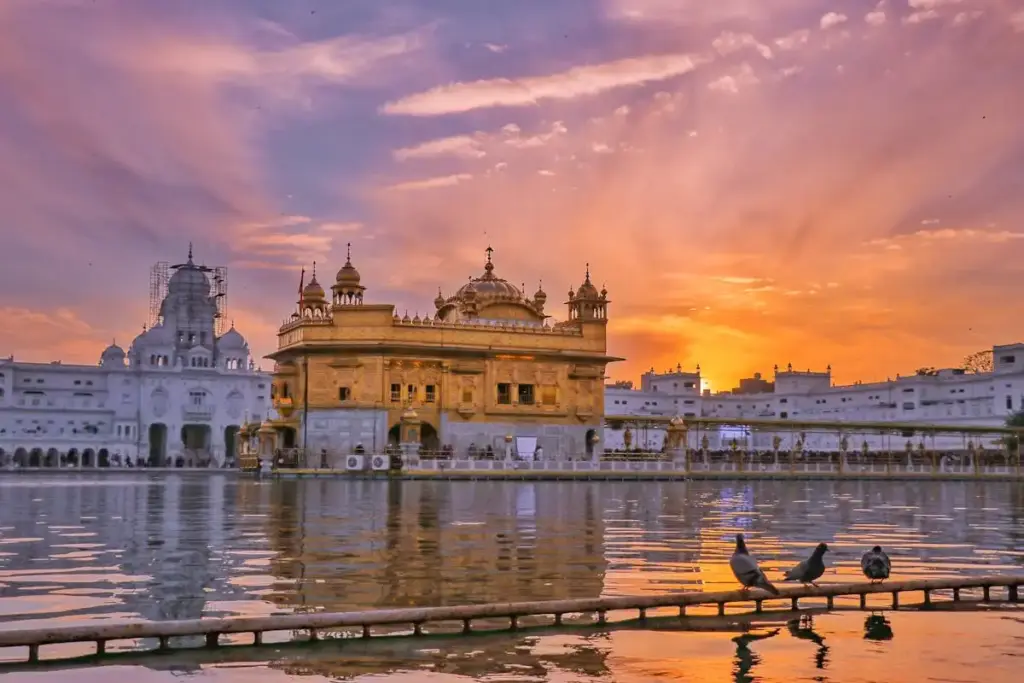
Pishach Mochan Kund sits in the Chetganj area of Varanasi, away from the cremation ghats, and it has one purpose. Pishach, a restless spirit, and mochan, release. The Kashi Khanda names it as the site where a soul held in Pret or Pishach Yoni after an unnatural death can be freed, and it is where Narayan Bali and Tripindi Shradh are performed in this city.
Contents
- Who the rites here are for
- The Kashi Khanda account
- Kapardishwara Mahadev
- Where it fits in Kashi
- Narayan Bali
- Tripindi Shradh
- Pind Daan and tarpan
- What it costs
- Getting there
- Preparing
- When to come
- For families abroad
- A three-day Varanasi circuit
- Where else we perform Narayan Bali
- Arranging it
- Questions families ask
Who the rites here are for
The tradition’s criterion is the circumstance of the death, not the state of the living family. The Garuda Purana names the deaths it applies to: accident, suicide, drowning, fire, murder, snakebite, epidemic — or any death where the Antyeshti rites were not performed, or were not completed properly.
If that describes a death in your family, Narayan Bali at Pishach Mochan is the rite the tradition prescribes, and you do not need anything else to establish it. If it does not, the Ganga ghats are where the ordinary ancestral rites — tarpan and Pind Daan — are performed, and they are sufficient.
The Kashi Khanda account
Chapter 54 of the Kashi Khanda, in the Skanda Purana — “The Greatness of Pishacha-Mochana Tirtha” — gives the origin. The tank was first known as Vimalodaka Tirtha, the immaculate water, created by a Shiva Gana named Kapardi through austerities.
A brahmin who had fallen into Pishach Yoni through past karma came upon a Shaiva sage meditating there in the month of Margashirsha. He tried to frighten the sage, failed, and then prostrated and asked for release. The sage told him: bathe in this Vimalodaka Tirtha and take darshan of the Kapardeeshwara Linga. He did, the demon body was destroyed, and the soul was freed. The kund has been Pishach Mochan since.
What makes the chapter more than an account of one miracle is what it establishes next: that any soul in Pret or Pishach form, whatever the original cause, can find release at this kund when the rites are properly performed. The text places it among the Anashrita Tirthas — sites within Kashi whose power comes from what happened at them rather than from a deity residing there.
Kapardishwara Mahadev
The temple beside the kund holds one of the Pancha Lingas of Kashi — the five supreme lingas listed in the Kurma Purana, with Vishwanatha, Krittivaseshwara, Madhyameshwara and Omkareshwara. Kapardi refers to Shiva’s matted locks, and this form is Shiva as the refuge for those whom death itself has not freed.
The Kashi Khanda prescribes worshipping Kapardishwara before the rites at the kund, not after — the darshan is treated as what opens the way for the rest. Any pandit working here will take you to the temple first.
The local Tirth Purohit tradition holds that the kund was once part of a larger complex with shrines to several forms of Bhairava, Kashi’s kotwal or guardian. The rites here are understood to petition both Shiva, through Kapardishwara, and Bhairava.
Where it fits in Kashi
Varanasi’s sacred geography is not undifferentiated. The Pancha Tirtha — Assi, Dashashwamedh, Manikarnika, Panchaganga and Adi Keshava — serve pilgrims seeking general purification. The cremation ghats, Manikarnika and Harishchandra, handle the transition of those who die within the Kashi Mandala.
Pishach Mochan has a narrower function: souls that the ordinary mechanism of death and cremation did not release. In scriptural terms they are neither in Pitra Lok with the properly cremated nor liberated as those dying naturally in Kashi are held to be, but in an intermediate state.
Which is why it matters to be clear about which of these you need. This is not a general pilgrimage site.
Narayan Bali
The rite for a soul held after an akal mrityu, an untimely death, or where the funeral rites were never properly performed. Its purpose in the tradition is to release the soul from that state and let it take its place in Pitra Lok.
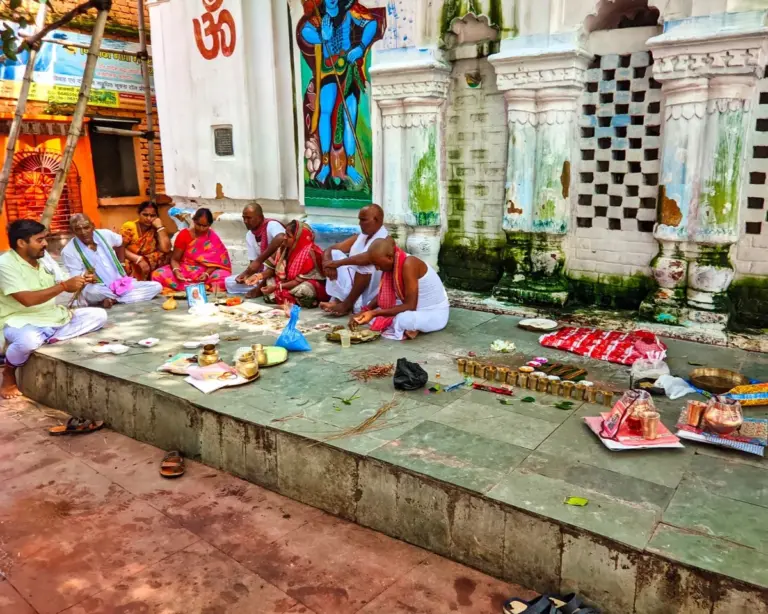
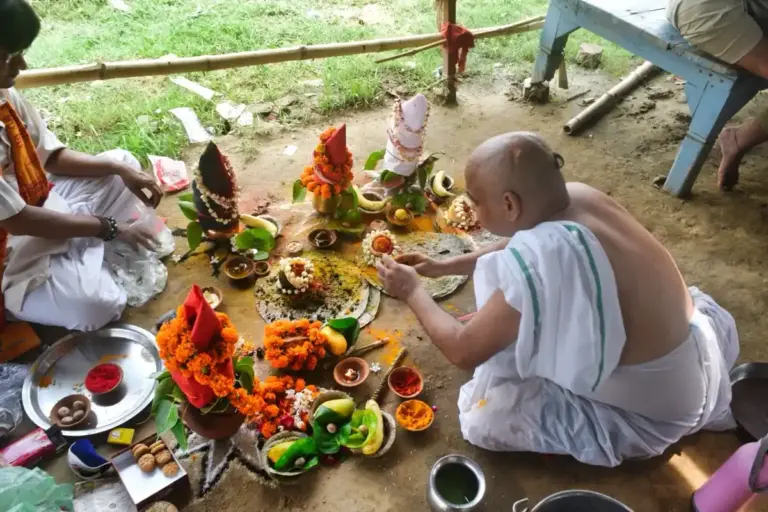
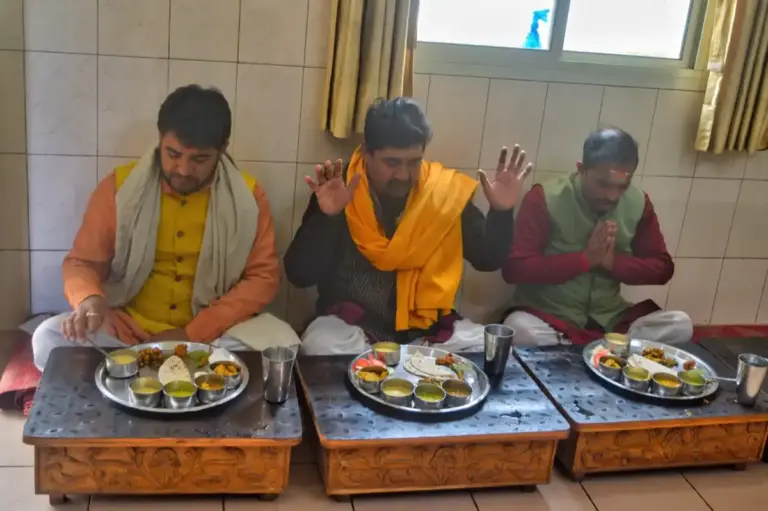
The sequence is the sankalpa; the invocations to Ganesha, Vishnu, Brahma, Rudra and Yama; the Narayan Bali homa; the invocation of the soul by mantra; the forming of a symbolic body from wheat flour and the performance of the full funeral rites over it; the Pinda Pradan and tarpan; and the closing Brahmin Bhojan. Four to five hours in a single-day form, or across three days where Tripindi Shradh is included. Our complete Narayan Bali guide sets out the rite in detail.
Tripindi Shradh
A different problem. Where Narayan Bali is for a death, Tripindi Shradh is for neglect: ancestors across three generations — father, grandfather, great-grandfather — whose annual shradh has been missed, or who the tradition describes as restless from lingering attachment.
Families often perform both where the family history includes both a neglected obligation and an untimely death. Our Tripindi Shradh page covers it.
Pind Daan and tarpan
These are performed here too, though more usually at the Ganga ghats. For a family covering the full range, the sensible division is the Narayan Bali at the kund and the tarpan at the river afterwards — the kund for the specific release, the Ganga for the general purification.
What it costs
| Rite | Price | What it covers |
|---|---|---|
| Narayan Bali in Varanasi | ₹25,000 | The full rite at the kund — sankalpa, homa, symbolic body, Pinda Pradan, tarpan. Was ₹31,000 |
| Tripindi Shradh at Varanasi | ₹21,000 | Three generations, where the annual shradh has been missed |
| Pind Daan in Varanasi | ₹7,100 | At the Ganga ghats |
| Tarpan in Varanasi | ₹5,100 | The water offering on its own |
| Shradh at Varanasi (Kashi) | ₹10,999 | The shradh ceremony at the ghats |
The prices include the pandit, the full samagri and the coordination at the kund. Nothing is added on the day. If you want accommodation arranged near the kund, ask and we will help with it.
Getting there
The kund is in Chetganj, with the Kapardishwara Mahadev temple and smaller shrines around it. Auto and taxi drivers know it.
- From Varanasi Junction — about 5 km, 15 to 20 minutes by auto
- From Dashashwamedh Ghat — about 3 km, 10 to 15 minutes
- From Babatpur airport — about 25 km, 45 to 60 minutes
Preparing
- Bathe before you arrive, and wear clean traditional dress — white or light dhoti-kurta, saree or salwar. Not black.
- Vegetarian diet before and during the puja days, avoiding onion and garlic, and in some paddhatis rice as well. Ask the pandit what your family’s practice requires.
- Samagri is arranged for you — flour, rice, sesame, flowers, fruit, incense, sacred thread — and is in the price.
- Who performs it. Usually a male descendant, most often the eldest son, with other family members participating.
When to come
The rites can be performed through the year. Pitru Paksha, the fortnight in September or October, is the period families most often choose. Any amavasya suits, with Somvati Amavasya — a Monday new moon — particularly asked for. The ancestor’s own death tithi is the other usual choice. Confirm the dates against a panchang with the pandit, as the tithis move each year.
For families abroad
The ceremony can be arranged remotely, either with a family representative present at the kund or performed on your behalf with the sankalpa taken in your name and gotra. It is streamed, and a written account follows. Our puja services for families abroad explain how the arrangement works.
A three-day Varanasi circuit
Families often cover more than one obligation in a single visit:
- Pishach Mochan Kund — Narayan Bali, and Tripindi Shradh if it applies
- The Ganga ghats — Pind Daan and tarpan at Manikarnika or Dashashwamedh, with the evening aarti at Dashashwamedh
- Asthi Visarjan, if you are carrying ashes, and darshan at Kashi Vishwanath
Kedar Ghat, where the Kedareshwara temple is associated with the ancestral rites, is the other site Tirth Purohits add for a family doing the full circuit. We can arrange the whole itinerary with one point of contact.
Where else we perform Narayan Bali
- Varanasi, at Pishach Mochan — ₹25,000
- Gaya, at the Vishnupad temple and the Phalgu — ₹35,000
- Prayagraj, at the Triveni Sangam — ₹31,000
- Haridwar, at Har Ki Pauri — ₹31,000
Arranging it
Tell us the circumstances of the death, the gotra and when you can travel, and we will confirm the pandit, the kund arrangements and the total before anything is paid. WhatsApp +91 77540 97777 or call +91 91152 34555.
Keep reading


Blog
10 min read
Barsi: The Hindu First Death Anniversary, and When It Falls
Questions families ask
Narayan Bali Puja is a Hindu ritual specifically performed for the liberation (Moksha) and peace (Shanti) of souls who died an unnatural or untimely death (Akal Mrityu). This includes deaths by accident, suicide, certain illnesses (like pandemics), fire, drowning, murder, snakebite, or those whose funeral rites (Shradha) were not performed properly or were neglected. The puja aims to satisfy the unfulfilled desires of these departed souls, releasing them from a state of suffering or limbo (often referred to as Pret Yoni or Pishach Yoni) and allowing them to attain peace in the ancestral realm (Pitra Lok).
Pishach Mochan Kund is located near the Chetganj area in Varanasi. It's a well-known site, distinct from the main cremation ghats like Manikarnika or Harishchandra Ghat. It features a sacred pond (kund) and associated temples, including one dedicated to Kapardishwara Mahadev.
Performing Narayan Bali in the sacred city of Kashi, particularly at Pishach Mochan, is believed to offer profound benefits:
- Effective Liberation: Provides strong support for the liberation (Moksha) of souls stuck due to unnatural death.
- Targeted Relief: Specifically addresses issues arising from Pret/Pishach Yoni at a site dedicated to this purpose.
- Potent Pitru Dosha Removal: The combined power of Kashi, Ganga, and Pishach Mochan effectively mitigates ancestral curses and obstacles.
- Ancestral Blessings: Pacified ancestors bestow blessings for family peace, health, success, and prosperity.
- Spiritual Merit: Performing rites in Kashi accrues significant spiritual merit for the performer.
The procedure, performed by qualified pandits, generally includes:
- Sankalpa: Taking a formal vow (resolution) to perform the ritual for the specific ancestor(s).
- Purification: Taking a holy dip, often in the Pishach Mochan Kund itself or the Ganga.
- Deity Worship: Invoking Lord Ganesha, Kalash Sthapana, and worshipping key deities including Lord Vishnu (Narayan), Brahma, Rudra (Shiva), Yama (Lord of Death). Shaligram Puja might be included.
- Narayan Bali Homa/Puja: A fire sacrifice or specific puja directed towards Lord Narayan.
- Invoking the Soul: Using specific mantras to invoke the troubled soul.
- Creating Artificial Body (Pind): A symbolic body, often made of wheat flour, is created for the soul to inhabit temporarily.
- Symbolic Funeral Rites: Rituals mimicking funeral rites are performed on this symbolic body to fulfill desires and grant release.
- Pinda Pradan & Tarpana: Offering rice balls and water oblations to nourish and satisfy the soul.
- Brahmin Bhojan & Dakshina: Feeding Brahmins and offering donations as per capacity.
Narayan Bali: Primarily focuses on liberating souls who died an unnatural death (Akal Mrityu) and are consequently stuck (Pret Yoni). It addresses the specific trauma and unfulfilled desires associated with such deaths.
Tripindi Shradh: Addresses ancestors (usually across three generations - father, grandfather, great-grandfather) whose regular Shraddha rites might have been neglected over time, or who are causing trouble due to strong lingering attachments (to food, clothes, wealth etc.). It aims to pacify these general ancestral dissatisfactions.
While both are performed at Pishach Mochan and aim for ancestral peace, Narayan Bali targets the specific issue of unnatural death, whereas Tripindi Shradh addresses neglect or general restlessness across generations. Often, they might be performed together if both situations apply.
The duration can vary:
- Condensed versions focusing purely on the core Narayan Bali rites might take around 4-5 hours, often completed in a single day. (Sources mention this timeframe).
- More elaborate packages, sometimes including Tripindi Shradh, extensive Daan (charity), or multiple priests, might extend over 3 days or potentially longer. (Source mentions 3-day Narayanbali packages).
It's essential to confirm the expected duration and included components with the pandit or service provider.
This puja should be performed by families experiencing persistent hardships believed to stem from Pitru Dosha (ancestral affliction) caused by an ancestor's unnatural or untimely death. Problems can include chronic illness, financial struggles, obstacles in marriage or childbirth, accidents, family conflicts, or experiences of negative or paranormal events. Usually, a male descendant (like the eldest son) performs the core rites, but other family members facing these issues can initiate or participate.
While Pishach Mochan Kund is the most famous and specifically designated site for rituals targeting Pret/Pishach Mukti (like Narayan Bali and Tripindi Shradh) in Varanasi, rituals can sometimes also be performed on the sacred Ghats of the Ganga River (like Dashashwamedh Ghat, Assi Ghat, Kedar Ghat). However, for the specific purpose of liberating souls from unnatural death afflictions, Pishach Mochan is highly recommended and widely regarded as the most appropriate and effective location within Kashi.
Pishach is a restless spirit, mochan is release. The kund was earlier called Vimalodaka Tirtha and took the name from the brahmin freed there.
No. The criterion is the circumstance of the death, which your family already knows. If someone died by accident, suicide, drowning, fire, snakebite or without proper funeral rites, the rite applies.
Four to five hours for the single-day form. Three days where Tripindi Shradh is performed with it.
The ghats serve for the general ancestral rites. For this particular release the Kashi Khanda names the kund, which is why the pandits here perform it there and follow it with tarpan at the river.
Still have a question?
Ask our team on WhatsApp and we will help you plan the ceremony.
We reply on WhatsApp within 1–2 hours.
Ask a pandit (opens WhatsApp)Book Your Sacred Ritual
Authentic ceremonies performed by Veda-trained pandits at sacred sites across India.
- Clear package details before you book
- The ceremony in the language you choose
- 2,263+ families served
- Serving since 2019
- GST registered