No rituals selected yet.
Browse Pooja Packages → Save 35%
Pind Daan
Pind Daan in Prayagraj this Pitrupaksha 2026
Complete Pind Daan at Triveni Sangam Shastri-qualified pandit Private boat ride to...
from
₹7,100
₹11,000
September 26 – October 10, 2026
Choose by family need
Understand the purpose first, then compare the available 2026 packages.
Save 35%
Complete Pind Daan at Triveni Sangam Shastri-qualified pandit Private boat ride to...
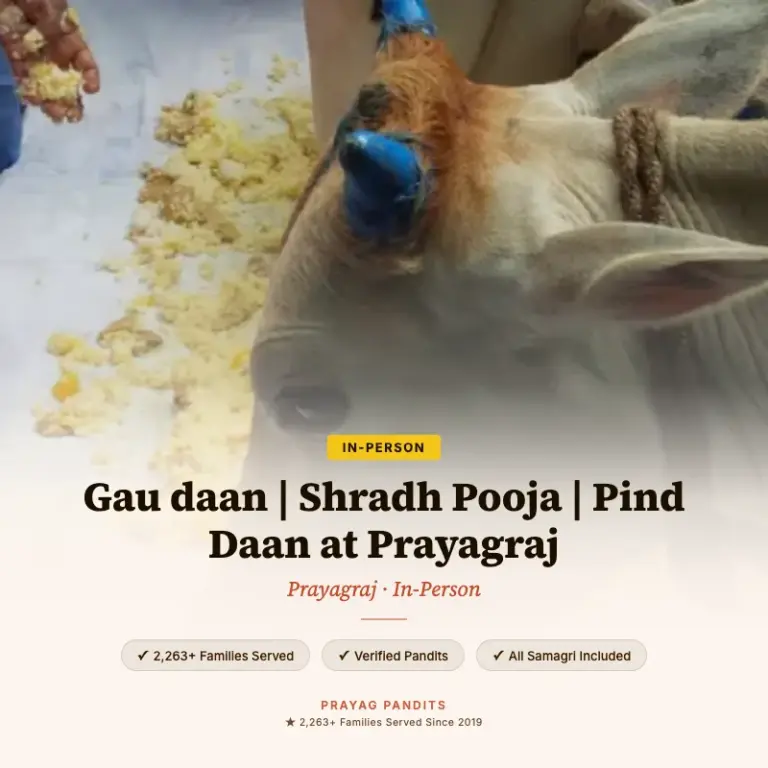 Save 40%
Gau Daan Complete Shradh Pooja with Tarpan at Triveni Sangam (up to...
 Save 40%
Online Pind Daan at Triveni Sangam, Prayagraj (live video) Online Pind Daan...
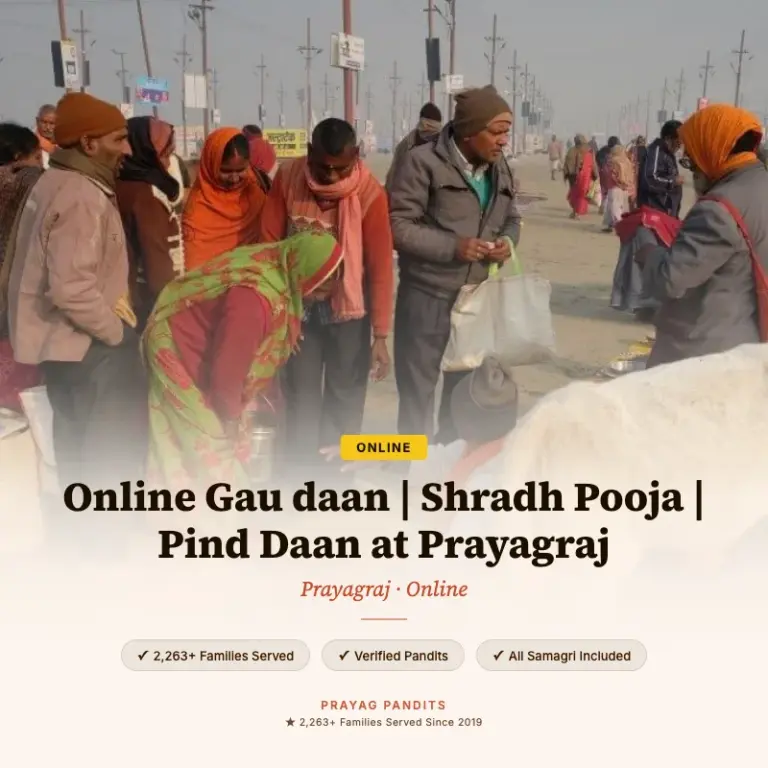 Save 40%
Online Pind Daan at Triveni Sangam, Prayagraj Complete Shradh Pooja with Tarpan...
 Save 22%
Complete Pind Daan ceremony for two persons (2 families) at Triveni Sangam...
 Save 35%
Online Pind Daan at Triveni Sangam (live video) Experienced Prayagraj-based pandit Complete...
 Save 35%
Odia Vidhi Ceremony Pind Daan at Triveni Sangam (pindas of rice, barley,...
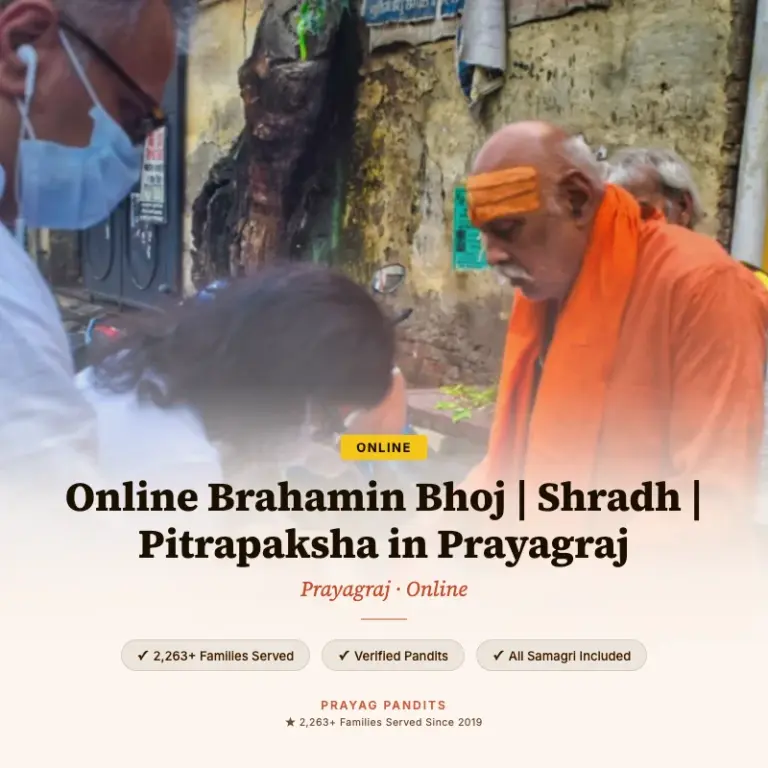 Save 32%
Online Shradh Pooja at Triveni Sangam, Prayagraj (Pitrapaksha, live video) Experienced Prayagraj-based...
Save 40%
Gau Daan Complete Shradh Pooja with Tarpan at Triveni Sangam (up to...
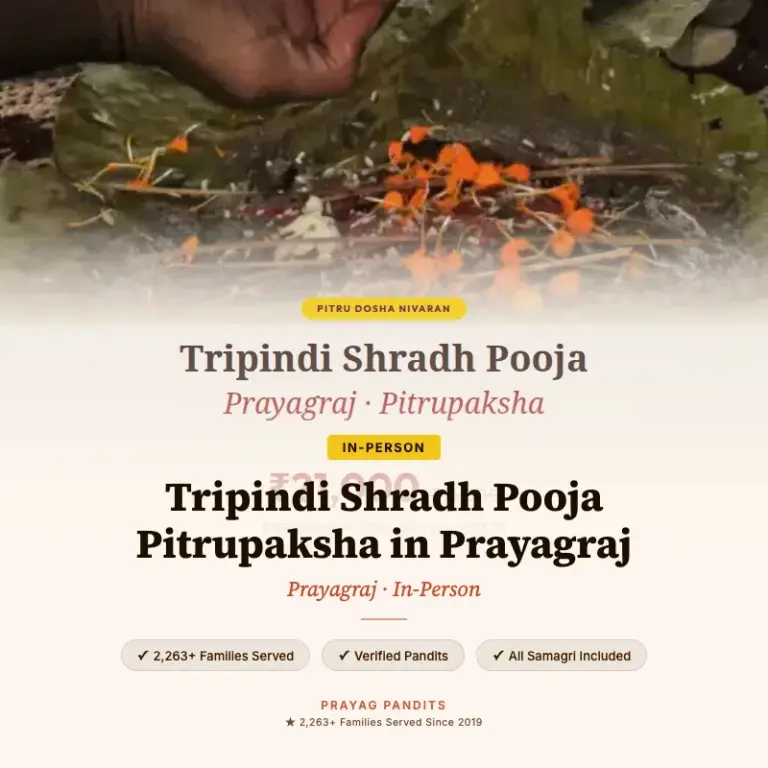 Save 32%
Tripindi Shradh at Triveni Sangam, Prayagraj (Pitrupaksha) Experienced Prayagraj-based pandit All samagri...
Save 40%
Online Pind Daan at Triveni Sangam, Prayagraj Complete Shradh Pooja with Tarpan...
 Save 33%
Online Tripindi Shradh at Triveni Sangam, Prayagraj (live video) Experienced Prayagraj-based pandit...
 Save 35%
Shradh ceremony at Triveni Sangam, Prayagraj Experienced Prayagraj-based pandit All samagri (sesame,...
 Save 39%
Odia Vidhi Ceremony Pitru Tarpan at Triveni Sangam (Tila-tarpan with Gangajal) Complete...
 Save 43%
Tarpan at Triveni Sangam, Prayagraj Experienced Prayagraj-based pandit All samagri (sesame, kusha,...
 Save 24%
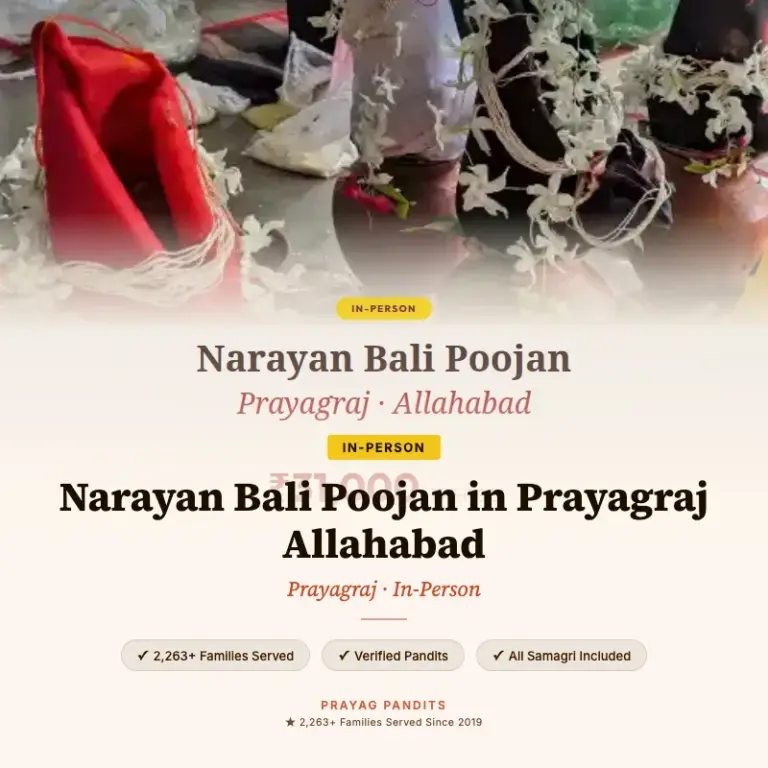
Online Narayan Bali Poojan at Triveni Sangam, Prayagraj (live video, 4–5 hours)...
 Save 24%
Complete Narayan Bali Poojan at Triveni Sangam, Prayagraj Experienced qualified pandit (full...
Save 32%
Tripindi Shradh at Triveni Sangam, Prayagraj (Pitrupaksha) Experienced Prayagraj-based pandit All samagri...
Save 33%
Online Tripindi Shradh at Triveni Sangam, Prayagraj (live video) Experienced Prayagraj-based pandit...
 Save 44%
Asthi Visarjan at Triveni Sangam, Prayagraj, for one deceased person Experienced Vedic...
 Save 33%
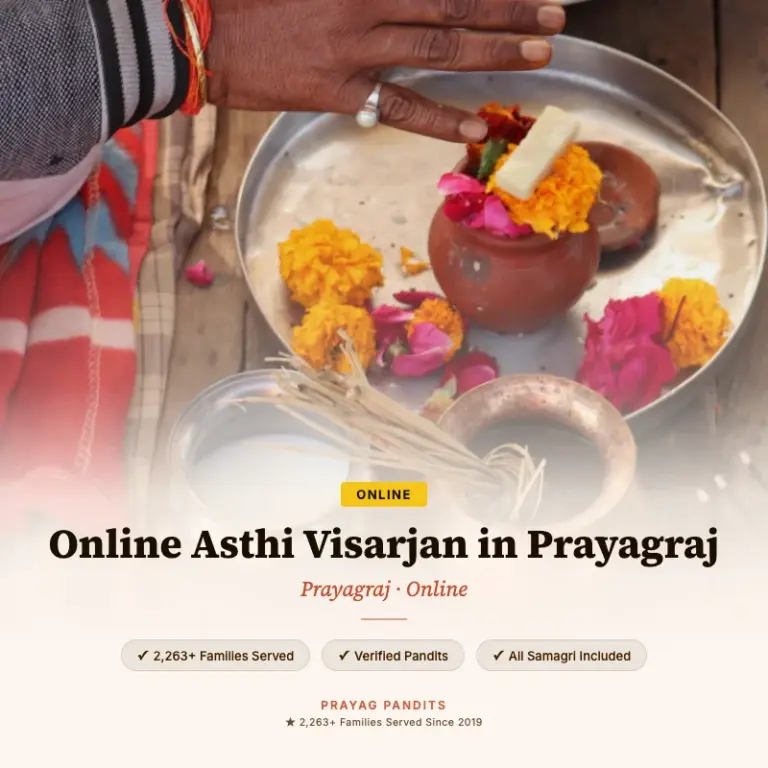
Online Asthi Visarjan at Triveni Sangam, Prayagraj Qualified experienced Prayagraj pandit Complete...
 Save 21%
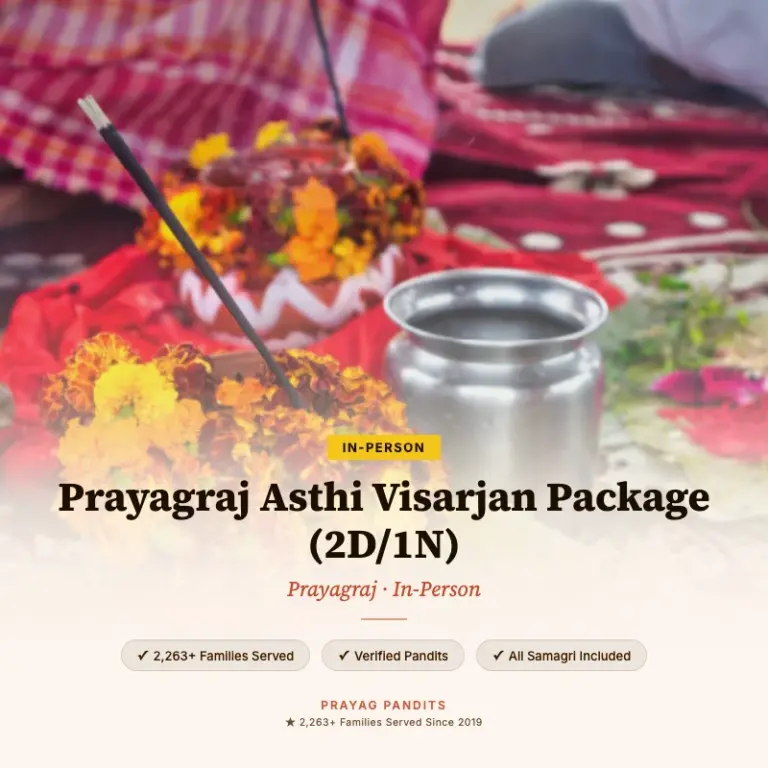
1 night Deluxe hotel stay (no meals) Airport / station pickup &...
 Save 39%
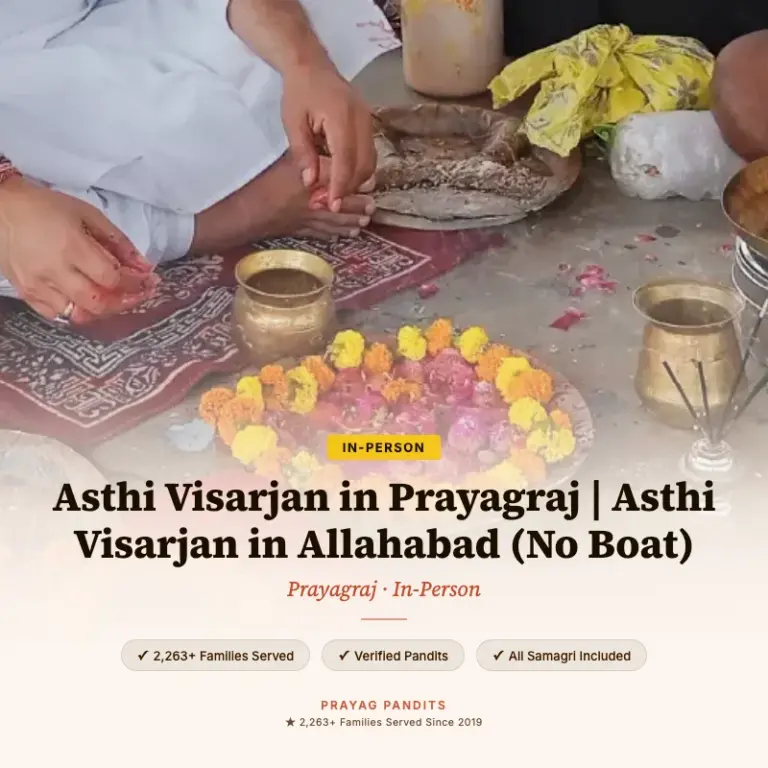
Ghat-based Asthi Visarjan at Prayagraj Experienced Pandit Complete samagri (til, kusha, Gangajal,...
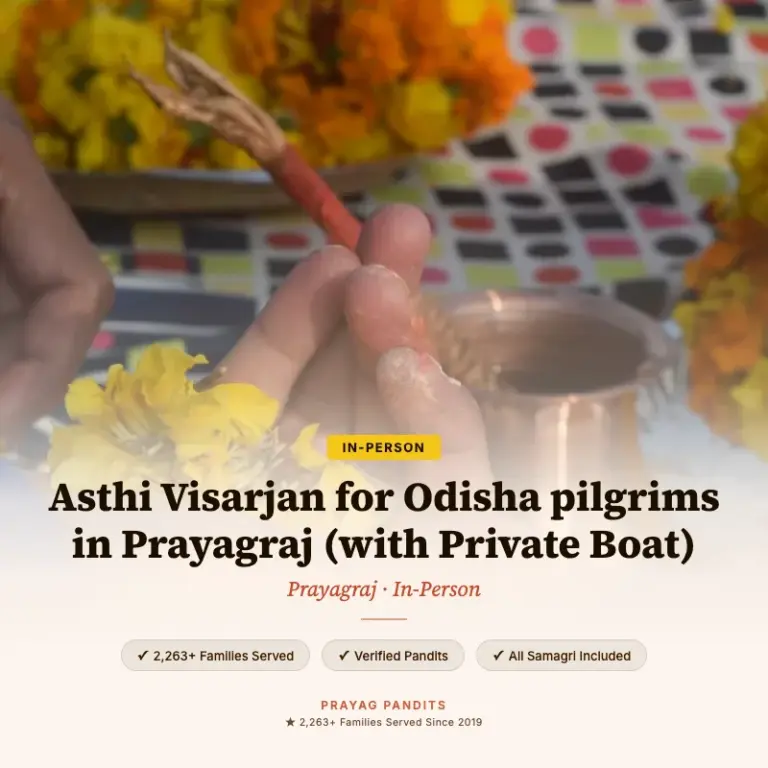 Save 54%
Odia Vidhi Ceremony by qualified pandit Private boat to Triveni Sangam point...
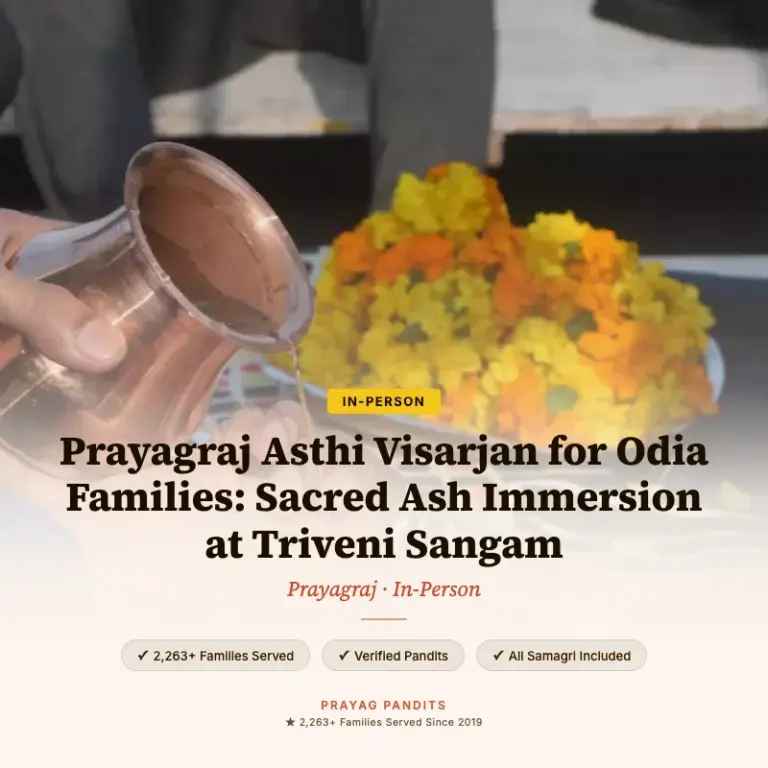 Save 54%
Odia Vidhi Ceremony Complete Asthi Visarjan at Triveni Sangam point Private boat...
 Save 25%
1 night in 4-star hotel with breakfast (1-2pax) Private AC cab for...
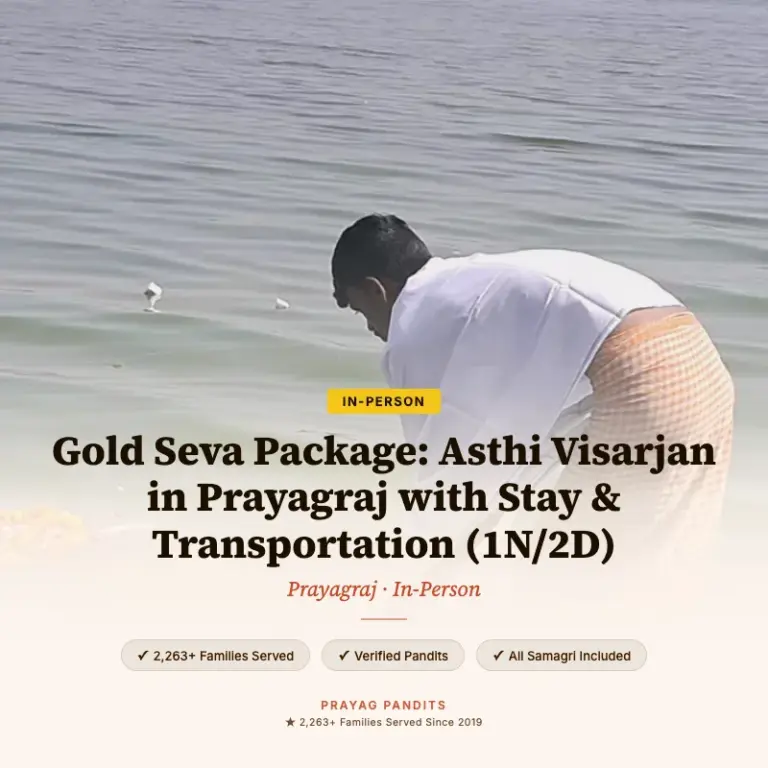
1 night in 3-star hotel with breakfast (1-2pax) Private AC cab for...
All ceremonies performed by verified pandits with 10+ years of experience in Vedic rituals.
Package inclusions and exclusions are shown clearly before booking.
Every material required for the puja is arranged by us. Nothing extra to buy or carry.
Can't travel? We perform the ritual on your behalf with live video call option.
Yes — Garh Mukteshwar is the most convenient Ganga-based Shradh destination for Delhi-NCR families. At approximately 100 km from Delhi (2-3 hours by road via NH-9), a complete Shradh ceremony can be performed as a single-day trip:
Typical day-trip schedule: Depart Delhi 6:00 AM → Arrive Garh Mukteshwar 8:30-9:00 AM → Ganga Snan and preparation 30 min → Complete Shradh ceremony 2-3 hours → Prasad and rest 30 min → Depart 1:00 PM → Back in Delhi by 3:30-4:00 PM.
This makes Garh Mukteshwar ideal for annual Pitrupaksha Shradh — families can perform the ceremony on the correct tithi without taking multiple days off work. By comparison, Haridwar requires 4-5 hours each way (making a day-trip exhausting) and Prayagraj requires overnight travel.
Prayag Pandits coordinates pandit, samagri, and ghat arrangements in advance so everything is ready when your family arrives.
Garh Mukteshwar — literally "the Fort of Liberation" — is one of the most sacred Ganga tirthas in western Uttar Pradesh. The Skanda Purana and Brahma Purana describe this as the site where the Ganga first enters the plains in its purest Himalayan form, making its waters exceptionally potent for ancestral rites.
The Mahabharata tradition records that the Pandavas performed Shradh and Pind Daan for the Kaurava warriors at Garh Ganga after the great war. This established the site as a permanent teerth for ancestral ceremonies. The adjacent Mukteshwar Mahadev Temple, dedicated to Lord Shiva, adds the power of Shiva's moksha-granting grace to every Shradh performed here.
For families in Delhi-NCR, Haryana, and western UP, Garh Mukteshwar is the closest Ganga-based Shradh destination — making it practical for annual Pitrupaksha observances without the longer journey to Haridwar or Prayagraj.
Siddhavat is an ancient immortal banyan tree (vat vriksha) on the banks of the Shipra River in Ujjain. It is one of three sacred immortal trees in the Hindu tradition — the other two being Akshayavat at Prayagraj and Vanshivat at Vrindavan.
According to the Skanda Purana and local tradition, Lord Rama performed Pitra Tarpan (ancestral water offerings) for his father King Dashrath under the Siddhavat tree. Since that event, Siddhavat has been considered one of the holiest sites in India for Shradh, Pind Daan, and Asthi Visarjan. The merit of performing ancestral rites at Siddhavat is said to be equivalent to performing them at the Akshayavat in Prayagraj.
The tree stands within a temple complex on the Shipra banks, with dedicated platforms for performing the Asthi Visarjan ceremony. Local Teerth Purohits maintain the tradition of conducting ancestral rites here throughout the year, with particular activity during Pitrupaksha and Simhastha years.
Panchak Nivaran puja is a specific Vedic ritual performed to neutralize the harmful effects of a death that occurred during Panchak kaal (the 2.5-day period when Moon transits through the last five nakshatras). It should be done BEFORE or DURING the cremation for maximum efficacy, though it can also be performed after cremation if the family did not know about Panchak at the time. The puja involves a qualified Brahmin performing sankalpa in the name of the deceased, preparing five kusha grass effigies (putlas), reciting specific mantras from the Garuda Purana and Yajurveda, placing the effigies on the pyre, and performing havan with specific samidha (fire offerings). The puja typically takes 2-3 hours. After cremation, follow-up rites include 11-day Mahamrityunjaya jap, Navagraha shanti, and a dedicated Pind Daan for the deceased at Prayagraj, Gaya, or Varanasi. Panchak Nivaran can also be performed as a preventive measure during Pitrupaksha for ancestors who died during Panchak in previous years. Prayag Pandits provides complete Panchak Nivaran services including the cremation-time puja, follow-up jap, and Pind Daan at sacred tirthas.
Pitru Paksha September 26 – October 10, 2026. Limited pandit availability — book early.