अभी तक कोई अनुष्ठान नहीं चुना गया।
पूजा पैकेज देखें →मुख्य बिंदु
इस लेख में
Many religious scriptures, like the Garuda Purana, state that if someone dies at Panchak, five other members of his family will also die. Rog Panchaka, Raj Panchaka, Agni Panchaka, Mrityu Panchaka, and Chor Panchaka are the five types of Panchak.  Panchak, which begins on Saturday, is the most dangerous. This is known as the death quintet. In the Sanskrit language, Panchak refers to a group of five. Panchak, according to Vedic astrology, represents the union of five Nakshatras or constellations: Dhanishta, Purva Bhadrapada, Shatabhisha, Uttar Bhadrapada, and Revati. Panchak Nakshatras are the names given to these Nakshatras. The moon transits through the Panchak Nakshatras for about five days during Panchak Kaal. Panchak Kaal is described as the five-day time when the moon is in the last two zodiac signs, Aquarius and Pisces, as the 27 Nakshatras are divided into twelve zodiac signs. Auspicious acts such as marriage, housewarming, Nav Vadhu Pravesh, new construction, Upnayan Sanskar, and Mundan ritual are prohibited during Panchak Kaal, according to Hindu scriptures.
So, What is Panchak?
There are 27 constellations in the sky. Panchak is the combination of the last five constellations – Dhanishta, Shatabhisha, Poorvabhadrapada, Uttarabhadrapada, and Revathi – of these 27 constellations. The alignment of these five constellations is unlucky. If someone dies in the combination of these constellations, other members of the family must suffer death, according to ‘Muhurta Chintamani.’ The Moon constellations of Aquarius and Pisces, that is, the latter portion of Dhanishta, Shatabhisha, Purva Bhadrapada, Uttara Bhadrapada, and Revati — these five constellations are known as Panchaka in astrology. Mars, the lord of Dhanishta, Rahu, the lord of Shatabhisha, Jupiter, the lord of Purvabhadrapada, Saturn, the lord of Uttarabhadrapada, and Mercury, the lord of Revati combine to form Panchak. Panchak, which begins on Saturday, is the most dangerous. This is known as the death quintet. In the Sanskrit language, Panchak refers to a group of five. Panchak, according to Vedic astrology, represents the union of five Nakshatras or constellations: Dhanishta, Purva Bhadrapada, Shatabhisha, Uttar Bhadrapada, and Revati. Panchak Nakshatras are the names given to these Nakshatras. The moon transits through the Panchak Nakshatras for about five days during Panchak Kaal. Panchak Kaal is described as the five-day time when the moon is in the last two zodiac signs, Aquarius and Pisces, as the 27 Nakshatras are divided into twelve zodiac signs. Auspicious acts such as marriage, housewarming, Nav Vadhu Pravesh, new construction, Upnayan Sanskar, and Mundan ritual are prohibited during Panchak Kaal, according to Hindu scriptures.
What is Panchak Death?
Panchak death refers to death during the Panchak period. Death in the Panchak Nakshatra, according to Hindu traditions, is exceedingly inauspicious and unpleasant. Such a person will not be saved, and their soul will not be at rest. For the benefit of the family and relatives. It is thought that if someone dies during the Panchak Kaal, five members from the clan or family would die within the next 24 months.Types of Panchak
According to Vedic astrology, there are five types of Panchak, each of which is based on Var (days).Mrityu Panchak:
It’s called Mrityu Panchak if it starts on a Saturday (death). Marriage and the beginning of any major event should be avoided.Rog Panchak:
If Panchak begins on a Sunday, it is also considered bad and is referred to as Roga (diseases) Panchak. This is a bad time for your health. A person may be afflicted with long-term sickness.Rajya Panchak:
It is considered inauspicious and termed as Rajya (kingdom) if it begins on a Monday. During this time, all government-related problems and employment changes are avoided.Agni Panchak:
If Panchak begins on a Tuesday, it is referred to as Agni (fire) Panchak. Construction, moving to a new home, and employment involving machines should all be avoided.Chor Panchak:
It is also considered unfavourable if it begins on a Friday, and is known as Chor (theft) Panchak. Travel, business, and financial operations should be avoided during this period of Panchak.What do the Scriptures say about Panchak?
Dhanisht-Panchakam Grame Shadbhisha-Kulpanchakam.Poorvabhadrapada-rathya: Chotara Grihapanchakam.Revathi grambahyam cha etat panchak-laksnam.’धनिष्ठ-पंचकम ग्राम शद्भिषा-कुलपंचकम।पूर्वाभाद्रपद-रथ: छोटा गृहपंचकम।रेवती ग्रामभ्यं चा एतत पंचक-लक्षनाम।’Five categories of these five constellations from Dhanishtha to Revathi respectively.
- Grampanchak
- Kulpanchak
- Rathyapanchak
- Grihapanchak
- Grambahya Panchak.
Remedies for Panchak
The Garuda Purana also has remedies for the individual who dies in Panchak. According to the Garuda Purana, one must seek the guidance of a trained scholar before executing the funeral rites of a deceased person in Panchak. If this job is carried out following the law, the crisis will be averted. Indeed, as per Pandit Ji’s directions, five effigies constructed of flour, gramme flour, or Kush (dried grass) are placed on the earth alongside the deceased, and these five are likewise burned with the same elaborate ceremonies as the deceased. This eliminates Panchak dosha. Second, the Garuda Purana states that if someone dies in Panchak, certain preparations should be performed. To begin, cremation can be performed at the constellation’s centre by offering sacrifices from the constellation’s mantra. Sacrifices undertaken following the rules produce virtuous outcomes.Additionally, if possible, the cremation should take place in the pilgrimage site, as this results in the quickest cremation. Families who wish to perform Asthi Visarjan at the Triveni Sangam, Prayagraj after cremation may also arrange for the immersion of ashes at this sacred confluence — a deeply purifying act that brings peace to the departed soul.
Vedic Remedies After Fifteen days of the Panchak Death
If no Panchak remedy is used at the time of death, the following Vedic rituals should be performed to remove the malefic effects of Panchak death. These Panchak death cures should be conducted with the help of a priest or astrologer after fifteen days of Panchak death. Here are the Vedic rituals that must be followed.- When completing Vedic rituals for Panchak death, all family members should be present.
- Shradh Puja or Pitru Tarpan Pooja should be performed at home. Five dolls made of Kusha grass (Darbha) and white cotton are required for this Puja. Families who cannot perform this at home may arrange Shradh Poojan at Prayagraj through experienced pandits at the Triveni Sangam.
- After that, a five-doll Prana Prathistapana ceremonial ceremony should be done. This rite represents giving life to the dolls.
- The dolls should then be buried near-sacred ponds, lakes, or rivers in sand or dirt.
- Perform Rudrabhishek at home after the burying and offer Pitru Tarpan.
- To calm the planets and remove the malefic effects of Panchak Dosh, family members might do Nakshatra Shanti Puja and Navagraha Shanti Pooja.
- After that, at home, recite Maha Mrityunjaya Mantra Jaap and Havan.
- If someone dies in the Purva Bhadrapada Nakshatra, family members should donate a “Daana” brass pitcher filled with sesame seeds.
- According to the Garuda Purana, a person’s residence shall be locked for six months if they die in Panchak Kaal, depending on the Panchak death Nakshatra.
- If a person dies unexpectedly, such as from hunger, an animal attack, arson, or a curse, Narayana Bali Poojan should be performed. This ceremony should be carried out within six months of death or as soon as possible following death.
- According to the Garuda Purana, if a person dies through suicide, snake bite, murder, electric shock, robbery, or falling from a mountain, there is no Vedic ceremony to alleviate the ravages of the Panchak Death.
Birth in Panchak Yoga
The following are the flaws that every Panchak Nakshatra born individual has. If a child is born in Panchak Nakshatra, the native’s life is believed to be riddled with flaws.- Physical limitations may be present in people born under the Dhanistha Panchak.
- Poorva Bhadrapada natives have disagreements with their families.
- They have a number of issues at home.
- People born in Satabhisha have a variety of health problems throughout their lives. Natives of Uttara Bhadrapada lose a lot of money at labour.
- If a child is born in Revati, he or she will suffer financial losses anytime Panchak is present in the relevant constellation.
The 5 Deaths of Panchak: Understanding the Belief
The phrase 5 deaths of Panchak refers to one of the most feared beliefs in Hindu astrology. According to the Dharma Sindhu and regional Smriti texts, if a person dies during Panchak Kaal, five more deaths may follow in the same family within 6 to 24 months unless the proper Panchak Shanti ritual is performed during cremation.
Each of the five nakshatras in the Panchak period carries a specific risk:
- Mrityu Panchak (Dhanishta nakshatra) — highest risk of additional deaths in the family
- Agni Panchak (Shatabhisha nakshatra) — risk of fire-related destruction
- Raja Panchak (Purva Bhadrapada) — risk of legal troubles or authority-related loss
- Chore Panchak (Uttara Bhadrapada) — risk of theft or loss of valuables
- Roga Panchak (Revati nakshatra) — risk of chronic illness in the family
The cremation-time remedy involves making five effigies (putlas) from kusha grass, each representing one nakshatra, and cremating them alongside the deceased. This satisfies the demand of the five nakshatras. Contact Prayag Pandits on WhatsApp for emergency Panchak Shanti consultation.
Precautions during Panchak Kaal
- As soon as the Dhanishta Nakshatra Panchak begins. Avoid collecting wood, grass, or other fuel-related items. It is thought that during Panchak, your home may catch fire, causing harm to you or your loved ones.
- Due to the possibility of fire as a malefic effect of Panchak Yoga, do not build a bed during the Panchak Kaal.
- During the Panchak Nakshatras, avoid starting any new work, business, construction, or large financial transaction.
- During Panchak Kaal, do not lend money or make loans.
- During the Revati Nakshatra, avoid building a terrace.
- It is strictly forbidden to cremate a deceased person during Panchak. Prior to cremation, it is recommended that Shanthikarma be performed.
- During Panchak, avoid travelling in a southerly route, especially if you were born under Panchak Yoga.
- Housewarming ceremonies, Upnayan Sanskar, Bhoomi Pujan, and other auspicious celebrations should be avoided.
Panchak Dosha Remedies
- Before travelling to the south during Panchak Kaal, worship Lord Hanuman and offer fruits. South is the direction of Yam Dev, the God of Death, thus only travel to the south during Panchak Yog if absolutely essential.
- Do not buy wooden products, but if essential, do Goddess Gayatri’s Havan before making a transaction.
- Rooftop construction is prohibited in Panchak Kaal. If necessary, provide sweets to workers prior to beginning building work.
- During Panchak, one should follow the astrological treatments and precautions recommended by an experienced astrologer or priest. Avoid doing anything that is prohibited during Panchak Kaal.
Panchak Nivaran Puja: Complete Process and Benefits
Panchak Nivaran Puja is the Vedic ritual performed to neutralize the harmful effects of death during Panchak Kaal. Unlike general Panchak remedies (avoiding certain activities), this is a formal ceremony addressing the karmic consequences of a Panchak-period death.
What the Puja Involves
- Sankalpa — formal vow specifying the deceased name, gotra, and death nakshatra
- Five kusha grass effigies — placed on the cremation pyre alongside the body
- Garuda Purana mantras — specific verses for each of the five nakshatras
- Havan — fire offering with specific samidha (sacred wood)
After the Cremation
Follow-up rites include 11-day Mahamrityunjaya Jaap, Navagraha Shanti, and Pind Daan at Prayagraj, Varanasi, or Gaya. Call +91 77540 97777 for immediate assistance.
Perform These Sacred Rituals at Prayagraj to Remove Panchak Dosha
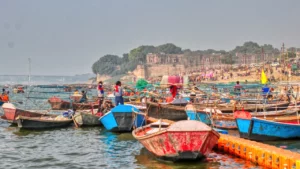
Prayagraj — the Triveni Sangam of the Ganga, Yamuna, and Saraswati — is one of the most powerful tirthas in Sanatan Dharma for performing post-death rituals and ancestral rites. When a death occurs during Panchak Kaal, performing the prescribed Vedic ceremonies here carries exceptional spiritual weight. Prayag Pandits arranges all of the following rituals with experienced Brahmin pandits at the Sangam:
- Asthi Visarjan at Triveni Sangam, Prayagraj — The immersion of ashes (asthi) and bones at the confluence grants moksha to the departed soul. If the death occurred during Panchak, performing Asthi Visarjan at Prayagraj is especially recommended by the Garuda Purana to ensure the soul finds peace.
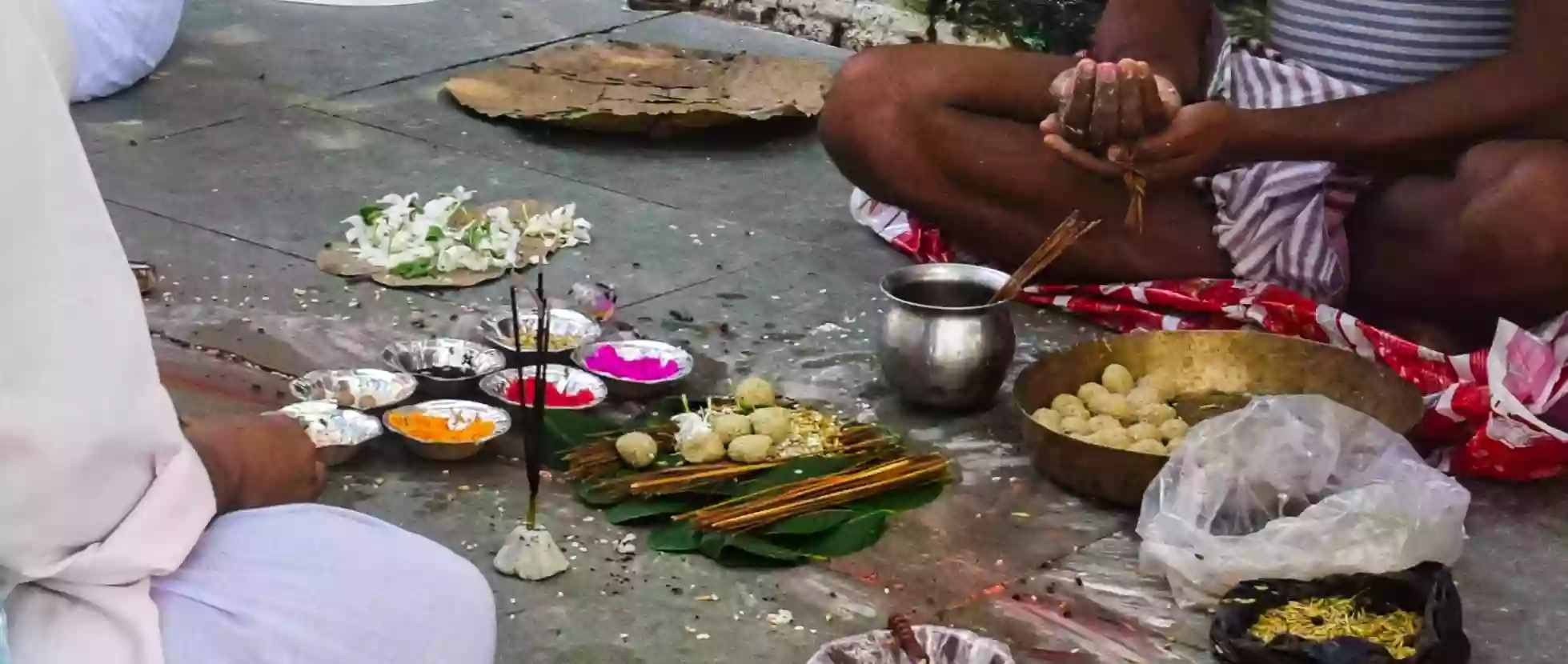
- Pind Daan at Prayagraj — Offering pindas (rice flour balls) at the Triveni Sangam is among the most sacred of all pitru karmas. Pind Daan performed here on behalf of one who died in Panchak Kaal helps the soul cross over and frees the family from the dosha’s malefic influence.
- Shradh Poojan at Prayagraj — A complete Shradh ceremony at Prayagraj, performed on the tithi appropriate for the deceased, ensures the ancestors receive the offerings and bless the family. This is a vital remedy after Panchak death.
- Narayan Bali Poojan at Prayagraj — Prescribed by the Garuda Purana for those who die sudden, unnatural, or untimely deaths — all of which are associated with inauspicious Panchak periods. This ritual pacifies the departed soul and removes the dosha from the family lineage.
- Online Pind Daan at Prayagraj — For families outside India or those unable to travel to Prayagraj, Prayag Pandits performs Pind Daan on your behalf at the Triveni Sangam with live video streaming, so you can witness and participate in the ritual from anywhere in the world.
All rituals are performed by learned, experienced pandits at the actual Triveni Sangam. Contact Prayag Pandits to discuss which ceremony is most appropriate for your family’s specific situation.
Death During Panchak? Perform Shanti Rituals
If a family member passed away during Panchak, performing Pind Daan and Shanti Pooja is considered essential according to Hindu scriptures. Our Pandits specialize in these critical post-death rituals.
Pind Daan in Prayagraj | Pind Daan in Gaya | Asthi Visarjan Services
Remedial Ritual
🙏 Panchak Dosha Shanti Puja at Prayagraj
Starting from
₹35,000
per person
Book a Panchak Dosha Shanti Puja with Prayag Pandits
If a death has occurred during Panchak Kaal in your family, or if you are experiencing persistent troubles that may be linked to an inauspicious Panchak period, Prayag Pandits offers two powerful remedial rituals performed by experienced Brahmin pandits at the Triveni Sangam, Prayagraj:
- Shanti Pooja — ₹35,000 onwards. A comprehensive Vedic shanti ritual performed at Prayagraj to neutralise the malefic effects of inauspicious yogas, doshas, and periods including Panchak. Includes complete ritual samagri, experienced pandit, and Brahmin bhojan.
- Mahamrityunjay Jaap for 3 Days — ₹31,000 onwards. Three-day continuous recitation of the Mahamrityunjay Mantra, one of the most powerful Vedic mantras for protecting the family from premature death and pacifying the effects of Mrityu Panchak and Raj Panchak.
Both rituals can be arranged for in-person attendance or performed on your behalf with live video streaming for families outside Prayagraj. Book the Shanti Pooja or contact us to discuss which remedy is appropriate for your specific situation.
Book Panchak Shanti Puja with Prayag Pandits
If a death has occurred during Panchak Kaal in your family, immediate ritual action is critical. Prayag Pandits provides emergency Panchak Shanti services including:
- Cremation-time Panchak Shanti (Rs 5,100) — Five kusha grass effigies, Garuda Purana mantras, supervised cremation ceremony
- Post-cremation Mahamrityunjaya Jaap (Rs 7,100) — 1,08,000 recitations over 11 days by qualified Brahmins at Triveni Sangam
- Complete Panchak Dosha Removal Package (Rs 11,000) — Shanti puja + Mahamrityunjaya Jaap + Pind Daan at Prayagraj + Navagraha Shanti
Available at Prayagraj, Varanasi, Haridwar, and Gaya. For NRI families: full remote ceremony with live video call and documentation. Call +91 77540 97777 or WhatsApp us for immediate consultation — we understand the urgency of Panchak-related deaths.
अक्सर पूछे जाने वाले प्रश्न
What is Panchak and why is it considered inauspicious?
Panchak is a period of approximately 2.5 days when the Moon transits through the last five nakshatras of the lunar cycle — Dhanishta, Shatabhisha, Purva Bhadrapada, Uttara Bhadrapada, and Revati — all falling in the zodiac signs of Aquarius (Kumbha) and Pisces (Meena). Hindu Jyotish Shastra considers this period inauspicious for five specific activities: cremation (Mrityu Panchak), construction (Agni Panchak), travel in the south direction (Dakshin Panchak), purchasing beds or mattresses (Roga Panchak), and making thatch roofs (Chore Panchak). The scriptural basis comes from the Muhurta Chintamani and Dharma Sindhu which advise caution during these nakshatras. If a death occurs during Panchak, the family must perform Panchak Shanti puja with five effigies made of kusha grass to prevent further deaths in the family — a belief rooted in the Garuda Purana"s teaching that souls departing during these nakshatras may pull other family members. The Panchak period occurs roughly every 27 days as the Moon completes its cycle through all 27 nakshatras.
What remedies are prescribed for Panchak Dosha?
When a death occurs during Panchak, the Dharma Sindhu and regional Smriti texts prescribe the Panchak Shanti ritual. Five effigies (putlas) are made from kusha grass or darbha, each representing a symbolic body. These are placed alongside the deceased on the funeral pyre and cremated together — the belief is that the five effigies satisfy the five nakshatras" demand and prevent further deaths in the family. A qualified Brahmin must perform specific mantras during the cremation. Additionally, Gayatri Mantra jap (1,008 times), Mahamrityunjaya Mantra jap (1,25,000 times in a 40-day period), Navagraha puja, and Rudra Abhishek are recommended as supplementary remedies. For general Panchak periods (not death-related), the scriptures advise avoiding the five prohibited activities but do not restrict normal daily prayers, Tarpan, or ancestral rites. Pind Daan and Shradh CAN be performed during Panchak — only cremation-related activities carry the dosha. Prayag Pandits offers Panchak Shanti puja and Mahamrityunjaya Jaap services for families affected by Panchak-period deaths. Contact +91 77540 97777.
What is Panchak Nivaran puja and when should it be done?
Panchak Nivaran puja is a specific Vedic ritual performed to neutralize the harmful effects of a death that occurred during Panchak kaal (the 2.5-day period when Moon transits through the last five nakshatras). It should be done BEFORE or DURING the cremation for maximum efficacy, though it can also be performed after cremation if the family did not know about Panchak at the time. The puja involves a qualified Brahmin performing sankalpa in the name of the deceased, preparing five kusha grass effigies (putlas), reciting specific mantras from the Garuda Purana and Yajurveda, placing the effigies on the pyre, and performing havan with specific samidha (fire offerings). The puja typically takes 2-3 hours. After cremation, follow-up rites include 11-day Mahamrityunjaya jap, Navagraha shanti, and a dedicated Pind Daan for the deceased at Prayagraj, Gaya, or Varanasi. Panchak Nivaran can also be performed as a preventive measure during Pitrupaksha for ancestors who died during Panchak in previous years. Prayag Pandits provides complete Panchak Nivaran services including the cremation-time puja, follow-up jap, and Pind Daan at sacred tirthas.
Can normal activities like Pind Daan and Shradh be done during Panchak?
Yes. The five prohibitions during Panchak are specifically: cremation (Mrityu Panchak), new construction (Agni Panchak), southward travel (Dakshin Panchak), purchasing beds (Roga Panchak), and making thatch roofs (Chore Panchak). Normal religious activities including Pind Daan, Shradh, Tarpan, temple darshan, havan, Satyanarayan Katha, and daily prayers are NOT prohibited during Panchak. The Muhurta Chintamani specifically clarifies that ancestral rites (Pitru Karma) are exempt from Panchak restrictions because the merit of serving ancestors overrides the nakshatra-based caution. Similarly, marriages are debated — some traditions avoid Panchak weddings while others (particularly in South India) consider only the five specific activities as restricted. For Pind Daan at sacred tirthas, families should proceed on their planned dates even if they fall during Panchak — the spiritual benefit of the tirtha and the ritual outweighs the general nakshatra caution. Our pandits at Prayag Pandits can advise on specific muhurat within Panchak periods if you have concerns.
Are there any foods or behaviors to avoid during Pitrupaksha?
Devotees often abstain from non-vegetarian foods, alcohol, and engage in fasting, emphasizing purity and devotion.
Can Pind Daan be performed for a person whose death date (tithi) is not known?
Yes. When the tithi of death is unknown, the rite should be performed on Sarva Pitru Amavasya — the last day of Pitrupaksha — which is specifically designated for all ancestors whose dates are unknown or uncertain. The pandit will adjust the sankalpa accordingly.
Can Pind Daan be done online or through someone else if I can not go to Gaya?
In rare cases, due to health, age, or unavoidable circumstances, a proxy (sarva-sangrahi) may perform Pind Daan on your behalf. This should be arranged with a trustworthy Gaya Purohit, and you must send your consent and sankalp. While this is spiritually valid, personal presence is always superior, as the devotion and intention of the doer carry immense karmic weight.
Can Pind Daan be done at home, or only at sacred tirthas?
Pind Daan can be performed at home, but its merit is significantly amplified when performed at a recognised tirtha. Scriptures describe Gaya, Prayagraj (Triveni Sangam), Varanasi (Pishach Mochan), Haridwar, and a few other sites as places where the boundary between the earthly and ancestral realms is especially thin, making the ritual spiritually more effective. At-home Pind Daan is accepted in scriptures when travel is not possible, but most families choose to perform at least one tirtha-based ceremony for the liberation of ancestors. Our pandits can guide you through either option.
What are the 5 deaths of Panchak?
The phrase 5 deaths of Panchak refers to a widespread Hindu belief that if a person dies during Panchak kaal (the 2.5-day period when the Moon transits the last five nakshatras), five consecutive deaths may occur in the same family unless the proper Panchak Shanti ritual is performed. The five types of Panchak correspond to the five nakshatras involved: Mrityu Panchak (death-related, Dhanishta nakshatra) — risk of additional deaths in the family; Agni Panchak (fire-related, Shatabhisha nakshatra) — risk of fire-related destruction; Raja Panchak (authority/legal, Purva Bhadrapada) — risk of government penalties or legal troubles; Chore Panchak (theft, Uttara Bhadrapada) — risk of theft or loss of property; Roga Panchak (disease, Revati nakshatra) — risk of chronic illness spreading in the family. The Dharma Sindhu prescribes the cremation-time remedy of making five effigies (putlas) from kusha grass and cremating them alongside the deceased — each effigy symbolically satisfies one nakshatra, preventing the cascading deaths. This is why families are advised to immediately consult a qualified Brahmin when a death occurs during Panchak to determine the exact nakshatra and perform the appropriate shanti puja. Prayag Pandits provides emergency Panchak Shanti consultation on +91 77540 97777.
अपना पवित्र अनुष्ठान बुक करें
भारत भर के पवित्र स्थलों पर वेद-प्रशिक्षित पंडितों द्वारा वीडियो प्रमाण सहित प्रामाणिक अनुष्ठान।
2,263+ परिवारों की सेवा
वीडियो प्रमाण शामिल
2019 से
