अभी तक कोई अनुष्ठान नहीं चुना गया।
पूजा पैकेज देखें → Save 35%
Pind Daan
Pind Daan in Prayagraj this Pitrupaksha 2026
The sacred fortnight of Pitrupaksha is the most powerful time to honor...
from
₹7,100
₹11,000

There is a moment in every family’s life when someone says: “We have done Pind Daan in Gaya. We have performed Tarpan at Prayagraj. And still we feel unsettled — as though the work is not finished.” For those families, the ancient shastra has a clear answer: Brahma Kapal in Badrinath Dham.
This flat stone platform on the banks of the Alaknanda River, set against the snow-covered peaks of the Garhwal Himalayas, holds a distinction that no other teerth in India can claim. The Skanda Purana states that Shraddha karma performed at Badrinath Kshetra is eight times more potent than the same rites performed at Gaya Kshetra. And most crucially — once Pind Daan is performed at Brahma Kapal, the shastras declare that no further Pind Daan or Shradh karma is ever required for those ancestors. It is the antim Shradh — the final ancestral rite.
In this guide, I want to share everything our team at Prayag Pandits has learned from accompanying families to Brahma Kapal over many seasons — the scriptural basis, the complete ritual, the practical logistics, and the reasons this teerth occupies a place unlike any other in our ancestral tradition.
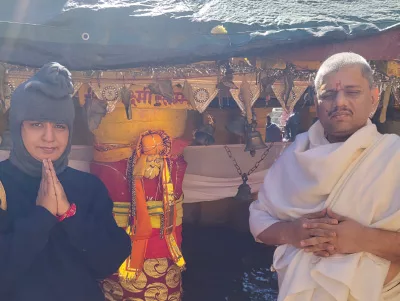
The Puranas preserve this story in several recensions. What follows is drawn from the Brahma Purana and the Skanda Purana accounts.
Lord Brahma, the creator, originally had four heads — each facing one of the four cardinal directions, representing the four Vedas. In a moment of desire directed at Satarupa (his own creation), a fifth head spontaneously grew, turning to gaze upon her wherever she moved. This act was considered a profound transgression — a creator turning desire toward his own creation.
Lord Shiva, witnessing this, was moved to correct the transgression. In a moment of cosmic correction, he took his trident and severed Brahma’s fifth head. But the moment the head fell, a terrible consequence unfolded: the skull of Brahma adhered to Shiva’s left hand and could not be removed. This is the Brahmahatya Dosha — the sin of severing a Brahmin’s head — and even the Lord of Destruction was not exempt from its binding power.
Shiva wandered across the three worlds, unable to free himself from the skull. Everywhere he went, the skull followed, attached to his hand, a constant reminder of the act. He performed every purificatory rite known to the cosmos. Nothing released him.
Finally, on the counsel of Lord Vishnu, Shiva came to Badrikashrama — the sacred valley in the high Himalayas presided over by Lord Badrivishal. The moment Shiva bathed in the Alaknanda at this spot and touched the stone platform here, the skull detached from his hand and fell to the earth. The Brahmahatya Dosha was extinguished.
That skull — the severed head of Lord Brahma — still rests on the banks of the Alaknanda in the form of the boulder we see today. The platform where it fell became Brahma Kapal. And in celebration of his release, Lord Brahma himself performed the very first Pind Daan at this spot — establishing it as the supreme location for ancestral rites for all time.
This is not a coincidence of geography. This is the reason the ground at Brahma Kapal is considered permanently charged by Brahma’s own offering.
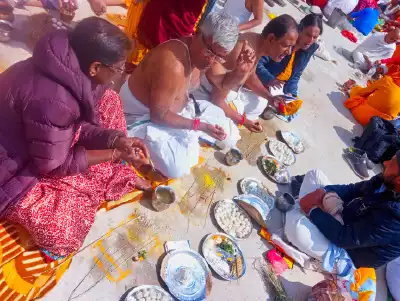
Gaya, in Bihar, is the most famous site for Pind Daan in all of India. The Gaya Mahatmya section of multiple Puranas praises it as the greatest teerth for ancestral liberation. Families travel from across the country and from abroad to perform Shraddha at the Vishnupad Ghat and the Falgu River. Pind Daan performed at Gaya is considered supremely meritorious.
And yet the Skanda Purana makes an unambiguous declaration:
“Yani kani cha tirthani Gaya-kshetraat cha uttamam — Badrikshetra Shraddham tu ashtagunam phalam dakshinam.”
Translation: “Whatever sacred teerths exist, and however great the merit of Gaya Kshetra, the Shraddha performed in Badri Kshetra gives eight times that fruit.”
This eightfold multiplier is specific to Badrikshetra, and Brahma Kapal is the designated Shraddha ghat within Badrikshetra. When you or I perform Shradh karma at Brahma Kapal, we are doing it at the location where the creator himself first made this offering — and the Alaknanda river carries the merit directly to the pitrs in whatever loka they presently inhabit.
Four scriptural reasons explain this potency:
Families who have already performed Pind Daan at Prayagraj or at Gaya ask me why they should also come to Brahma Kapal. The answer is not that the earlier rites were wasted — they were not. Each location liberates a different tier of pitr obligation. Brahma Kapal is specifically described as the site that provides complete and final liberation.
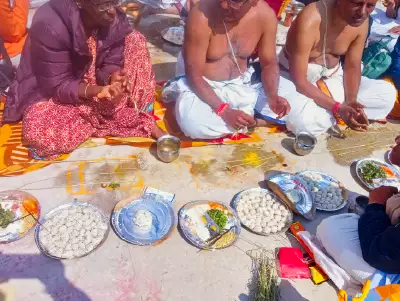
This is the aspect of Brahma Kapal that sets it apart from every other Pind Daan teerth — and it is one that most families have never heard explained clearly. The shastras are direct on this point.
When Pind Daan is performed at Gaya, at Prayagraj, or at Varanasi, the benefit is enormous — but annual Shradh (the Pitrupaksha rites performed every year during Bhadrapada-Ashwin) continues to be a duty. The ancestors continue to need and receive these annual offerings.
Brahma Kapal operates differently. The Puranas state: “Brahmakapal Pind Daanat param na vidyate.” — “Beyond Pind Daan at Brahma Kapal, there is nothing further.”
Once the Pind Daan vidhi is completed at Brahma Kapal:
This is why Brahma Kapal is described in the tradition as the Mahateertha — the supreme pilgrimage for ancestral rites. It is not merely very good. It is final.
For families where a Pitra Dosh has persisted for generations despite regular Shradh performances, or where the death rites of an ancestor were incomplete or delayed, Brahma Kapal is the prescribed resolution. The tradition even holds that ancestors who could not find liberation at Gaya or other sacred teerths receive salvation here.
The Puranic texts make a particular recommendation for families where ancestors died through sudden, violent, or untimely means — accidents, drowning, falls, fires, or premature illness. Such souls are termed akal mrityu pitrs in the shastra — those who died before their natural lifespan was complete.
The tradition holds that souls who die unnaturally are more likely to remain in a transitional state between lokas, unable to fully pass to the pitr realm, because the circumstances of their death severed the normal process of transition. For such ancestors, Narayan Bali and Sapindikarana are important complementary rites. But Brahma Kapal is specifically described in the texts as having extraordinary efficacy for the liberation of such akal mrityu pitrs.
The Pandavas understood this. According to the Shrimad Bhagavata Mahapurana, after the Kurukshetra war the Pandavas carried the weight of having killed thousands of their own kin — cousins, teachers, grandfathers — many of whom died violent, sudden deaths in battle. When the Pandavas undertook their final Swargarohini Yatra through the Himalayas, they stopped at Brahma Kapal and performed Pind Daan for all those relatives who had died in battle. Only at Brahma Kapal could the debt of gotra-hatya (killing of one’s own clan) be settled.
If your family carries such a weight — an ancestor who died young, or in difficult circumstances — Brahma Kapal is where that weight can be set down permanently.
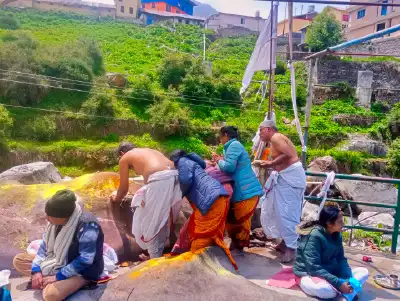
Brahma Kapal is extremely accessible for any pilgrim who has reached Badrinath Dham. Here is the complete route:
From Badrinath Temple to Brahma Kapal (on foot): Exit the main Badrinath Temple gate and turn left (north). Follow the path along the Alaknanda riverbank. Brahma Kapal is approximately 200 to 300 metres from the temple entrance — a 5-minute walk on a flat, well-maintained path. It is clearly signed and pandits are visible at the ghat during all hours that rites are being performed.
Getting to Badrinath (the larger journey):
Road condition note: The Badrinath highway (NH-7) passes through high-altitude terrain prone to landslides during heavy monsoon (mid-July to August). Travel in September–October is generally smoother.
As part of the Char Dham Yatra, many families visit Yamunotri, Gangotri, and Kedarnath before reaching Badrinath. Brahma Kapal is typically the final spiritual act of the Char Dham journey — the ancestral offering that completes the pilgrimage.
Brahma Kapal is open to all Hindus wishing to perform ancestral rites. But the shastras describe certain situations where this journey is especially indicated:
For NRI families, we offer both in-person services (you come to Badrinath and we arrange everything) and our NRI puja services for remote arrangements. Please see our booking page for options.
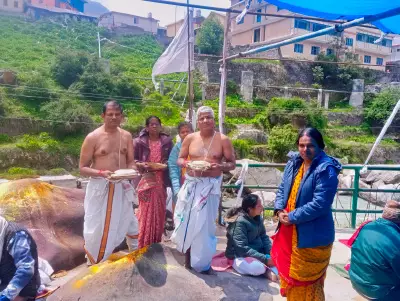
The Shradh vidhi at Brahma Kapal follows the Apastamba Sutra tradition for ancestral rites, with specific mantras from the Rigveda and Yajurveda that are particular to this kshetra. Here is what the ceremony involves:
Sankalp: The ritual begins with a formal declaration (Sankalp) in which the yajman (the one performing the rite) states his name, gotra, and the names of the ancestors for whom the rite is being performed. The pandit recites the Sankalp mantra that specifically identifies Brahma Kapal as the place of offering, invoking Lord Badrivishal as the witness.
Tarpan: Water offerings (Tarpan) are made into the Alaknanda using cupped palms, with sesame seeds (til) added. The Tarpan vidhi at Brahma Kapal includes offering to three generations of paternal and maternal pitrs, as well as to all unknown ancestors. This is the liquid offering that quenches pitr-trishna (ancestral thirst).
Pinda formation: Pindas (spherical balls) are formed from a mixture of barley flour (jau atta), sesame seeds, honey, and water. These represent the physical body of the ancestor — the food offering that sustains them in the ancestral realm during the transition to liberation.
Pinda Daan: The formed pindas are offered into the Alaknanda with the appropriate mantras, beginning with the most recently deceased and proceeding backward through the generations. Typically, offerings are made to the last three or four generations explicitly named, and then to all unnamed ancestors collectively.
Visarjan: The remaining materials are dissolved into the Alaknanda as a final offering. The ceremony closes with a Brahman bhoj (feeding of pandits) and daan — the giving of specific items including white cloth, rice, sesame, and silver.
The full vidhi typically takes 2 to 4 hours. Our pandits conduct this according to your gotra and family tradition (Shaiv or Vaishnav, north Indian or south Indian rite variations are accommodated).
Brahma Kapal can be visited for Pind Daan at any point during the Badrinath Temple season (typically late April to early November). However, certain periods carry additional merit or are more practically suitable:
The cost of Pind Daan at Brahma Kapal depends on the number of ancestors named, the complexity of the ritual, and whether additional rites (Narayan Bali, Tripindi Shradh, Tarpan for unknown ancestors) are included.
When you approach local pandits at the ghat without prior arrangements, rates vary widely and haggling is common — which is not the ideal atmosphere for a sacred ancestral ceremony. Our service provides fixed, transparent pricing with a qualified tirth purohit who performs the complete vidhi without abbreviation.
Complete Shradh vidhi at Brahma Kapal ghat on the Alaknanda — Sankalp, Tarpan, Pinda formation and offering, Visarjan — with an experienced tirth purohit. Fixed pricing, no hidden charges. In-person and online arrangements available.
Questions? Call or WhatsApp: +91 77540 97777
Families often ask whether they should perform Pind Daan at Gaya or at Brahma Kapal, and which should come first. Here is the traditional guidance:
The shastras describe Gaya as the primary Shradh teerth for most families — the first and most widely prescribed location. The Gaya Mahatmya in the Vayu Purana and Brahma Purana both instruct that Pind Daan at Gaya liberates 21 generations of ancestors. The Pind Daan vidhi at Gaya is extensive, covering multiple ghats over multiple days.
Brahma Kapal is described as the completion — the rite that finalises what Gaya began. The traditional sequence, as prescribed by our shastras, is:
If a family can do only one Pind Daan at this stage of their life, Brahma Kapal carries the greater scriptural weight for finality. The Skanda Purana’s eightfold comparison specifically uses Gaya as the benchmark — meaning Brahma Kapal outperforms even the primary Shradh teerth.
For families already troubled by a persistent Pitra Dosh — where the astrological signature and its life effects have not resolved despite annual Shradh — we generally recommend a combined Gaya + Brahma Kapal programme, with Narayan Bali if an ancestor died unnaturally.
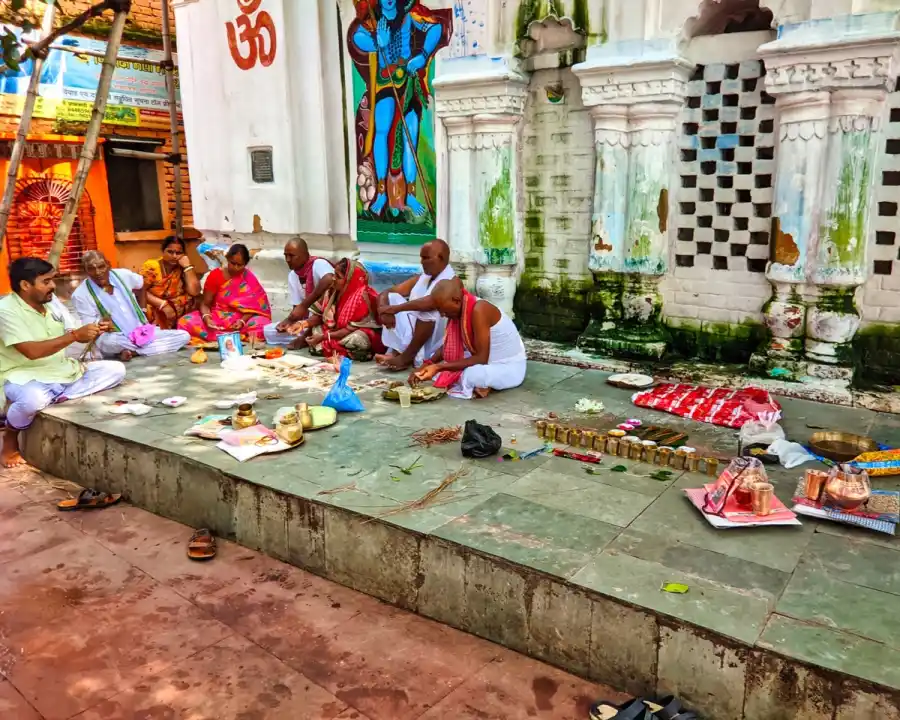
If you are making the journey yourself and coordinating with a local pandit, or if you want to supplement what our team provides, here is what you should carry:
Brahma Kapal’s history is rooted in the Puranas — specifically the Brahma Purana and the Skanda Purana. Lord Brahma sprouted a fifth head directed at his own creation, Satarupa. Lord Shiva severed the head with his trident to correct this transgression. The severed skull adhered to Shiva’s hand as the Brahmahatya Dosha, which could not be removed anywhere in the three worlds. On Vishnu’s counsel, Shiva came to Badrikashrama. The skull detached from his hand at this spot on the Alaknanda. In gratitude, Lord Brahma performed the first Pind Daan at this very platform. That act permanently consecrated the site as the supreme location for ancestral rites. The boulder shaped like a skull — Brahma’s actual severed head — still rests on the riverbank here.
Brahma Kapal is approximately 200 to 300 metres from the main entrance of the Badrinath Temple, on the northern (left) side of the temple. It is a flat, well-maintained 5-minute walk along the Alaknanda riverbank. No vehicle or additional transport is needed — it is easily accessible on foot for all pilgrims who have reached Badrinath Dham.
Local pandits at the ghat charge varying rates depending on negotiation, which we do not recommend for a sacred ceremony. Our Prayag Pandits service for Pind Daan at Brahmakapal starts at Rs. 10,999 for the complete vidhi including Sankalp, Tarpan, Pinda offering, and Visarjan, with all samagri included. Online Pind Daan (where our pandit performs on your behalf with live documentation) starts at Rs. 10,999. Contact us for a detailed quote including additional rites if required.
There are no general restrictions preventing any Hindu from visiting Badrinath or performing Pind Daan at Brahma Kapal. However, some practical considerations: the temple is at 3,100 metres altitude, which can be challenging for those with serious cardiac or respiratory conditions. Pregnant women are generally advised to avoid high-altitude travel in the third trimester. Menstruating women traditionally do not participate in Pind Daan vidhi on those specific days but can be present at the ghat. Non-Hindus are permitted to visit Brahma Kapal ghat but the Pind Daan ceremony itself is specific to Hindu ancestral tradition.
Yes. For families who are unable to make the physical journey to Badrinath — particularly NRI and overseas families, or those with elderly or infirm family members — we offer an online Pind Daan service at Brahmakapal. Our pandit performs the complete vidhi at the actual Brahma Kapal ghat on the Alaknanda, with your gotra and ancestor names included in the Sankalp. We provide live video if timing permits, and a photo/video documentation of the ceremony is sent via WhatsApp. Book at: Online Pind Daan at Brahmakapal.
According to the Puranas, Pind Daan at Brahma Kapal is the antim (final) Shradh for the ancestors named in the ceremony. The texts state that no further Pind Daan or Shradh karma is required for those specific pitrs after the Brahma Kapal rite is performed. However, if you later wish to perform annual Pitrupaksha Tarpan as a continued expression of respect and gratitude, that is always meritorious and acceptable. The distinction is that it becomes an act of devotion rather than an unfulfilled duty.
Yes. When no male relative is available, willing, or capable of performing the rite, daughters and mothers are fully authorised to perform Pind Daan. The shastras recognise this provision explicitly. The Sankalp is adjusted to identify the female relative as the yajman. Our pandits at Brahma Kapal have guided daughters through the complete vidhi on multiple occasions. The spiritual merit and efficacy of the rite are not diminished in any way.
The temple season runs from approximately late April to early November. The most auspicious periods are: (1) Pitrupaksha — the 16-day ancestral fortnight in September–October, which carries the highest spiritual charge for Shradh rites; (2) the lunar death tithi of your ancestor; and (3) Amavasya (new moon) of any month during the season. Practically, May–June and September–October are the best months for comfortable travel and reliable road conditions. Avoid mid-July to mid-August due to monsoon landslide risk on the Badrinath highway.
Select your package and complete booking. Our team calls within 2 hours to confirm details.
Provide your gotra, departed soul's name, and any special requirements.
Experienced pandit performs the complete ceremony at the sacred site.
Full ceremony video on WhatsApp within 24 hours. Digital certificate shared via email.
Save 35%
The sacred fortnight of Pitrupaksha is the most powerful time to honor...
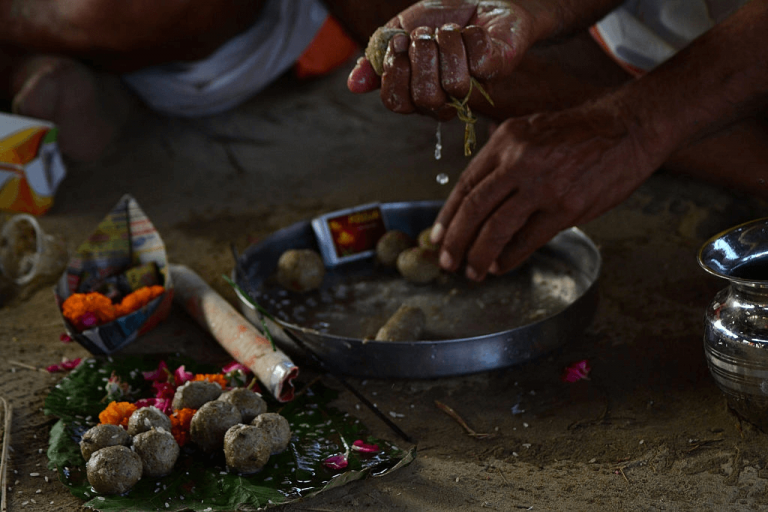 Save 35%
Gaya, Bihar is the top preferred place by Hinduism to perform Pind...
 Most Booked
For the devotee who seeks to perform their ancestral duty with the...
 Save 35%
Pind daan in Haridwar this Pitrupaksha 2025 is performed over the banks...
 Save 35%
Mathura, one of the ancient city in Uttar Pradesh. The pind daan...
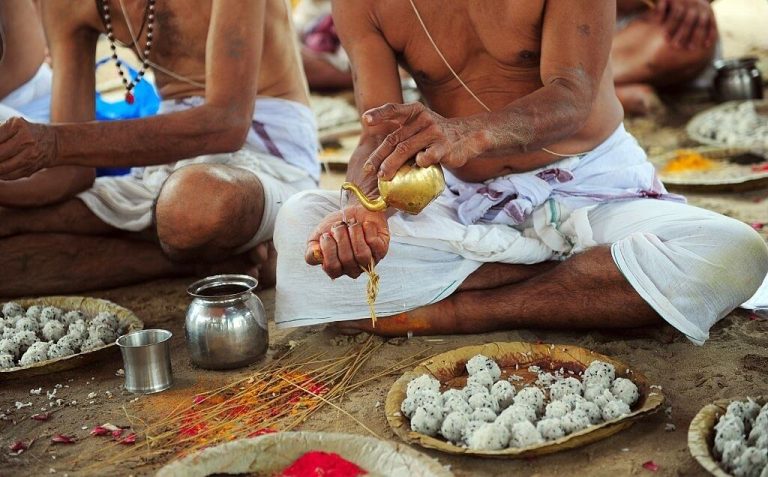 Save 35%
Pind daan at garh mukteshwar or garh ganga is being performed over...
 Save 56%
A Profound 3-Day Pilgrimage: Pind Daan in Gaya During Pitrupaksha Immerse yourself...
 Save 48%
Even if you are miles away, you can connect with the holiest...
Brahma Kapal is a sacred flat rock platform on the banks of the Alaknanda river at Badrinath, approximately 500 meters from the main Badrinath Temple. According to the Skanda Purana and Vishnu Purana, Brahma Kapal is where Lord Shiva gained release from the sin of Brahmahatya (killing a Brahmin — specifically Brahma's fifth head) by performing ancestral rites. This makes Brahma Kapal uniquely powerful for: liberating ancestors from Brahmahatya dosha, liberating souls who committed suicide or died violently, resolving generational Pitra Dosh, and granting moksha to souls trapped in Preta state. The scriptures state that Pind Daan at Brahma Kapal grants eight times the merit of Pind Daan at Gaya for specific types of ancestral afflictions.
Pind Daan at Brahmakapal is believed to grant ultimate and final liberation (Moksha) to ancestors. Scriptures like the Skanda Purana state that rituals performed here are eight times more potent than those at Gaya. It's believed Lord Brahma resides here, and Lord Shiva was absolved of his sin (Brahma Hatya) at this spot. Performing Pind Daan here ensures ancestors, even those restless or trapped elsewhere, attain permanent peace and a place in the highest celestial abodes, potentially eliminating the need for future annual Shraddha rituals
The procedure for Pind Daan at Brahma Kapal follows the standard Vedic vidhi with a few unique elements: (1) Bathe in the icy Alaknanda at Tapt Kund (the hot spring near the temple) before proceeding, (2) Dress in clean white or saffron attire, (3) Collect puja samagri: rice, sesame (til), kusha grass, Ganga Jal, a small pot of ghee, and 3-7 pindas based on the number of ancestors, (4) Proceed to Brahma Kapal and face the river (east), (5) Perform the Sankalpa with your gotra and the names of ancestors, (6) Offer pindas one at a time while reciting the Pitri Sukta, (7) Release the pindas into the Alaknanda, (8) Offer Tarpan (water with sesame) to all ancestors, (9) Conclude with Namaskar to the Alaknanda and the Badrinath Temple. Our Badrinath Pind Daan package includes pandit coordination, samagri, and ritual documentation for ₹8,000-₹15,000.
Badrinath is accessible only from May to early November each year — the temple and town close for winter due to heavy snow (typically from mid-November to late April). Within this window, the best times for Pind Daan are: (1) May-June — post-opening, pleasant weather, moderate crowds, (2) August-September — best balance of weather and lower crowds (monsoon is technically on but Badrinath receives less rain than Rishikesh), (3) October — pre-closing, crisp mountain air, crowds lower, (4) Pitrupaksha (September) — most spiritually powerful but most crowded. Avoid: peak monsoon (July) when landslides can close the road, and November when temperature drops dramatically. Our Badrinath pilgrimage packages include weather-safe dates with pre-arranged accommodation at the nearest Badrinath hotels.
Pind Daan at Brahma Kapal is slightly more expensive than plain Pind Daan at other tirthas due to the remote Himalayan location and specific scriptural procedures. Our basic 1-day Badrinath Pind Daan package starts from ₹8,000 and includes: pandit dakshina, all samagri, the full scriptural vidhi at Brahma Kapal, a bath at Tapt Kund, Alaknanda Tarpan, and a basic completion certificate. Standard packages with Brahmin Bhoj for 5 Brahmins range from ₹11,000 to ₹15,000. Premium packages with extended rites at Brahma Kapal + Vasudhara + Mana village visit range from ₹18,000 to ₹25,000. These prices do NOT include travel and accommodation to Badrinath (approximately ₹12,000-₹20,000 additional for a 3-day Haridwar-Badrinath-Haridwar trip). Visit our Badrinath service page for complete pilgrimage packages.
Yes, Brahmakapal is considered exceptionally potent for performing Pind Daan and Shraddha for ancestors who suffered Akal Mrityu (untimely/unnatural death) or whose souls may be trapped or restless (in Pretayoni). The profound sanctity of Brahmakapal, blessed by Brahma and Shiva, is believed to grant immediate peace, liberation from suffering, and ultimate salvation (moksha) even to such souls, ensuring their peaceful transition.
Brahma Kapal Pind Daan is recommended in these specific cases: (1) Families with ancestors who committed suicide or died by violence (Brahmahatya or similar "grave" causes), (2) Families experiencing persistent Pitra Dosh that has not been resolved by Gaya Pind Daan, (3) Individuals who feel a spiritual call to perform Pind Daan in the Himalayas rather than the plains, (4) Pilgrims combining Char Dham Yatra with ancestral rites, (5) Those seeking the additional blessing of Lord Badri Narayan alongside ancestral liberation. For most general Pind Daan purposes, Gaya remains the scripturally-preferred site. Brahma Kapal is specifically for "difficult cases" or for those desiring the spiritual depth of a Himalayan ceremony.
Badrinath's remote Himalayan location makes in-person attendance difficult for many families. Our Vedic pandits based at Badrinath (during the open season May-November) perform Pind Daan at Brahma Kapal on behalf of NRI families. The procedure is the same as in-person: you share the deceased's name, gotra, date of passing, and any specific causes of death (unnatural, suicide, etc.) via WhatsApp or email. We conduct the ceremony at Brahma Kapal with full scriptural authenticity and provide video documentation within 3-5 days (slightly longer than plains ceremonies due to Badrinath's limited internet connectivity). Remote Badrinath Pind Daan is priced at ₹8,000-₹12,000, including all pandit fees and samagri. Available only during temple opening months.