No rituals selected yet.
Browse Pooja Packages →Key Takeaways
In This Article
Introduction: Why Gaya Holds the Key to Ancestral Peace
There are many temples to visit in the Gaya region of India, but theHave you ever wondered why millions of Hindus travel thousands of kilometers to perform rituals in a small town in Bihar? The answer lies in an ancient promise made by Lord Vishnu himself.
Gaya isn’t just another pilgrimage destination—it’s the only place on Earth where Pind Daan is believed to grant instant moksha (liberation) to departed souls. This sacred geography, blessed by Lord Vishnu’s own footprint, houses six remarkable temples that together form the spiritual heart of ancestral rites in Hinduism.
Whether you’re planning to perform Pind Daan in Gaya during Pitrupaksha 2026 or simply wish to experience the profound spirituality of this ancient land, this comprehensive guide will walk you through every sacred site, ritual, and practical detail you need to know.se six temples are considered to be the most mystical and beautiful. These ancient sites were constructed over 2000 years ago and date back to the era of the Magadha Empire.
| Temple/Site | Primary Deity | Key Significance | Best For |
|---|---|---|---|
| Vishnupad Temple | Lord Vishnu | Sacred footprint of Vishnu; main Pind Daan center | Pind Daan, Shradh, Tarpan |
| Mangla Gauri Temple | Goddess Shakti | One of 18 Shakti Peethas | Fertility blessings, marital harmony |
| Phalgu River & Gaya Ghat | River Goddess | First Pind Daan offering point | Water rituals, Tarpan |
| Akshayabat | Sacred Banyan Tree | Final & essential Pind Daan point | Completing ancestral rites |
| Mahabodhi Temple (Bodh Gaya) | Lord Buddha | Buddha’s enlightenment site; UNESCO Heritage | Meditation, Buddhist pilgrimage |
| Dungeshwari Cave Temples | Lord Buddha | Buddha’s 6-year austerity site | Spiritual retreat, Buddhist pilgrimage |
The Legend That Made Gaya Sacred: The Story of Gayasur
Before we explore each temple, you must understand why Gaya holds such unparalleled importance for ancestral rites.
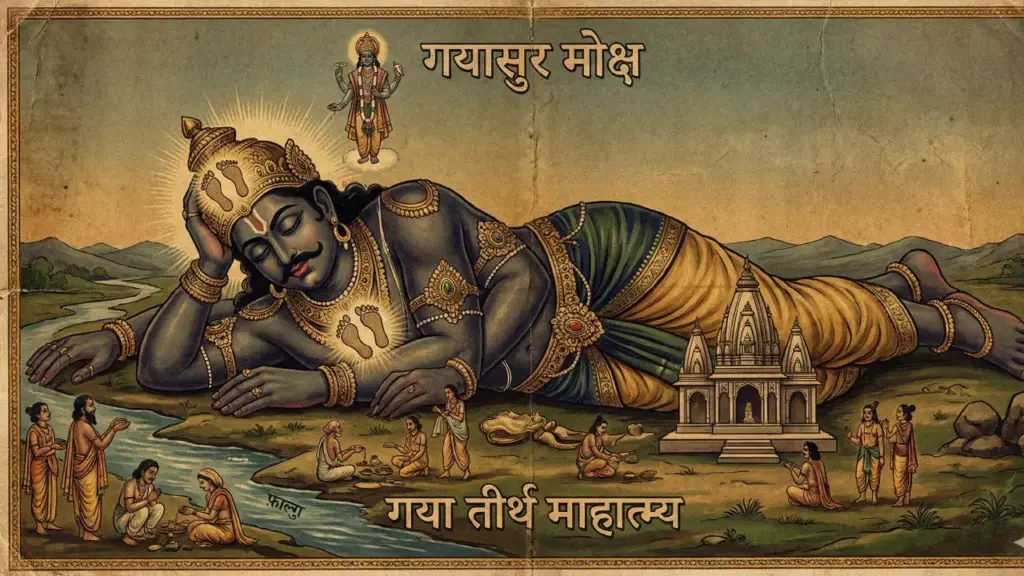
Long ago, there lived a demon named Gayasur. Unlike other demons known for destruction, Gayasur was extraordinarily devoted to the gods. His intense penance pleased Lord Brahma, who granted him a remarkable boon: anyone who touched Gayasur’s body would immediately attain moksha (liberation from the cycle of rebirth).
This created an unexpected cosmic crisis. People simply touched Gayasur and bypassed all karma, all dharma, all cycles of learning—and went straight to heaven. The natural order of the universe was collapsing.
The gods approached Lord Vishnu for help. Vishnu, in his wisdom, approached Gayasur with a request: would the demon allow a grand yajna (sacrifice) to be performed upon his body? The ever-generous Gayasur agreed, lying down upon the earth.
To keep Gayasur in place, Lord Vishnu placed his sacred foot upon the demon’s chest, pressing him into the earth forever. That divine footprint is now enshrined in the Vishnupad Temple.
As a final blessing, Gayasur asked: “Let this land become the holiest place for ancestral salvation.”
Lord Vishnu granted this wish. And that is why Pind Daan in Gaya is considered the most powerful rite for liberating departed souls
1. Vishnupad Temple: The Heart of Ancestral Liberation
At a Glance
| Aspect | Details |
|---|---|
| Location | Banks of Phalgu River, Gaya City |
| Deity | Lord Vishnu (as Gadadhar) |
| Built By | Rebuilt by Maharani Ahilya Bai Holkar (1787) |
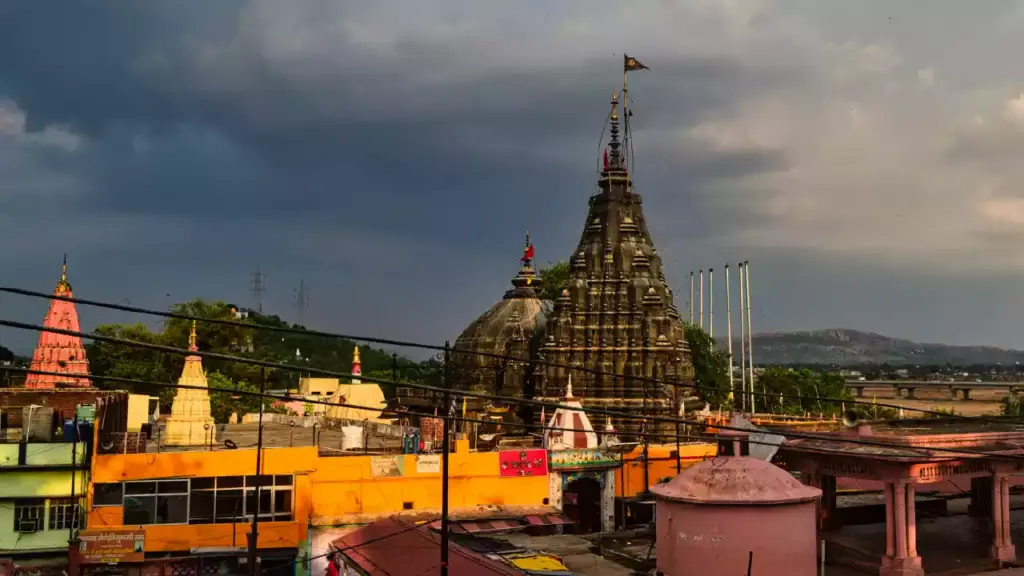
| Architecture | Octagonal shrine with pyramidal tower |
| Height | 30 meters (100 feet) |
| Entry | Hindus only (inner sanctum) |
| Timings | 5:00 AM – 12:00 PM, 3:00 PM – 9:00 PM |
The Sacred Footprint
The temple’s holiest treasure is a 40-centimeter footprint carved into a block of basalt called Dharmasila. This isn’t just any carving—Hindus believe this is the actual impression left by Lord Vishnu when he stepped on Gayasur’s chest.
The footprint contains nine sacred symbols including:
- Shankha (Conch) – Symbol of creation
- Chakra (Discus) – Symbol of the cosmic cycle
- Gadha (Mace) – Symbol of divine power
- Padma (Lotus) – Symbol of purity
The footprint is surrounded by a silver-plated basin where devotees offer water, flowers, and prayers.
History and Architecture
While the original temple’s origins are lost to antiquity (evidence suggests it existed during the 5th century CE reign of Samudragupta), the present magnificent structure was built in 1787 by Devi Ahilya Bai Holkar, the revered queen of Indore.
The queen’s dedication was remarkable:
- She sent officers across India to find the perfect stone
- They selected Munger black stone from Bihar
- Artisans from Rajasthan were brought to carve the temple at Patharkatti
- Finished stones were transported to Gaya for assembly
The result is an architectural marvel:
- 8 rows of intricately carved pillars support the pavilion
- Gray granite blocks joined with iron clamps form the structure
- A pyramidal tower rises with alternating indented sections
- The temple faces east, welcoming the morning sun
Rituals Performed at Vishnupad Temple
This is the primary center for all Shradh in Gaya ceremonies:
| Ritual | Description | Duration | Cost Range |
|---|---|---|---|
| Pind Daan | Rice ball offerings for ancestors | 1-1.5 hours | ₹7,100 – ₹21,000 |
| Tarpan | Water offerings with mantras | 1-2 hours | ₹5,100 – ₹7,100 |
| Brahma Kund Snan | Sacred bath at the temple pond | 30-45 minutes | Included in tour |
| Rudrabhishek | Shiva worship for departed souls | 2-3 hours | ₹5,000 – ₹11,000 |
Visitor Tips for Vishnupad Temple
- Arrive early (before 7 AM) to avoid crowds
- Remove leather items before entering
- Hire authorized pandas (temple priests) through trusted services like Prayag Pandits
- Dress conservatively – shoulders and knees covered
- Photography is generally not permitted inside
- Carry cash – ATMs may be unreliable during peak seasons

2. Mangla Gauri Temple: Where Divine Feminine Blesses Families
At a Glance
| Aspect | Details |
|---|---|
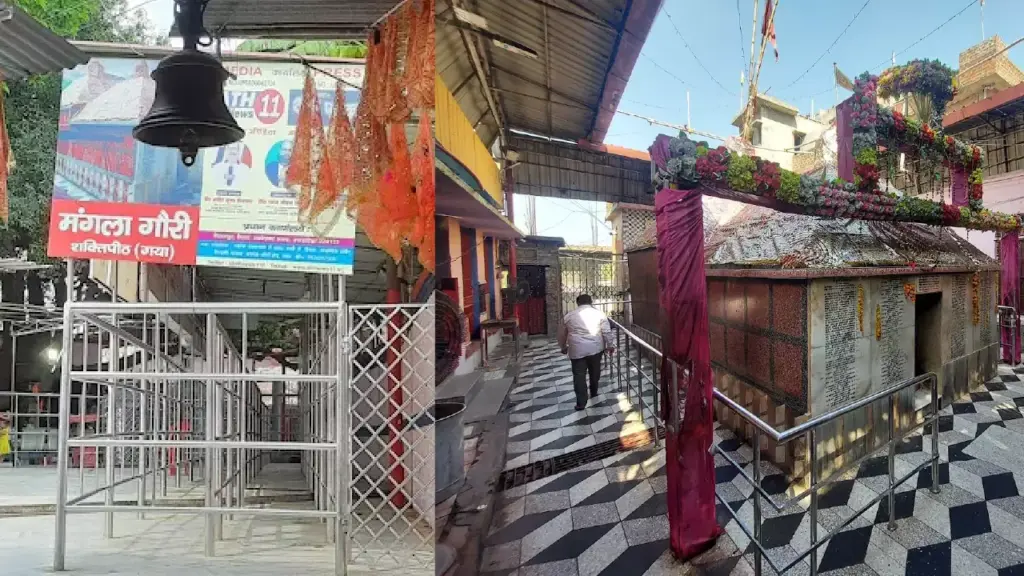
| Location | Banks of Phalgu River, near Vishnupad Temple |
| Deity | Goddess Mangla Gauri (Shakti) |
| Status | One of 18 Shakti Peethas |
| Age | Dates back to 15th century |
| Famous For | Fertility, marital happiness, child blessings |
| Entry | Open to all |
| Best Days | Tuesdays (especially during monsoon) |
The Shakti Peetha Legend
According to Hindu mythology, when Goddess Sati immolated herself in the sacred fire, Lord Shiva carried her body across the cosmos in grief. To end his cosmic dance of destruction, Lord Vishnu’s Sudarshana Chakra severed Sati’s body into pieces.
These fragments fell across the Indian subcontinent, creating the 51 (or 18 major) Shakti Peethas. At Gaya, Sati’s breast is believed to have fallen, symbolizing:
- Nourishment
- Creation
- Maternal abundance
This is why Mangla Gauri Temple is especially sacred for those seeking blessings related to fertility, pregnancy, and family prosperity.
Scriptural References
The temple’s significance is documented in multiple ancient texts:
- Padma Purana
- Vayu Purana
- Agni Purana
- Devi Bhagavata Purana
- Markandeya Purana
Who Should Visit Mangla Gauri Temple?
| Devotee Category | Blessing Sought |
|---|---|
| Married women | Long life for husband (Mangala Gauri Vrata) |
| Couples trying to conceive | Blessing for healthy child |
| Unmarried individuals | Finding ideal life partner |
| Those with marital troubles | Resolution of disputes, harmony |
| New mothers | Protection for child |
The Mangala Gauri Vrata
One of the most powerful rituals performed here is the Mangala Gauri Vrata, a sacred fast observed:
- Primarily by married women
- For 16 consecutive Tuesdays
- Especially during monsoon season (Shravan month)
Devotees believe that sincere observance of this vrata:
- Ensures longevity for their spouse
- Removes obstacles in married life
- Brings prosperity to the household
3. Phalgu River & Gaya Ghat: The Cursed River That Still Liberates
The Most Fascinating Myth of Gaya
The Phalgu River holds one of Hindu mythology’s most intriguing stories—one that involves Lord Rama, Mata Sita, and a curse that changed the river forever.
The Story:
During their 14-year exile, Lord Rama, Mata Sita, and Lakshmana came to Gaya to perform Shradh for Rama’s deceased father, King Dasharatha.
Rama and Lakshmana went to gather ritual materials, leaving Sita at the riverbank. As the auspicious muhurat (timing window) began passing, the spirit of King Dasharatha appeared before Sita, expressing hunger and requesting the ritual offerings.
With no other option, Sita performed the Pind Daan using sand from the riverbank—an unconventional but sincere offering.
When Rama returned, he doubted whether Sita had actually performed the ritual. Sita called upon witnesses:
- The Phalgu River – denied seeing anything
- A Cow – lied to support Rama
- A Brahmin – also denied
- A Tulsi plant – remained silent
Only the Akshayabat (Banyan Tree) testified truthfully.
Enraged at being doubted and lied about, Mata Sita cursed them all:
| Entity Cursed | The Curse |
|---|---|
| Phalgu River | Shall flow underground, invisible to human eyes |
| Cow | Shall never be worshipped from the front |
| Gaya Brahmins | Shall never be satisfied, always wanting more |
| Tulsi Plant | Shall not grow at Gaya |
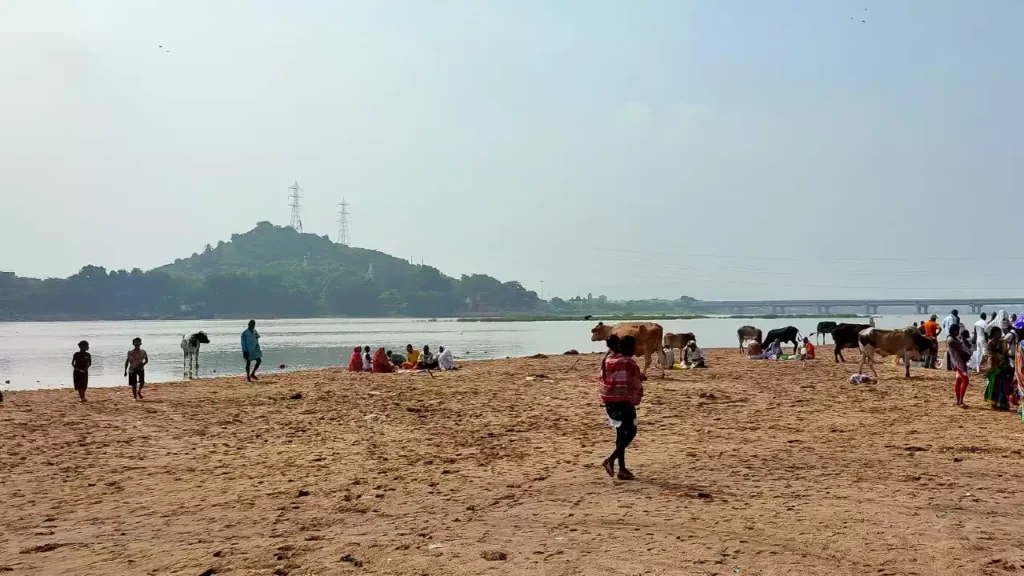
And indeed, to this day, the Phalgu River flows mostly underground in Gaya—you can dig into the sandy riverbed and find water beneath.
But Sita also blessed the Akshayabat with immortality for its truthfulness.
Despite the Curse: Why Phalgu Remains Sacred
Here’s the beautiful irony: despite Sita’s curse, the Phalgu remains the first and most important offering point for Pind Daan. The curse didn’t diminish its sanctity—it only changed its form.
The significance of the Phalgu River lies in:
- Being the first vedi (sacred spot) for Pind Daan
- Its waters (even underground) carrying the same liberating power
- The spiritual connection to Mata Sita’s sincere offering
Rituals at Phalgu River Ghat
| Ritual | Description |
|---|---|
| Pind Daan | First offering point in the Gaya pilgrimage circuit |
| Tarpan in Gaya | Water offerings with sesame seeds |
| Snan (Holy Bath) | Bathing in the sacred waters |
| Sandhya Vandana | Evening prayers on the ghats |
4. Akshayabat: The Immortal Witness to Your Ancestors’ Liberation
The Tree That Cannot Die
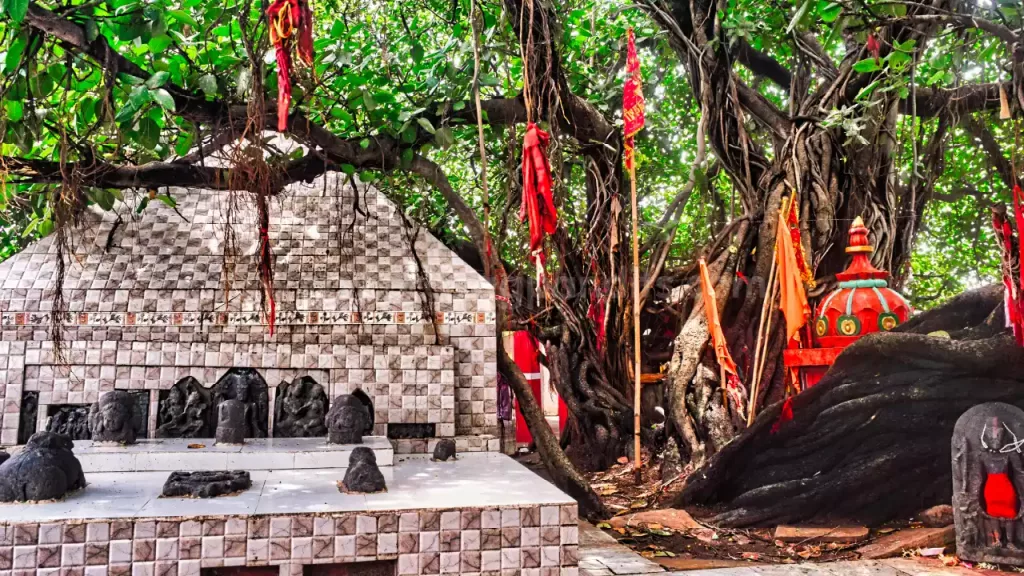
Near the Vishnupad Temple stands an ancient banyan tree that defies time itself. The Akshayabat (literally “the indestructible banyan”) has stood here for centuries—perhaps millennia—witnessing countless generations perform their final duties to ancestors.
Why Akshayabat is Essential for Pind Daan
Remember the story of Sita’s curse? Only this tree spoke the truth. In gratitude, Sita blessed it:
“You alone testified truthfully. May you live forever, and may no Pind Daan in Gaya ever be complete without offerings made at your roots.”
This divine declaration made Akshayabat the mandatory final stop for all ancestral rites in Gaya.
The vital role of Akshayavat in Gaya Shradh cannot be overstated:
- It serves as an eternal witness to all Shradh performed
- The final Pind Daan must be offered here
- It’s believed to validate all previous offerings
- Ancestors’ souls receive complete liberation only after Akshayabat offerings
The Ritual at Akshayabat
| Step | Action |
|---|---|
| 1 | Circumambulation (Parikrama) of the sacred tree |
| 2 | Offering of the final Pind (rice ball) at the roots |
| 3 | Tying of sacred thread around the trunk |
| 4 | Pouring of holy water (Ganga/Phalgu) |
| 5 | Final prayers for ancestral peace |
Spiritual Symbolism
The banyan tree in Hindu philosophy represents:
- Continuity of life – its aerial roots descend to become new trunks
- Family lineage – branches spreading represent descendants
- Immortality – the tree can live for centuries
- Truthfulness – as demonstrated in the Ramayana story
5. Mahabodhi Temple, Bodh Gaya: Where Buddha Found Enlightenment
At a Glance
| Aspect | Details |
|---|---|
| Location | Bodh Gaya (16 km from Gaya city) |
| Significance | Site of Buddha’s enlightenment |
| Status | UNESCO World Heritage Site (2002) |
| Original Builder | Emperor Ashoka (3rd century BCE) |
| Present Structure | 5th-6th century CE (Gupta period) |
| Height | 55 meters (180 feet) |
| Entry | Open to all religions |
| Timings | 5:00 AM – 9:00 PM |
The Night That Changed Human History
In 528 BCE, a prince named Siddhartha Gautama sat beneath a Bodhi tree in this very spot. He had renounced his palace, his wealth, his family—everything—in search of the answer to human suffering.
For 49 days, he meditated. On the full moon night of Vaishakh (May), as the morning star rose, Siddhartha attained Bodhi (enlightenment). He understood the nature of suffering, its cause, its end, and the path to liberation.
He was no longer Siddhartha. He was now The Buddha—The Awakened One.
The Seven Sacred Spots Within the Complex
After enlightenment, Buddha spent seven weeks at seven different locations within the temple complex. Each is now a revered pilgrimage point:
| Week | Location | Significance |
|---|---|---|
| 1st | Bodhi Tree & Vajrasana | Where Buddha attained enlightenment under the tree; Vajrasana (Diamond Throne) marks the exact spot |
| 2nd | Animesh Lochana Chaitya | Buddha gazed at the Bodhi Tree without blinking for one week in gratitude |
| 3rd | Chankramana Chaitya (Jewel Walk) | A raised platform where Buddha walked; 19 lotus symbols mark his footsteps |
| 4th | Ratnagarh Chaitya | Where Buddha contemplated the Abhidhamma (higher teachings) |
| 5th | Ajapala Nigrodha Tree | Buddha answered questions from Brahma and others here |
| 6th | Muchalinda Lake | The serpent king Muchalinda sheltered Buddha from a storm |
| 7th | Rajayatana Tree | Where Buddha received his first disciples—two merchants named Tapussa and Bhallika |

The Sacred Bodhi Tree
The present Bodhi Tree is a fifth-generation descendant of the original tree under which Buddha sat. The lineage:
- Original tree → destroyed over centuries
- A cutting was taken to Sri Lanka by Emperor Ashoka’s daughter Sanghamitta
- A cutting returned from Sri Lanka to replant at Bodh Gaya
- Through several generations → current tree
DNA studies confirm its connection to the ancient lineage.
The Vajrasana (Diamond Throne)
Emperor Ashoka placed a sandstone slab to mark the exact spot of Buddha’s enlightenment between 250-233 BCE. Called the Vajrasana (Diamond Throne), it remains the most sacred point in the entire complex.
Buddhists believe:
- It is the “navel of the Earth”
- No other spot can bear the weight of Buddha’s enlightenment
- It will be the seat of all future Buddhas
Architecture: A Blend of Two Traditions
The Mahabodhi Temple uniquely combines:
| Style | Features |
|---|---|
| Nagara (North Indian) | Pyramidal tower (shikhara), intricate carvings |
| Dravidian (South Indian) | Tiered structure, carved railings |
The temple is one of the earliest brick structures still standing in India, with:
- Sculpted scenes from Buddha’s life
- Carved lotuses and animals
- Buddhist and Hindu motifs (showing historical religious harmony)
Visitor Information
Best Time to Visit:
- October to March (pleasant weather)
- Buddha Purnima (May full moon) – grand celebrations
Dress Code:
- Modest clothing
- Remove shoes before entering
Photography:
- Allowed in most areas
- No flash photography near the Bodhi Tree
6. Dungeshwari Cave Temples: The Caves of Buddha’s Austerity
At a Glance
| Aspect | Details |
|---|---|
| Location | Dungeshwari Hills, 12-15 km from Gaya |
| Also Known As | Mahakala Caves, Pragbodhi Caves |
| Significance | Site of Buddha’s 6-year austerity practice |
| Famous For | Sujata’s offering of kheer to Buddha |
| Entry | Open to all |
| Best For | Spiritual retreat, Buddhist pilgrimage |
The Six Years Before Enlightenment
Before becoming the Buddha, Siddhartha Gautama spent six years in these caves practicing severe austerities. His self-mortification was extreme:
- He reduced his food intake to almost nothing
- His body became skeletal
- He could feel his spine through his stomach
- He was near death
Yet enlightenment eluded him.
The Pivotal Moment: Sujata’s Kheer
Weak and dying, Siddhartha rested under a banyan tree near the village of Uruvela (modern-day Bakraur). A local woman named Sujata came to the tree to make an offering—she had prayed for a son and been blessed.
Seeing the emaciated ascetic, she mistook him for a tree spirit who had granted her wish. She offered him a bowl of kheer (milk-rice pudding).
This nourishment gave Siddhartha the strength to:
- Walk to Bodh Gaya
- Sit under the Bodhi Tree
- Attain enlightenment
More importantly, this experience taught him the Middle Path: neither extreme luxury nor extreme asceticism leads to liberation. The truth lies in balance.
The Caves Today
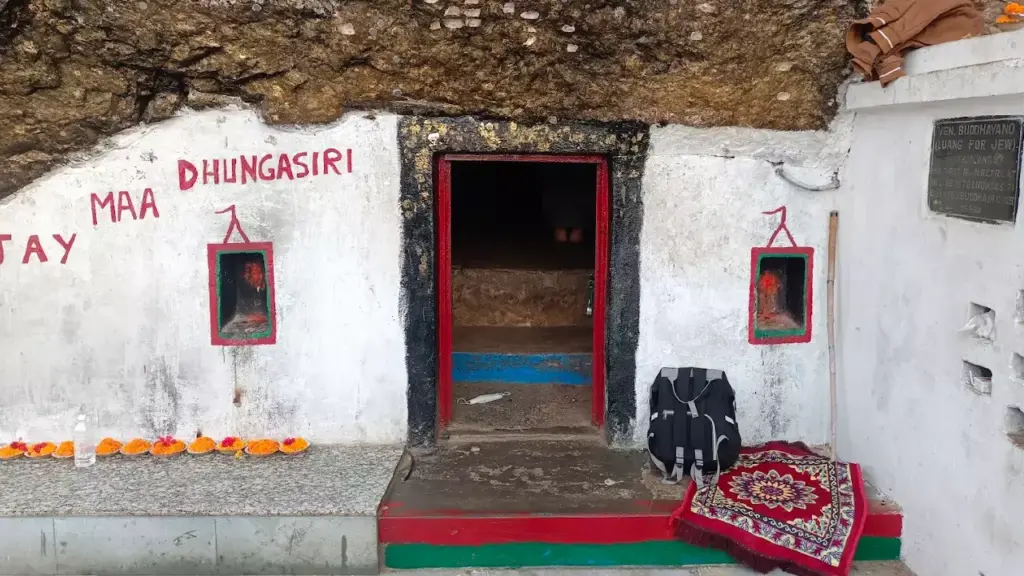
The Dungeshwari complex contains:
- Three main caves where Buddha meditated
- Ancient Buddhist sculptures carved into rock
- A small monastery maintained by local monks
- Sujata Sthal – marking where Sujata made her offering
Why Visit Dungeshwari?
| Reason | Description |
|---|---|
| Spiritual Significance | Walk where Buddha walked during his most challenging years |
| Off the Beaten Path | Far fewer tourists than Bodh Gaya |
| Meditation Retreat | Perfect for quiet contemplation |
| Complete Pilgrimage | Understanding Buddha’s full journey from austerity to enlightenment |
| Natural Beauty | Scenic hills along the Phalgu River |
Planning Your Gaya Pilgrimage: Practical Information
Best Time to Visit Gaya
| Period | Weather | Significance | Crowd Level |
|---|---|---|---|
| October – March | Pleasant (10-25°C) | Ideal for all temples | Moderate |
| Pitru Paksha (Sept-Oct) | Warm | Most auspicious for Pind Daan | Very High (23 lakh+ pilgrims) |
| Buddha Purnima (May) | Hot | Buddhist celebrations | High at Bodh Gaya |
| April – June | Hot (35-45°C) | Off-season | Low |
| July – September | Monsoon | Mangla Gauri worship (Tuesdays) | Moderate |
Pitrupaksha 2026 Dates
| Event | Date |
|---|---|
| Pitru Paksha 2026 Begins | September 27, 2026 (Sunday) |
| Pitru Paksha 2026 Ends | October 10, 2026 (Saturday) |
| Mahalaya Amavasya (Most Auspicious) | October 10, 2026 (Saturday) |
| Best Muhurat Daily | 11:45 AM – 1:19 PM (Kutup 11:45–12:32, Rohina 12:32–1:19) |
How to Reach Gaya
By Air:
| Route | Frequency | Notes |
|---|---|---|
| Delhi → Gaya | Daily (Air India) | Direct flights |
| Kolkata → Gaya | Bi-weekly | Also connects to Bangkok, Yangon |
| Mumbai → Gaya | Several weekly | Via connecting flights |
By Train from Delhi:
| Train | Duration | Type |
|---|---|---|
| Rajdhani Express | 12 hours | Premium |
| Mahabodhi Express | 16 hours | Daily non-stop |
| Mail/Express | 15-17 hours | Regular |
By Train from Kolkata:
| Route | Duration |
|---|---|
| Howrah → Gaya | ~6 hours overnight |
For complete travel details, see: How to Reach Gaya Ji
Where to Perform Pind Daan in Gaya
Gaya has 43-45 sacred vedis (spots) for ancestral rites. The most important ones:
| Vedi | Significance | Priority |
|---|---|---|
| Vishnupad Temple | Main Pind Daan center | Essential |
| Phalgu River Ghat | First offering point | Essential |
| Akshayabat | Final offering point | Essential |
| Pretshila Hill | Where Rama performed Shradh | Highly Recommended |
| Brahma Kund | Sacred pond near Vishnupad | Recommended |
| Ramshila Hill | Contains Ram’s footprints | Recommended |
| Sita Kund | Associated with Sita’s offerings | Recommended |
For a complete list, visit: Where to do Pind Daan in Gaya
Package Comparison
| Package | Duration | Vedis Covered | Includes | Price Range |
|---|---|---|---|---|
| Basic | 1.5 – 2 Hours | 1 main vedi | Pind Daan + Pandit Ji Dakshina + Addons | ₹7,100 – ₹9,000 |
| Platinum | 1.5 – 2 Hours | 1 main vedi | Pind Daan + Shradh + 1 Brahmin Bhoj + Pandit Ji Dakshina + Addons | ₹11,000 – ₹15,000 |
| Pitrupaksha Special | 3 Days | All vedis | Complete ceremony + special Pitru Paksha rituals | On Request |
What’s Typically Included
- Experienced Vedic Pandit (Gaya Teerth Purohit)
- All puja materials (flowers, incense, rice, sesame, etc.)
- Pind preparation with proper ingredients
- Mantra recitation as per Garuda Purana
- Rituals at multiple sacred vedis
- Tarpan (water offerings)
- Coordination and guidance throughout
What’s Not Included
- Travel to/from Gaya
- Accommodation
- Meals (except Brahmin Bhojan in some packages)
- Personal expenses
- Temple donations (optional)
Important Dos and Don’ts for Gaya Pilgrimage
Do’s
| Action | Reason |
|---|---|
| Book pandas/priests through trusted services | Avoid unauthorized guides who may overcharge |
| Carry sufficient cash | ATMs may be unreliable during peak seasons |
| Dress modestly | Temple protocols require covered shoulders/knees |
| Remove leather items | Not permitted in temple premises |
| Follow your pandit’s instructions | Each ritual has specific procedures |
| Maintain silence during rituals | Focus and respect for ceremonies |
| Carry ID proof | May be required at some locations |
Don’ts
| Action | Reason |
|---|---|
| Don’t negotiate during rituals | It’s considered inauspicious |
| Don’t photograph without permission | Many areas restrict photography |
| Don’t consume non-vegetarian food | Traditional practice during Shradh |
| Don’t consume alcohol | Strictly prohibited during pilgrimage |
| Don’t litter at sacred sites | Maintain sanctity of the area |
| Don’t rush through rituals | Each step has spiritual significance |
For NRI Families: Performing Pind Daan from Abroad
Can’t travel to India? Prayag Pandits offers solutions:
Options for NRIs
| Service | Description |
|---|---|
| Online Pind Daan | Priests perform on your behalf; live streaming available |
| Representative Service | Your materials/offerings used by authorized pandit |
| Guided Package | Complete coordination for NRI families visiting India |
Specific guides available for:
Other Pilgrimage Destinations to Consider
If you’re planning ancestral rites, consider these other sacred destinations:
| Destination | Distance from Gaya | Specialty |
|---|---|---|
| Varanasi (Kashi) | 250 km | Moksha for the living and dead; Asthi Visarjan |
| Prayagraj (Triveni Sangam) | 200 km | Confluence of three rivers; Pind Daan at Sangam |
| Haridwar | 900 km | Gateway to Char Dham; Ganga Aarti |
Many families combine Gaya with Varanasi and Prayagraj for a complete ancestral pilgrimage circuit.
Frequently Asked Questions
1. Why is Gaya considered the best place for Pind Daan?
According to the Garuda Purana and Vishnu Purana, Lord Vishnu himself blessed Gaya as the supreme destination for ancestral salvation. The presence of Vishnu’s footprint at Vishnupad Temple, combined with the 45 sacred vedis, makes Pind Daan here uniquely powerful for liberating ancestral souls.
2. How many days are needed for complete Pind Daan in Gaya?
- Minimum: 1 day (covering main vedis)
- Recommended: 2-3 days (covering all 45 vedis)
- During Pitru Paksha: 3-5 days (due to crowds and expanded rituals)
3. Can women perform Pind Daan?
Yes. While traditionally sons performed the rites, daughters, wives, and other female relatives can absolutely perform Pind Daan. The ritual’s power comes from sincere intention, not the performer’s gender.
4. Is Bodh Gaya part of the Hindu pilgrimage circuit?
While Bodh Gaya is primarily a Buddhist site, many Hindu pilgrims visit as part of their Gaya trip. The sites are only 16 km apart, and the spiritual significance of Buddha’s enlightenment is respected across traditions.
5. What is the cost of complete Pind Daan in Gaya?
Costs vary based on package:
- Basic: ₹7,100
- Premium/Platinum: ₹11,000 – ₹15,000
For transparent pricing, check: Pind Daan in Gaya Packages
6. Can Pind Daan be performed any time of year?
Yes, Pind Daan can be performed throughout the year at Gaya. However, Pitru Paksha (September-October) is considered most auspicious. Death anniversaries (tithi) are also significant days for performing Shradh.
Conclusion: Your Journey to Ancestral Peace Begins Here
Gaya isn’t just a destination—it’s a sacred promise kept for thousands of years. From the divine footprint at Vishnupad Temple to the immortal banyan of Akshayabat, from the goddess’s blessings at Mangla Gauri to Buddha’s enlightenment at Bodh Gaya, this land offers something profound: the chance to bring peace to those who came before you.
Whether you’re drawn by duty, devotion, or curiosity, the six mystical temples of Gaya await you with their ancient wisdom and timeless grace.
Ready to plan your pilgrimage?
Contact Prayag Pandits for authentic, transparent, and devotion-guided services at Gaya and other sacred destinations.
Related Articles
- The Sacred Path to Ancestral Liberation: Your Ultimate Guide to Pind Daan at Gaya Kshetra
- Pind Daan 101: A Comprehensive Guide to Meaning, Significance, Rituals & Benefits
- 50+ Common Questions on Pind Daan Answered by Puranas
- Shradh Karm 101: Types, Rituals, Philosophy & Importance
- Pretshila Hill, Gaya: Why Pind Daan is Done Here
- The Pilgrimage to Gaya Dham
Most Trusted
🙏 Book Your Pind Daan / Shradh Package
Starting from
₹2,100
per person

Book Your Pind Daan Ritual
Authentic ceremonies performed by Veda-trained pandits with video proof at sacred sites across India.
2,263+ families served
Video proof included
Since 2019
